
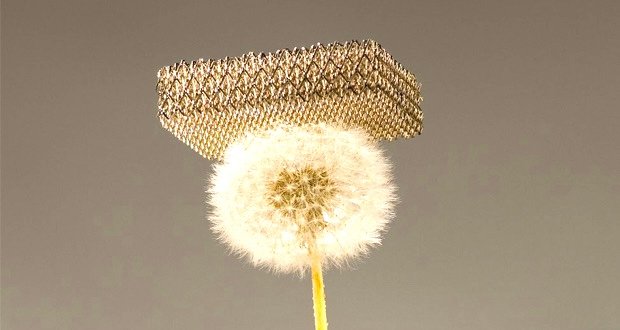
At just 160 grams per cubic meter, aerographene is the least dense solid known to exist. Discovered in 2013, this material is composed almost entirely of air, yet it possesses a physical structure allowing it to absorb one thousand times its own weight in liquid.
From cleaning up offshore oil spills to capturing cosmic dust directly from the tails of comets, the fabrication of this graphene aerogel opened up entirely new mechanical possibilities. The material can even be produced at the scale of cubic meters.
Forging a Three-Dimensional Structure
A team of scientists led by Gao Chao at Zhejiang University achieved this breakthrough. The researchers had previously succeeded in creating one-dimensional and two-dimensional macroscopic materials from graphene. To build aerographene, they transitioned to a three-dimensional framework.
The team freeze-dried solutions of carbon nanotubes combined with massive amounts of graphene oxide. Following this step, they chemically removed the residual oxygen. This specific synthesis resulted in a network of covalently bonded graphene sheets surrounding vast pockets of air.
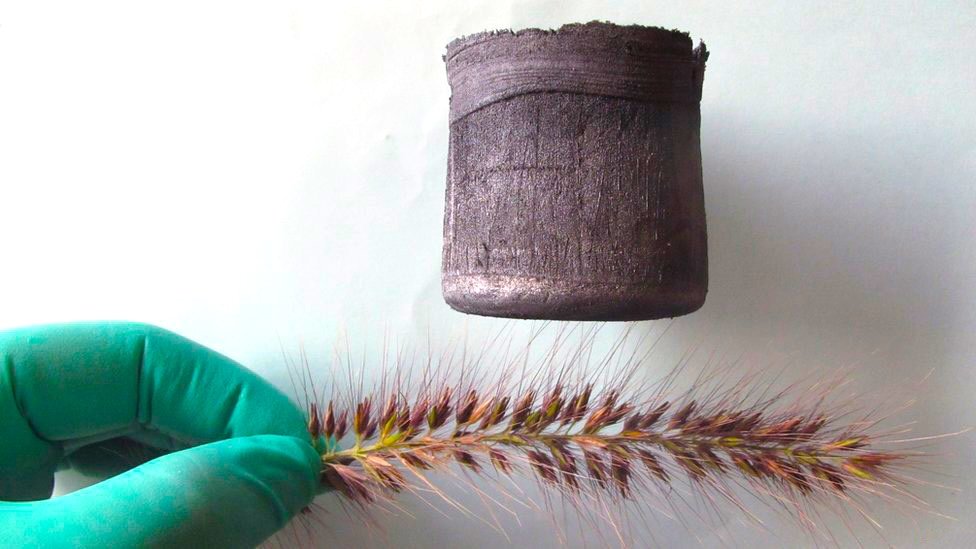
3D Printing and Chemical Precision
Scientists also developed methods to control the morphology of graphene aerogels using 3D printing technology. They created a specialized ink by gelling graphene oxide in a viscous solution, adding silica to lower the viscosity and enable printability. This ink is extruded directly from a nozzle into isooctane to stop it from drying too quickly.
Afterward, the solvent is eliminated through freeze-drying, and a hydrofluoric acid solution strips away the silica. The final product is a highly ordered 3D lattice maintaining extreme surface areas and low densities.
Extreme Compressibility and Stiffness
Aerographene displays distinct physical mechanics based on its microstructure. The material can be compressed elastically to strain values exceeding fifty percent. This high yield stress is driven by the strong sp2 bonding of graphene and the interaction between carbon sheets in highly curved and folded regions.
When pressure is applied, the graphene walls bend, distributing the stress isotropically. Tests show that 3D-printed periodic hexagonal structures exhibit a modulus ten times larger than bulk graphene aerogels of the exact same density when force hits the vertical axis.
Oil Spills and Comet Dust
Because of its high porosity and exceptionally low density, aerographene is being explored to replace traditional materials in flight balloons. The material also functions as a highly efficient sponge. It can absorb up to 1000 times its weight in liquid and then recover all the absorbed fluid without taking any structural damage.
This specific elasticity makes the material a primary candidate for cleaning up offshore oil spills. Furthermore, the aerogel can be deployed in space exploration to physically gather dust from the tails of comets.