
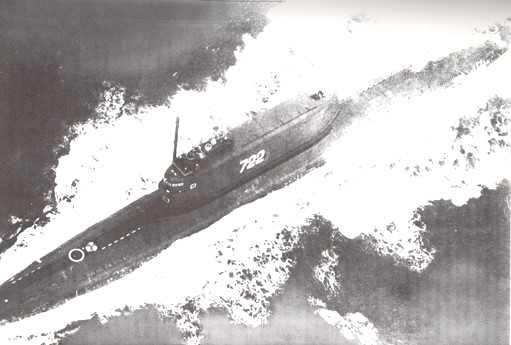
In 1968, a Soviet ballistic missile submarine vanished in the Pacific Ocean after missing its communication check-ins. The Soviet Union deployed massive naval fleets to find it, but eventually gave up. The United States, however, knew exactly where the wreckage lay. What followed was a highly classified, 800 million dollar espionage mission. The CIA built a massive mechanical claw and hired a billionaire to provide a cover story, all to lift a nuclear-armed vessel from the ocean floor under the noses of Soviet spy ships.
Locating the K-129 at the Bottom of the Pacific
The K-129 sank approximately 1,560 miles (2,510 kilometers) northwest of Hawaii. While the Soviet Navy searched the wrong areas, the U.S. Navy used its underwater acoustic surveillance network to pinpoint a sonic anomaly. The USS Halibut, a specially equipped search submarine, located the wreck resting at a depth of 16,000 feet (4,876 meters). Photographs revealed the vessel was largely intact, prompting the CIA to launch Project Azorian to retrieve its nuclear missiles, codebooks, and cryptographic documents.
Howard Hughes and the Deep-Sea Mining Cover Story
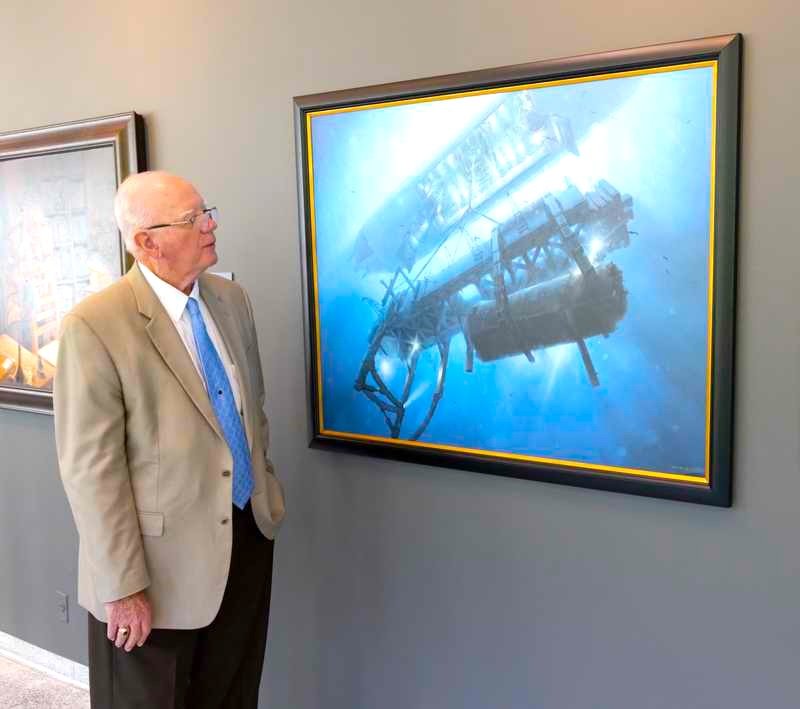
Lifting a 1,750-short-ton (1,587-metric-ton), 132-foot (40.2-meter) submarine required unprecedented engineering. The CIA contracted the construction of the Hughes Glomar Explorer, a 619-foot (188.6-meter) ship built in Pennsylvania. To explain the massive vessel’s presence in the open ocean, the CIA used billionaire Howard Hughes. The official story stated that Hughes was funding an expedition to mine manganese nodules from the seabed. In reality, the ship contained a hidden docking well, called a moon pool, and a giant mechanical claw designed to grasp the K-129.
The 1974 Recovery Mission and the Structural Failure
On July 4, 1974, the Hughes Glomar Explorer arrived at the site. The crew lowered the mechanical claw using sections of 60-foot (18.2-meter) steel pipe. The claw successfully clamped onto the target object. As the crew hauled the submarine upward, several steel claws fractured. A 100-foot (30.4-meter) section of the submarine broke off and plummeted back to the seafloor, while Soviet Navy ships monitored the area from the surface without realizing what was happening below.
The Aftermath and Public Exposure
The CIA managed to pull a 38-foot (11.5-meter) section of the bow into the moon pool. Inside, they found two nuclear torpedoes and the bodies of six Soviet submariners, who were subsequently buried at sea. Before the CIA could mount a second recovery mission, thieves stole classified documents connecting Hughes to the agency. Director of Central Intelligence William Colby attempted to suppress the leaks, but by early 1975, major newspapers published the details of Project Azorian, forcing the White House to abandon future recovery attempts.