

In the freezing early hours of January 5, 1965, a 24-year-old U.S. Army sergeant abandoned his patrol, tied a white t-shirt to his rifle, and walked across the Korean Demilitarized Zone. Terrified of being deployed to the Vietnam War, he planned to claim asylum at the Soviet embassy and secure a prisoner exchange back home.
Instead, his desperate gamble triggered a 40-year nightmare. He would endure torture, undergo operations without anesthesia, marry a kidnapped Japanese student, and become a North Korean propaganda movie star before finally escaping. This is the story of Charles Jenkins.
A Drunken Plan Gone Wrong
After consuming ten beers to build his courage, Jenkins told his squad he heard a noise and slipped into the darkness. His plan failed immediately. The Russians refused him asylum and handed him back to the North Korean government. For years, Jenkins was confined to a one-room house with three other American defectors.
He suffered regular beatings from guards and from a fellow American deserter. The captive men were forced to memorize the writings of Kim Il-sung and subjected to constant surveillance.
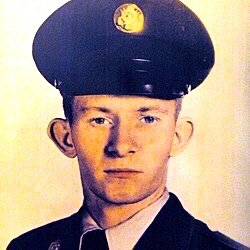
Life, Torture, and an Arranged Marriage
North Korean authorities forced Jenkins to teach English to military spies. In 1980, the government assigned him a wife: Hitomi Soga, a 21-year-old who had been abducted by agents to teach Japanese culture. Married just 38 days after meeting, the couple surprisingly fell in love and had two daughters.
Despite receiving slightly better rations than the local population, Jenkins endured horrific conditions and forced medical procedures, including the removal of an Army tattoo without anesthesia.
The Reluctant Propaganda Movie Star
Jenkins’s appearance caught the attention of state filmmakers. In 1978, he was cast as “Dr. Kelton,” a capitalist villain in the North Korean film series Unsung Heroes. The role made him a celebrity on the streets of Pyongyang, where locals asked him for autographs. This minor fame gave him brief access to Soviet diplomats who secretly passed him outside information, and the films provided the West with the first visual proof that he was still alive.
Court-Martial and a New Life in Japan
A diplomatic breakthrough in 2002 allowed Hitomi Soga to return to Japan. Two years later, Pyongyang permitted Jenkins and his daughters to fly to Indonesia to reunite with her.
On September 11, 2004, Jenkins reported to Camp Zama in Japan, saluting a U.S. officer to face his long-delayed court-martial. He pleaded guilty to desertion, served 25 days in a military brig, and received a dishonorable discharge. Jenkins lived out his days on Japan’s Sado Island, working at a local museum until his death in 2017.