
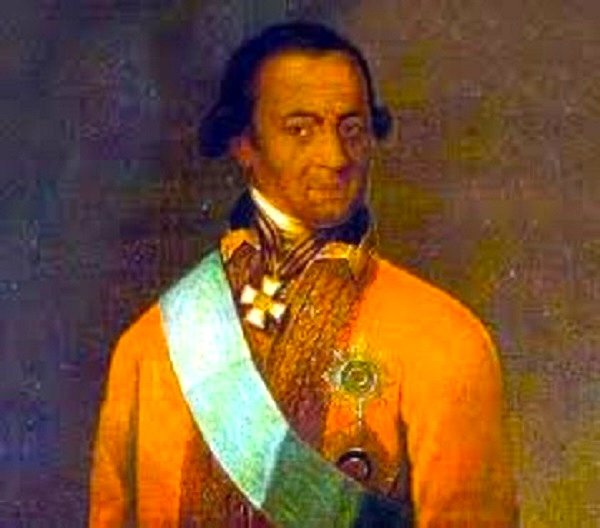
In 1707, a four-year-old boy from West Africa arrived in Europe on a Dutch trading ship and was presented as a gift to a German duke.
Three decades later, that same child was lecturing in philosophy at German universities, mastering six languages, and challenging René Descartes in Latin. Before his life ended back on the coast of Ghana, Anton Wilhelm Amo moved between royal courts, lecture halls, public ridicule, and a Dutch fortress.
From the Gold Coast to a German Palace
Born around 1703 in Axim, in present-day Ghana, Amo belonged to the Nzema people. Around age four, the Dutch West India Company transported him to Amsterdam and presented him to Dukes Augustus William and Ludwig Rudolf of Brunswick-Wolfenbüttel. Whether he was enslaved or sent by a preacher remains unknown. Baptised in 1708 and confirmed in 1721, he was treated as a member of the household by Duke Anthony Ulrich, though records from 1721 and 1725 also list him as a family servant.
Six Languages and a Challenge to Descartes
Amo entered the University of Halle’s Law School in 1727 and completed his preliminary studies in 1729 with a thesis titled On the Rights of Moors in Europe. He then moved to the University of Wittenberg, studying medicine, law, astronomy, theology, and philosophy while mastering English, French, Dutch, Latin, Greek, and German.
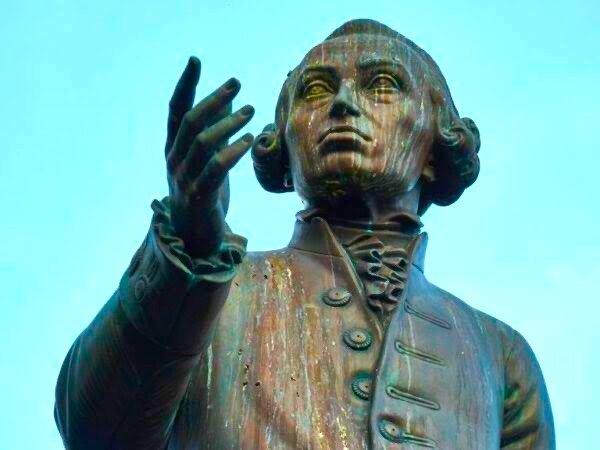
In 1734, he earned his doctorate in philosophy at Wittenberg. In his Latin dissertation, he accepted a dualist split between an immaterial mind and a material body, but broke with Descartes by arguing that only the living, divisible body receives sensations, not the mind itself.
University Lectures and a Public Lampoon
Amo returned to Halle to lecture under the name Antonius Guilielmus Amo Afer, later moving to the University of Jena in 1736 and taking a philosophy post there in 1740. In 1738, he published his 208-page Treatise on the Art of Philosophising Soberly and Accurately.
After his patron, the Duke of Brunswick-Wolfenbüttel, died in 1735, Amo lost his protector as the intellectual climate in Germany grew less liberal. Enemies targeted him, including staging a public lampoon against him at a theatre in Halle.
Return to Ghana and Modern Recognition
Around 1747, Amo sailed back to Ghana on a Dutch West India Company ship, reuniting with his father and sister. According to at least one report, he was later taken to the Dutch Fort San Sebastian in Shama during the 1750s, where he probably died around 1759. Centuries later, Oxford University Press published an English translation of his works in 2020, German museums held two exhibitions on him in 2024, and Berlin renamed Mohrenstraße to Anton-Wilhelm-Amo-Straße in August 2025.