
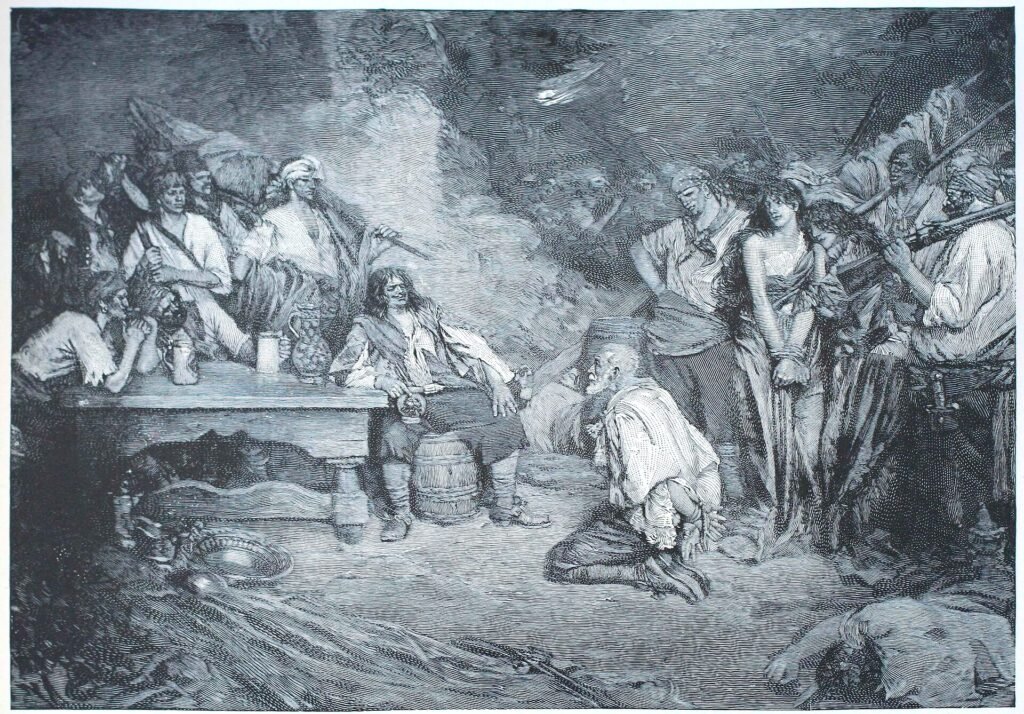
Most seventeenth-century Caribbean pirates died on the gallows or in shallow graves. Henry Morgan took a completely different route.
Born in Wales around 1635, he sailed to the West Indies in the 1650s, plundered Spain’s richest colonial strongholds, sparked a diplomatic crisis, and was arrested by the British Crown. Instead of executing him, King Charles II knighted Morgan and named him Lieutenant Governor of Jamaica.
Early Raids and a Letter of Marque
Little is known about Morgan’s early life in Wales before he reached the Caribbean in the 1650s. By the early 1660s, he sailed with privateers under Sir Christopher Myngs, raiding Spanish ports including Santiago de Cuba and Campeche. That plunder funded Morgan’s purchase of a Jamaican plantation by 1665.
In 1667, Jamaican Governor Sir Thomas Modyford issued Morgan a letter of marque authorizing attacks on Spanish ships. Although land raids were illegal, Morgan attacked coastal towns anyway and claimed Spanish forces were preparing to invade Jamaica.
The Surprise Capture of Porto Bello
In July 1668, Morgan targeted Porto Bello in modern-day Panama, a wealthy silver port guarded by three stone castles. Anchoring before dawn, Morgan sent men ashore in canoes to seize the forts before the garrison could react.
Morgan captured the city while losing just 18 men. After repelling 800 Spanish relief troops, he demanded 100,000 pesos to spare the town. Spain paid, and Morgan sailed back to Jamaica with roughly 250,000 pesos in total loot, exceeding the colony’s annual agricultural output. Modyford publicly criticized the raid while accepting a 10 percent cut.
The Burning of Panama City
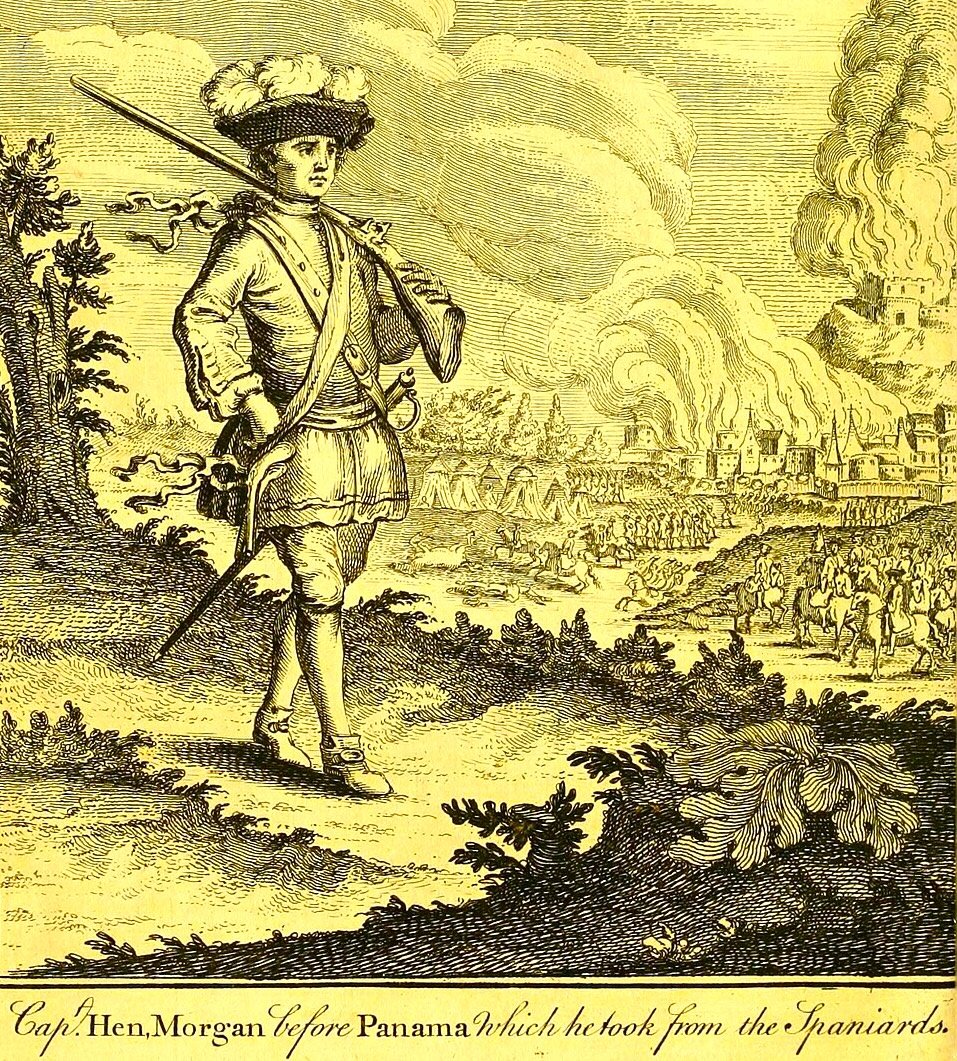
Morgan gathered a larger fleet in 1670 to attack Panama City on the Pacific coast. In January 1671, after marching through jungle terrain, his fighters faced about 1,600 Spanish defenders outside the city. Morgan routed them, killing roughly 400 troops while losing 15 men.
Before Morgan could collect the city’s treasure, Panama’s governor ignited the gunpowder magazines. Fires burned Panama City for days, destroying most of its wealth. Worse, England and Spain had already signed the Treaty of Madrid in July 1670 to end Caribbean fighting.
Arrest, Knighthood, and a State Funeral
King Charles II ordered Modyford and Morgan arrested and brought to London in 1672 to appease Spain. However, Morgan was hugely popular in Britain. In 1674, the king released him, knighted him, and appointed him Lieutenant Governor of Jamaica.
Morgan later lost his post over accusations of funding privateers and spent his final years drinking heavily on his estates. Following his death on August 25, 1688, officials held a state funeral in Port Royal and granted a temporary amnesty so pirates could attend without arrest. Today, his name appears on a well-known brand of spiced rum.