Inside an Austrian castle sits a room filled with mechanical toys, Japanese samurai armor, and a painting of a man who survived a lance driven straight through his head. In the 16th century, Ferdinand II, the Archduke of Austria, amassed a vast collection of bizarre, precious, and unprecedented objects.
To house these oddities, he constructed the Chamber of Art and Curiosities at Ambras Castle in Innsbruck. Preserved in its exact original location, this cabinet of wonders stands as the earliest specially constructed museum building on Earth.
Designing a Custom Exhibition
Between 1572 and 1583, Ferdinand II organized his massive array of worldly items according to a strict, systematic concept. He divided his acquisitions into specific categories: artificial objects, natural wonders, scientific instruments, exotic foreign pieces, and miraculous rarities.
Visitors walking through the displays encountered complex mechanical clocks, intricately carved coral, and a wooden sculpture of Death crafted by Hans Leinberger. Ferdinand also secured rare Asian artifacts, acquiring a Ryukyu bowl and a delicate Chinese silk painting for his custom-built galleries.
The Wonders of Nature Gallery
The archduke dedicated an entire section of his collection to individuals perceived at the time as wonders of nature. The painters of these unique portraits remain anonymous. One canvas depicts Vlad the Impaler, better known as Dracula, painted roughly a century after his rule.
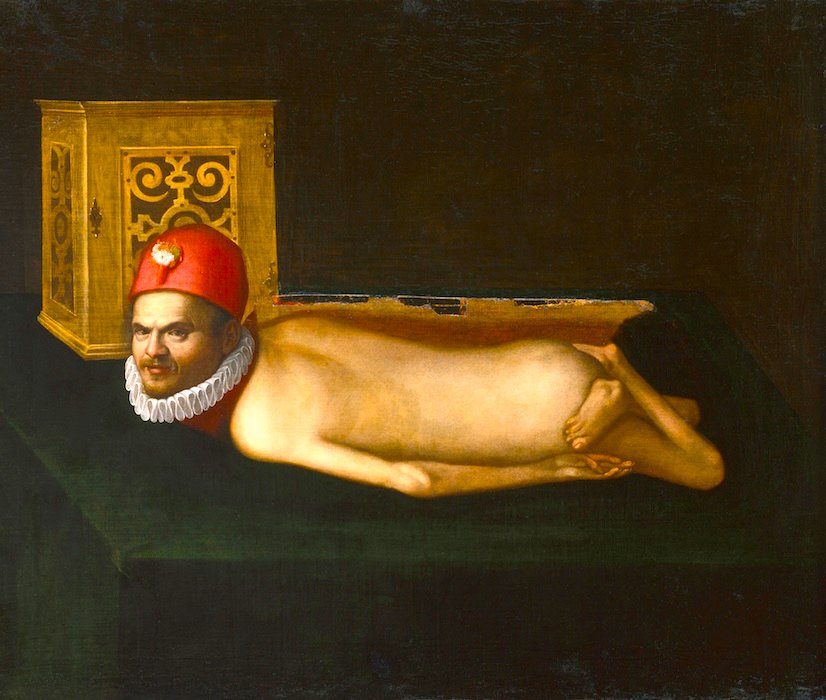
Another striking piece features a 16th-century portrait of a man with withered limbs. In its original display, a sheet of red paper covered the subject’s naked body. Observers had to physically lift the paper to reveal the figure beneath, an interactive feature that shocked early visitors.
The Hussar Pierced by a Lance
Among the unusual medical marvels hangs the portrait of Gregor Baci. The painting displays a Hungarian hussar staring forward with a large wooden lance piercing directly through the right side of his face.
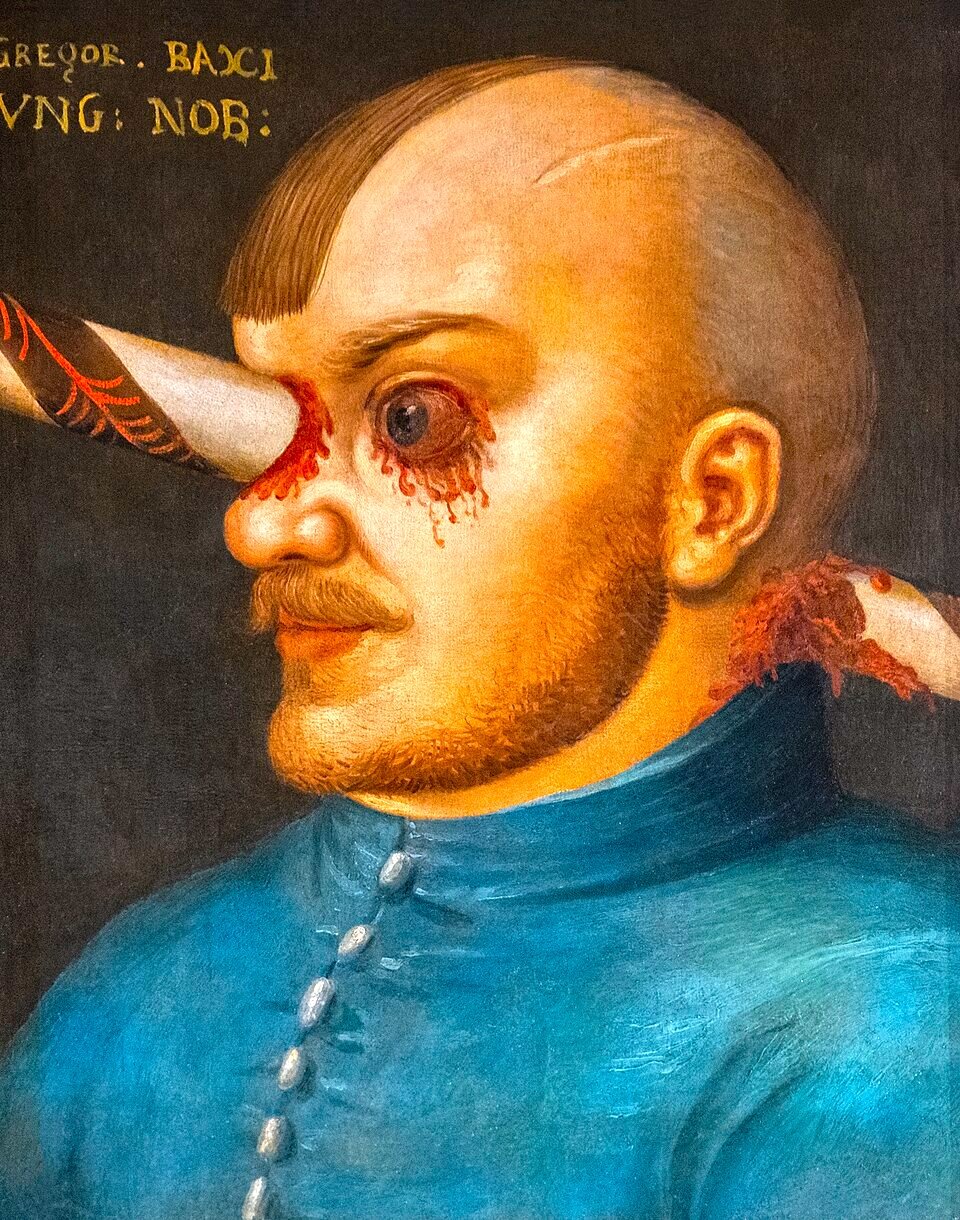
According to historical records, Baci survived this catastrophic head injury, which he likely sustained during a jousting tournament or while fighting the Ottoman Turks. First listed in the museum’s inventory in 1621, the artwork remains a startling focal point of the collection.
The Hairy Family of Tenerife
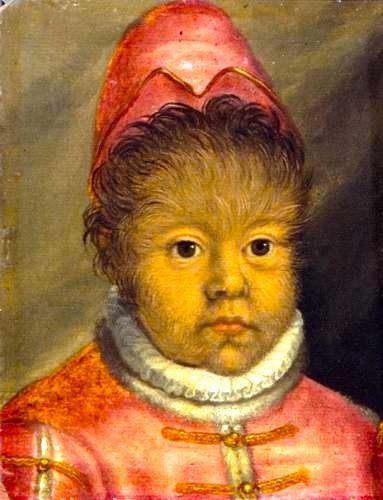
The museum also houses the famous portraits of Petrus Gonsalvus and his children. Born in Tenerife in 1537, Gonsalvus lived with hypertrichosis universalis, an extreme form of hirsutism that covered his face and body in thick hair. He traveled to the court of Henry II of France and later married in the Netherlands, where several of his children inherited the exact same condition.
Because the Gonsalvus family portraits were so prominently displayed in Ferdinand’s Innsbruck galleries, the medical condition was officially named Ambras syndrome in 1933.