
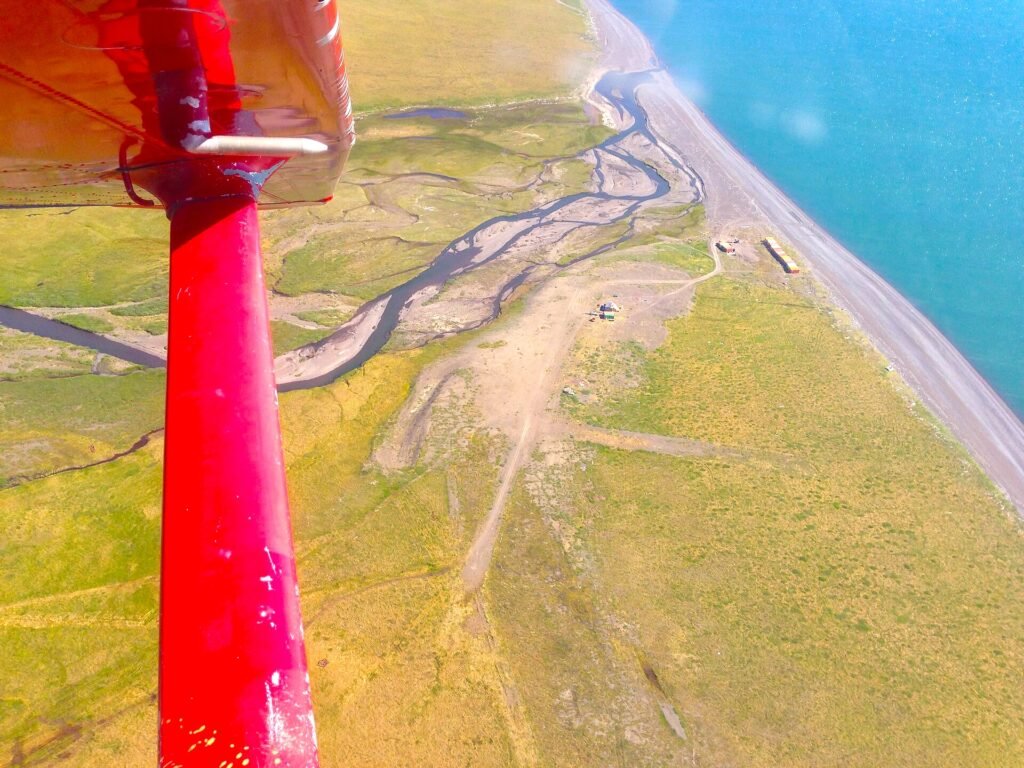
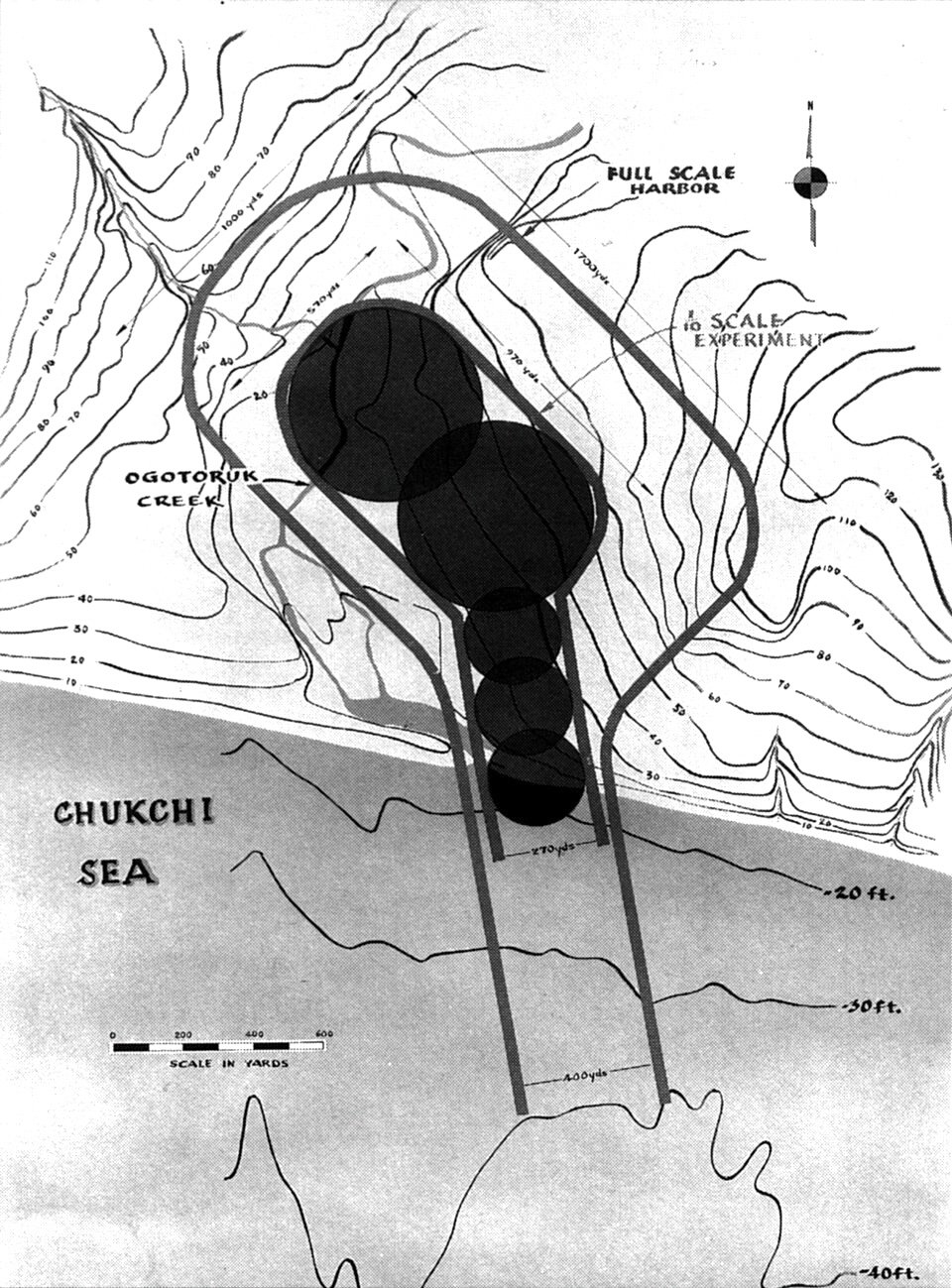
In 1958, just before Alaska became a state, the United States Atomic Energy Commission proposed blasting a deep-water harbor into the Arctic coastline using thermonuclear bombs.
Although massive opposition stopped the explosions from ever happening, federal researchers still secretly dumped radioactive material on the tundra in 1962, leaving hazardous waste unmarked on Indigenous hunting grounds for three decades.
Operation Plowshare and the Plan for Cape Thompson
Project Chariot began as the first major proposal under Operation Plowshare, a federal program launched in 1957 to find industrial uses for nuclear weapons. Nuclear physicist Edward Teller championed the plan, promoting an artificial port at Cape Thompson on the Chukchi Sea.
The initial blueprint called for detonating four 100-kiloton devices to carve a channel and two one-megaton devices for a turning basin. Together, the 2.4-megaton blast would displace 70 million short tons (64 million metric tons) of earth. Officials claimed the harbor would export coal from northern Alaska, even though sea ice blocked the coast nine months every year and no railroad crossed the Brooks Range.
Scientists and Inupiat Villagers Halt the Blasts
Resistance quickly formed among the Inupiat residents of Point Hope, a nearby village that relied on local caribou hunting and whaling. Environmental scientists hired by the Atomic Energy Commission soon backed the villagers’ concerns. Their field studies revealed that Arctic fallout moved rapidly up the food chain from lichen to caribou and directly into humans.
Researchers also warned that nuclear blasts would thaw the permafrost, collapsing the harbor walls. Conservation organizations like the Sierra Club joined the protests, while the Soviet Union objected during nuclear test ban negotiations. In 1962, the government quietly placed Project Chariot in abeyance without ever formally canceling it.
Secret Radioactive Experiments on the Arctic Tundra
Even without the detonations, federal scientists carried out contamination experiments at Cape Thompson in August 1962, roughly 25 miles (40 kilometers) south of Point Hope.
Researchers brought radioactive ejecta from a Nevada nuclear test and laboratory-produced radionuclides to study how rain washed fallout off tundra plants. Because frozen ground prevented deep burial, crews heaped the radioactive waste into an unmarked mound measuring 400 square feet (37 square meters) and 4 feet (120 centimeters) tall.
Archival Discovery and Decades of Cleanup
The burial site remained hidden until the early 1990s, when University of Alaska researcher Dan O’Neill uncovered records of the disposal in government archives. State investigators visited Cape Thompson and detected radioactivity 2 feet (60 centimeters) beneath the mound’s surface.
Point Hope residents, who experienced unusually high rates of cancer deaths, demanded action. In 1993, the federal government excavated and removed the contaminated soil at its own expense. Final environmental work concluded in 2014 with the cleanup of five early-1960s boreholes that had leaked refrigerated diesel fuel into the surrounding ground.