

Between the 15th and 17th centuries, a highly unusual psychiatric disorder emerged among the wealthy and educated classes of Europe. Noblemen, scholars, and monarchs began to express an overwhelming fear that their bodies were made entirely of glass. Terrified that a sudden movement or a light touch would cause them to shatter into jagged pieces, these individuals took extreme measures to protect their fragile forms. The glass delusion became a well-documented phenomenon in historical medical records.
The Shattered Reality of King Charles VI
One of the earliest cases was King Charles VI of France, who was afflicted by the condition during his twenties. He developed a severe fear causing him to believe his body was composed of delicate glass. To prevent himself from breaking, the monarch refused to let his advisors come near him. He commanded his tailors to sew rigid iron rods into his clothing to reinforce his frame. Charles had previously survived the traumatic event of the Bal des ardents, where the costumes of his dance companions caught fire.
A Piano Swallowed by Princess Alexandra
The condition was not limited to medieval rulers. Princess Alexandra of Bavaria experienced a highly specific variation of the glass delusion. She was absolutely convinced that, as a child, she had swallowed a full-sized glass piano. The princess lived with the conviction that the object remained intact inside her body from that point on. She moved with extreme caution, constantly fearful that any abrupt movement or collision would cause the internal instrument to shatter and puncture her vital organs.
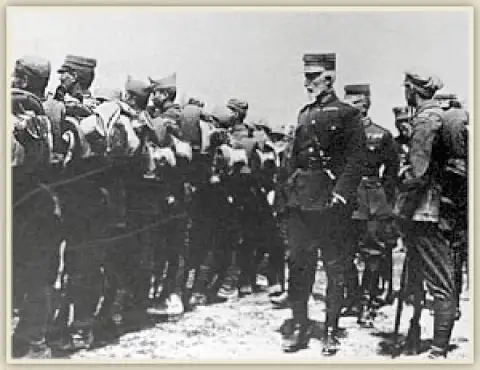
The Glass Commander on the Battlefield
The delusion also impacted major historical events in the 20th century. Georgios Hatzianestis, a Greek military officer, served as the commander of the Army of Asia Minor during the Greco-Turkish War in 1922. He failed to adequately respond to the critical Great Offensive because he believed his legs were made of glass and would shatter if he attempted to move. For this operational failure, he was tried as an anti-Venizelist and was executed for high treason.
Novel Materials and Copycat Clusters
Historians note that the phenomenon frequently targeted materials regarded as valuable, novel, or luxury commodities in early modern Europe. Historian Edward Shorter states that the unconscious mind has historically attached its delusions to new technological advances of the age. The disorder also spread by social contagion, clustering heavily among literate men such as scholars, nobles, and physicians who regularly read contemporary medical literature and historical accounts of the condition.