
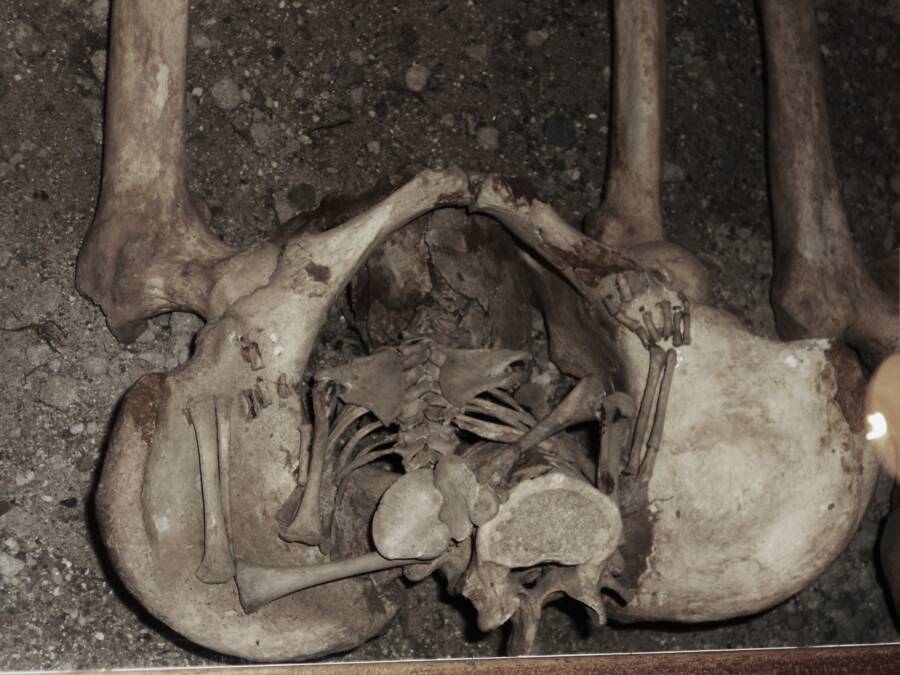
Medical history contains rare accounts of a phenomenon known as coffin birth, or postmortem fetal extrusion. This natural event involves the unexpected expulsion of a nonviable fetus from the body of a deceased pregnant woman.
Driven entirely by the biological forces of decomposition, the process has puzzled observers from the medieval era to modern forensic scientists. By examining historical records, chemical mechanics, and real-world autopsy data, researchers have mapped exactly how this extraordinary event occurs without any human intervention.
The Biology of Postmortem Pressure
The mechanism behind this phenomenon relies entirely on natural decomposition. Following death, anaerobic bacteria within the gastrointestinal tract multiply rapidly, consuming tissues and producing metabolic gases such as methane, carbon dioxide, and hydrogen sulfide. Between two to five days after death, depending on temperature and humidity, these expanding gases cause the torso and limbs to bloat.
This immense intra-abdominal pressure builds up inside the cavity until it forces internal fluids and organs toward any available exit. Eventually, the pressure squeezes the uterus, forcing it to turn inside out and pass through the vaginal opening. If a fetus is present, this specific inversion pushes the fetus out of the body in a way that physically mimics live childbirth.
From the Inquisition to Modern Forensic Science
Documented cases span centuries, with one of the earliest official entries occurring in 1551. A pregnant woman was executed by hanging during the Spanish Inquisition, and observers documented two infants falling from her body four hours postmortem. In 1633, a deceased woman in Brussels spontaneously expelled a fetus three days after her death. Today, modern chemical embalming processes replace natural fluids and eliminate gas-producing bacteria, making the event exceptionally rare.
However, it still occurs when a body remains undiscovered. In 2005, medical examiners in Hamburg, Germany, discovered an eight-month pregnant woman who had succumbed to an overdose, capturing a case of postmortem extrusion directly in progress. Another instance occurred during the 2018 Watts family homicide investigation, where a deceased woman buried in a shallow grave expelled a 15-week-old fetus.
Uncovering Historical Anomalies
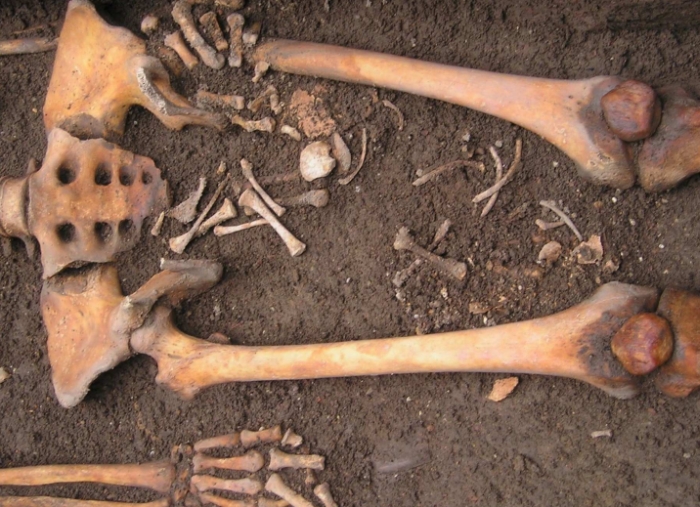
Bioarchaeologists look for highly specific skeletal arrangements to identify this phenomenon in ancient burial grounds. For a true diagnosis, the complete fetal remains must lie entirely outside the pelvic outlet, positioned in-line with the birth canal, with the skull facing the opposite direction of the mother. Excavations have revealed several verified instances across Europe.
In 1975, archeologists excavating a medieval cemetery in Kings Worthy, England, uncovered a young female skeleton with a fetal cranium resting directly between her femora, or thigh bones. Similar skeletal configurations have been documented at a Neolithic site in Germany, a fourteenth-century Black Death cemetery in Genoa, Italy, and a Roman-era site near Baldock, Hertfordshire. These precise physical configurations allow scientists to track historical maternal mortality data without confusing the event with separate post-burial traditions.