
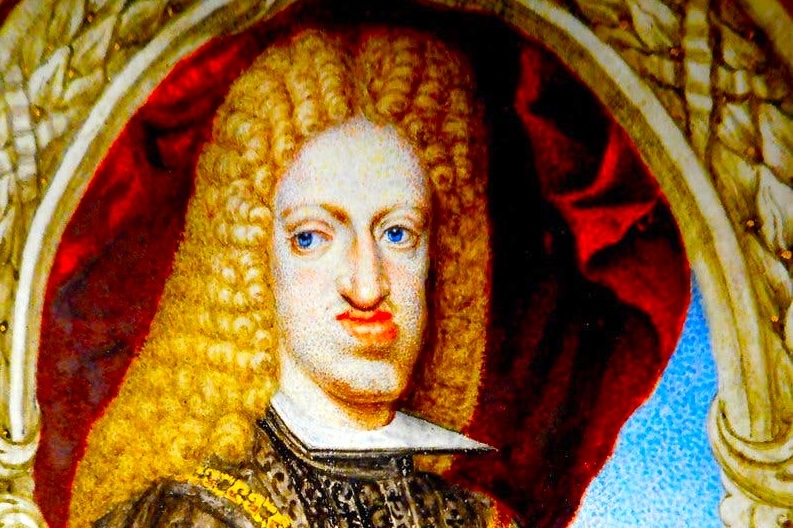
In November 1661, the birth of Charles II marked the arrival of the last Habsburg monarch to rule the Spanish Empire. From his earliest days, European diplomats anticipated his demise due to his profound health struggles, with observers noting that the continent spent his entire life waiting for his death.
His eventual passing without an heir in 1700 triggered the War of the Spanish Succession. Despite historical characterizations of total incompetence, contemporary records show a complex administration shaped by severe physical challenges, rigorous tutoring, and sweeping financial changes.
Family Intermarriage and Physical Challenges
Charles was the son of Philip IV and Mariana of Austria, an uncle and niece union that reflected generations of extensive inbreeding within the Habsburg dynasty. This practice accentuated distinct physical traits, notably a pronounced lower jaw that prevented him from thoroughly chewing his food, leading to chronic digestive problems.
He suffered from rickets as a child, which delayed his ability to walk unaided until the age of four and required leg braces until he turned five. He also survived early encounters with potentially fatal diseases, including smallpox, measles, chickenpox, and rubella.
The Reality of Royal Education and Daily Life
Historical accounts claiming Charles remained entirely uneducated throughout his youth are contradicted by royal records. At age six, the university legal expert Ramos del Manzano became his tutor, followed later by specialized instructors in music and mathematics.
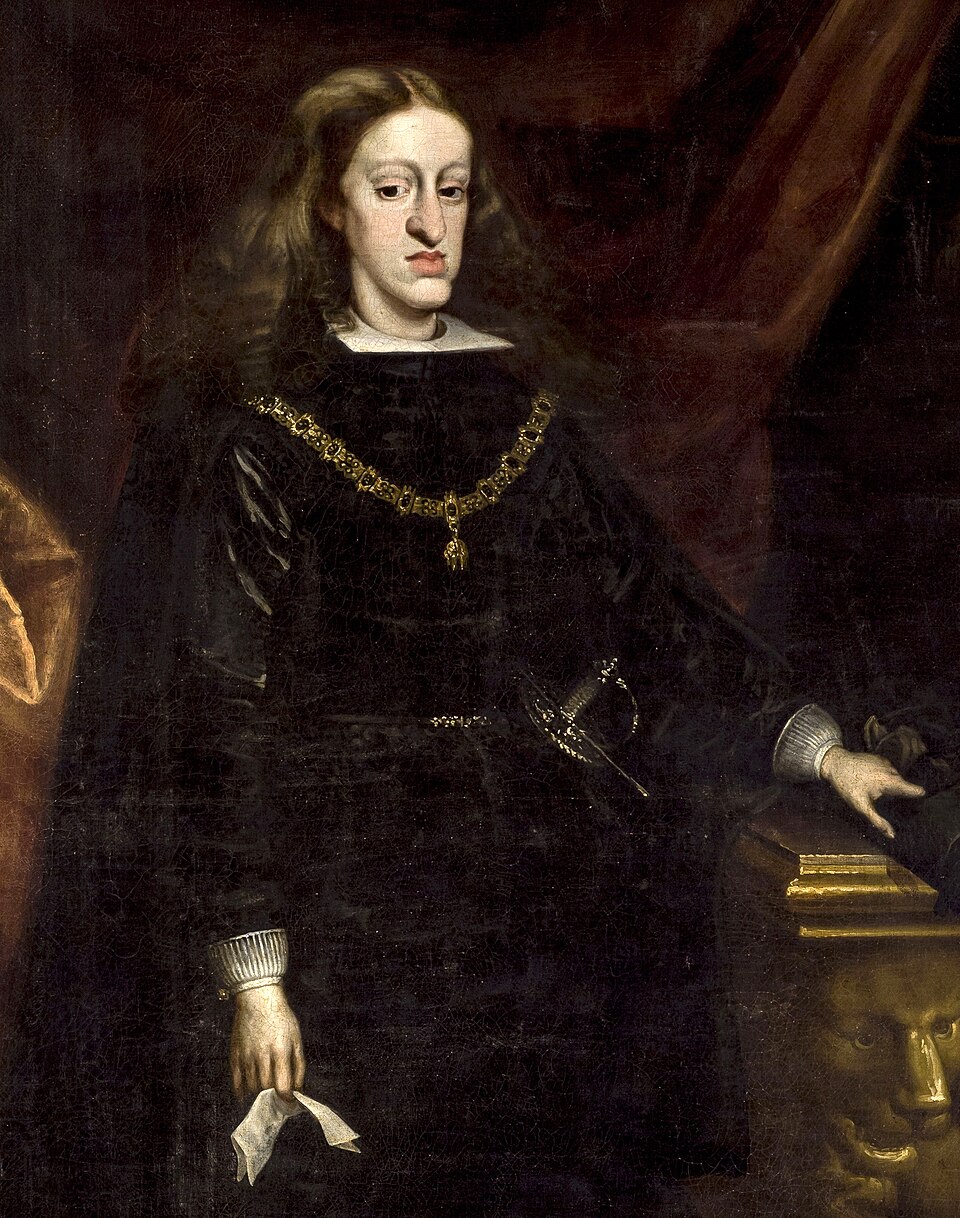
While prone to periods of illness and depression, foreign diplomats noted his mind remained intact during state audiences. He maintained an active physical routine centered on hunting. To address his infertility, doctors ordered him to sleep alongside his father’s disinterred remains, a contemporary medical recommendation aimed at securing the succession.
Economic Trials and Strict Monetary Reforms
The global empire faced severe demographic and financial pressure during his reign, with the population of Castile dropping significantly. Public funds remained in a state of crisis, heavily drained by ongoing conflicts with France and the necessity of paying foreign creditors.
In the 1680s, royal advisors implemented drastic deflationary decrees that instantly revalued the currency to 25% of its previous worth. Though this policy initially disrupted domestic trade and shattered financial credit, the government adjusted the rate in 1686, successfully stabilizing the Spanish coinage for the remainder of his rule.
The Final Days and an Extraordinary Autopsy
Charles married twice, first to Marie Louise of Orléans and later to Maria Anna of Neuburg, but neither union produced children. By late September 1700, the king became too ill to eat and altered his will to name the 16-year-old Philip of Anjou as his successor.
Charles died on November 1, 1700, at the age of 38. The subsequent official autopsy reported a series of structural anomalies, listing a heart the size of a peppercorn, corroded lungs, gangrenous intestines, a single atrophied testicle, and a skull cavity filled with water, a condition modern researchers link to childhood hydrocephalus.