
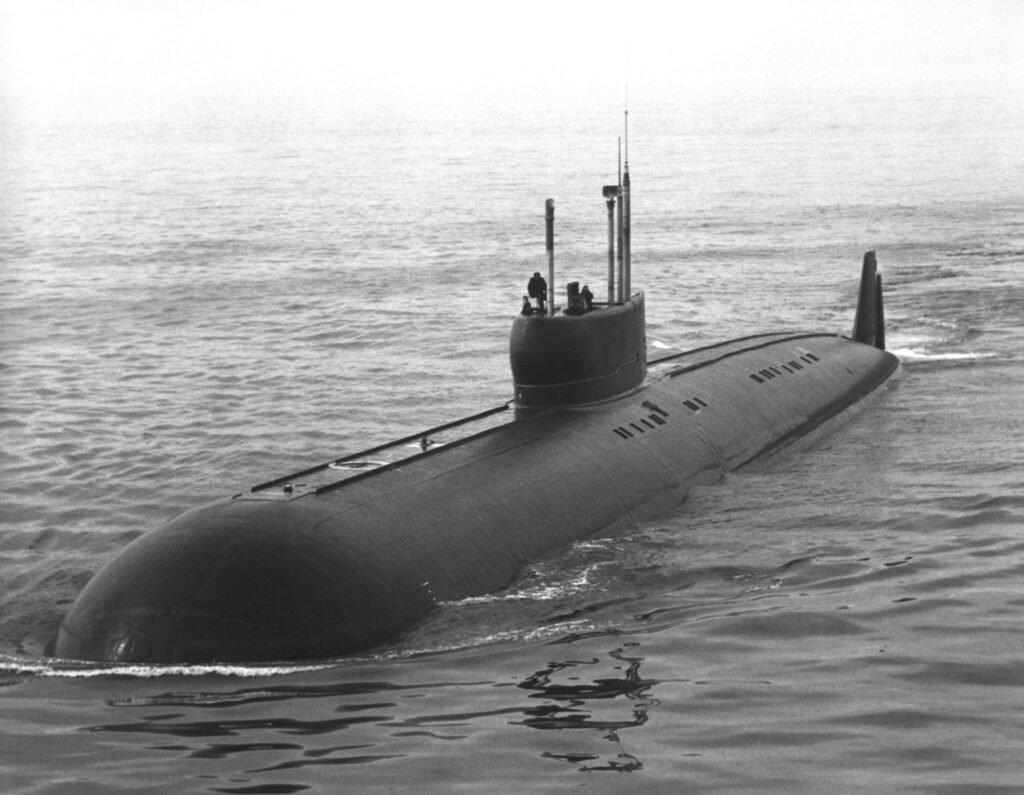
The vessel was discovered a mere ten kilometers from a highly classified Swedish naval base. The Soviet military claimed severe navigation failures and distress had led the vessel off course.
The situation escalated dramatically when Swedish officials secretly detected radioactive signatures aboard, strongly suggesting the grounded vessel carried nuclear weapons. While the submarine eventually returned to international waters, the incident permanently altered Sweden’s defense posture and launched a decade-long military pursuit driven by underwater acoustics.
The Hunt for the Bacon Sound
Finding a silent, submerged submarine is incredibly difficult. Because sound travels four to five times faster in water than in air, the Swedish navy deployed highly sensitive underwater microphones called hydrophones. Over the following decade, these hydrophones repeatedly picked up distinct noises deep within the Swedish archipelago.
The military categorized two distinct underwater acoustic signatures indicating a Russian incursion. The first was a cavitation noise resembling a propeller churning water. The second, labeled the “typical sound,” was a crackling noise that resembled frying bacon.
Every time the typical sound hit the hydrophones, the Swedish navy deployed ships, dropped depth charges, and initiated massive hunts. Each time, they found absolutely nothing except some bubbles on the surface of the ocean. By 1994, diplomatic relations frayed as the Swedish Prime Minister demanded Russian President Boris Yeltsin stop infiltrating Swedish waters. Yeltsin firmly denied the accusations.
Bringing in Civilian Ears
Desperate for answers, the Swedish military took an unprecedented step in 1996 and invited civilian bio-acousticians Magnus Wahlberg and Håkan Westerberg into a classified bunker in Stockholm. The military played the recordings of the “typical sound.” Wahlberg realized the crackling noise did not match the mechanical hum of a propeller, but rather the sound of small air bubbles releasing underwater.
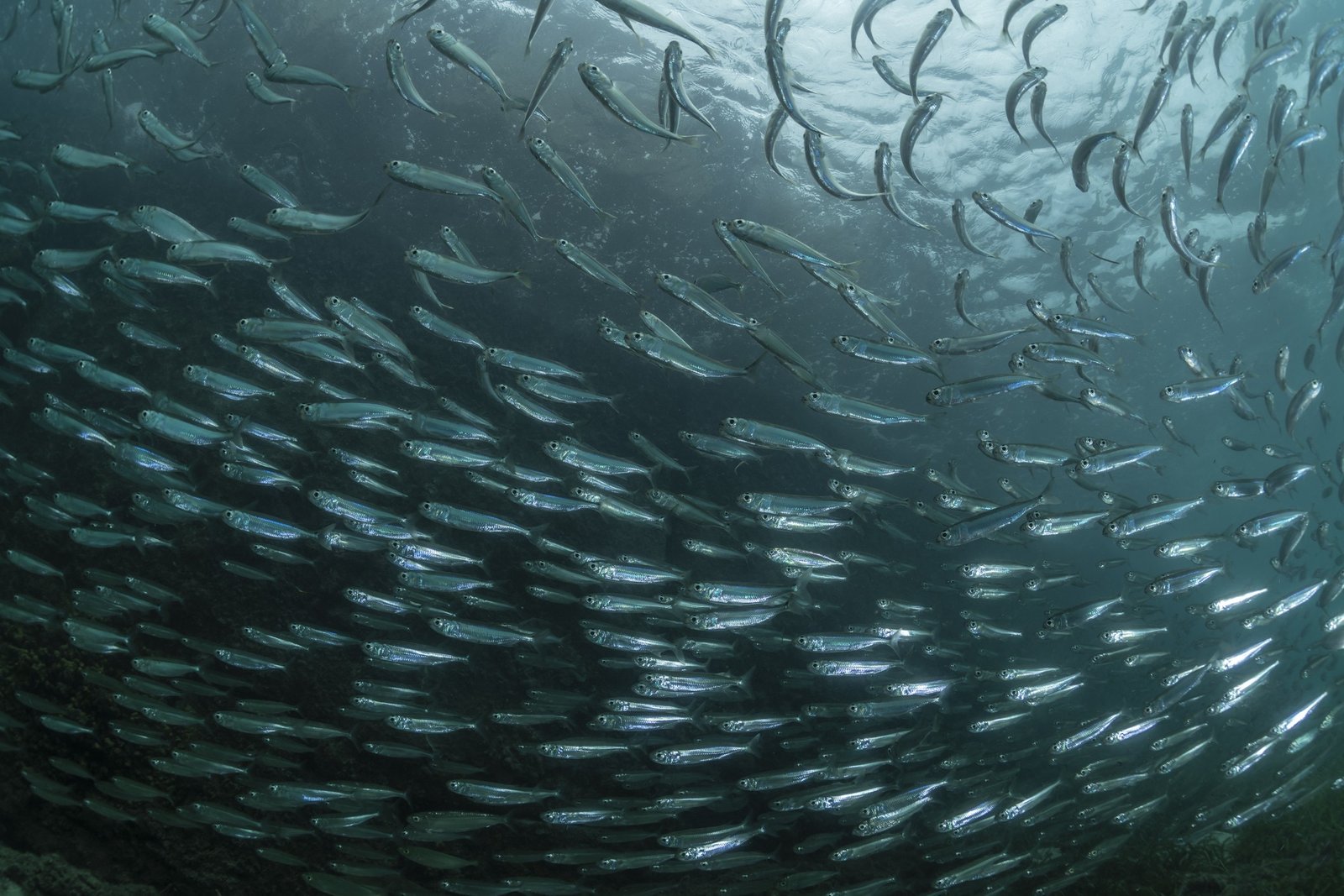
The scientists decided to test an unconventional theory. They visited a local fishmonger, purchased a common herring, submerged it in water with a hydrophone, and squeezed it. The exact crackling noise that had terrified the Swedish navy for fifteen years emerged from the rear end of the fish.
Fast Repetitive Ticks
Later research in 2004 fully explained the phenomenon. Atlantic and Pacific herring possess a unique anatomical structure where their swim bladder connects directly to their anal duct. By squeezing the swim bladder, the herring expels bursts of air bubbles. Scientists officially named this biological acoustic function Fast Repetitive Ticks (FRTs).
The research proved the FRTs are not a digestive byproduct, nor are they used for buoyancy regulation, stress signaling, or mating. Because herring have exceptional hearing, they use these high-frequency bursts for social contact to maintain massive school cohesion in total darkness. The Swedish military had spent more than a decade deploying depth charges against massive schools of socially communicating fish.