
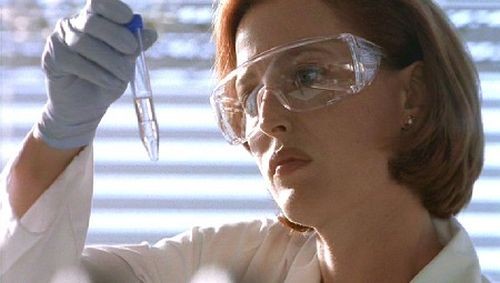
A fictional FBI agent flashed her badge on television screens in 1993 and subsequently caused a measurable shift in the demographics of real-world scientific laboratories. When the Fox network broadcast the premiere of “The X-Files,” it introduced Dr. Dana Scully, a medical doctor and forensic pathologist operating in a male-dominated government agency.
Over the next two decades, this specific television character directly influenced thousands of women to enter science, technology, engineering, and mathematics (STEM) careers, creating a sociological phenomenon that researchers later quantified and officially named.
A Medical Doctor on Prime Time
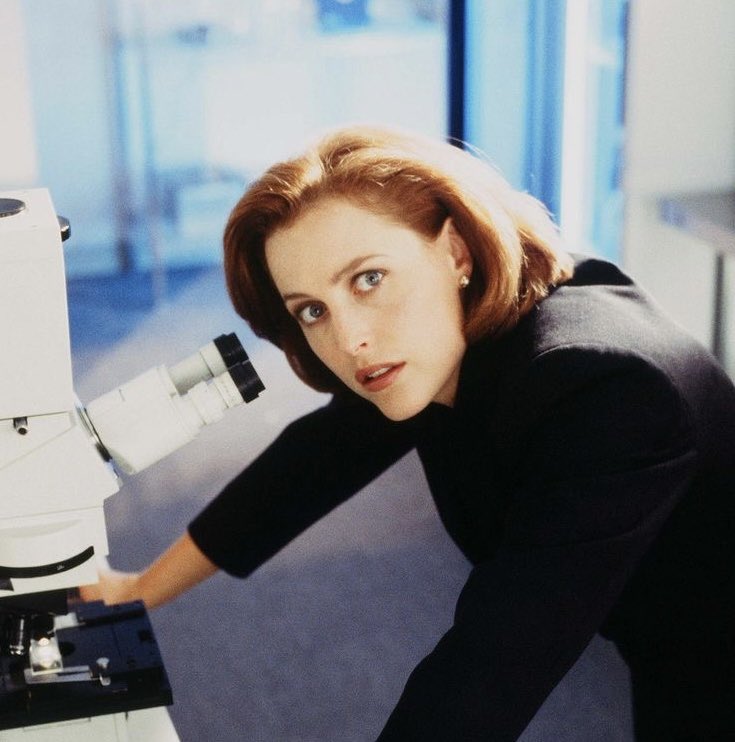
In September 1993, the first episode of the science fiction series aired. The show featured Fox Mulder, a believer in the paranormal, and his partner, Dana Scully. Portrayed by actress Gillian Anderson, Scully was a strict skeptic who relied entirely on the scientific method, physics, and empirical data to solve complex criminal cases.
At the time, network television rarely depicted women as the primary scientific authority figures. She wore lab coats, conducted detailed autopsies, and handled heavy field equipment, sometimes carrying gear weighing over 15 pounds (6.8 kilograms), to uncover biological facts.
The 2018 Geena Davis Institute Study
For years, anecdotal reports suggested that the character influenced the career choices of female viewers. In 2018, the Geena Davis Institute on Gender in Media, alongside 21st Century Fox and J. Walter Thompson Intelligence, launched a formal academic study to investigate the exact statistical impact.
The research team surveyed a sample group of 2,021 female participants aged 25 and older across the United States. The researchers designed specific questions to measure exactly how television representation correlated with real-world professional trajectories over a distance of several decades.
The Statistical Proof of the Phenomenon
The published results of the survey confirmed the existence of the “Scully Effect.” According to the data gathered by the institute, 63 percent of the surveyed women working in STEM fields stated that Dana Scully served as their direct professional role model.
Furthermore, 50 percent of the women familiar with the character reported that she significantly increased their interest in science and medicine. The study also revealed that women who regularly watched the show were 43 percent more likely to consider majoring in a STEM subject during their university education.
Changing the Demographics of Laboratories
Prior to the 1990s, women occupied a much smaller percentage of roles in scientific research, forensic investigation, and engineering. Throughout the initial nine-season run of the series, university enrollment in forensic science programs and medical schools experienced a massive demographic shift.
The researchers concluded that the consistent weekly depiction of a capable, rational female scientist on a highly-rated, globally distributed broadcast directly correlated with a massive influx of women pursuing professional degrees. This data officially measured the exact influence of a fictional media property on real-world scientific employment.