
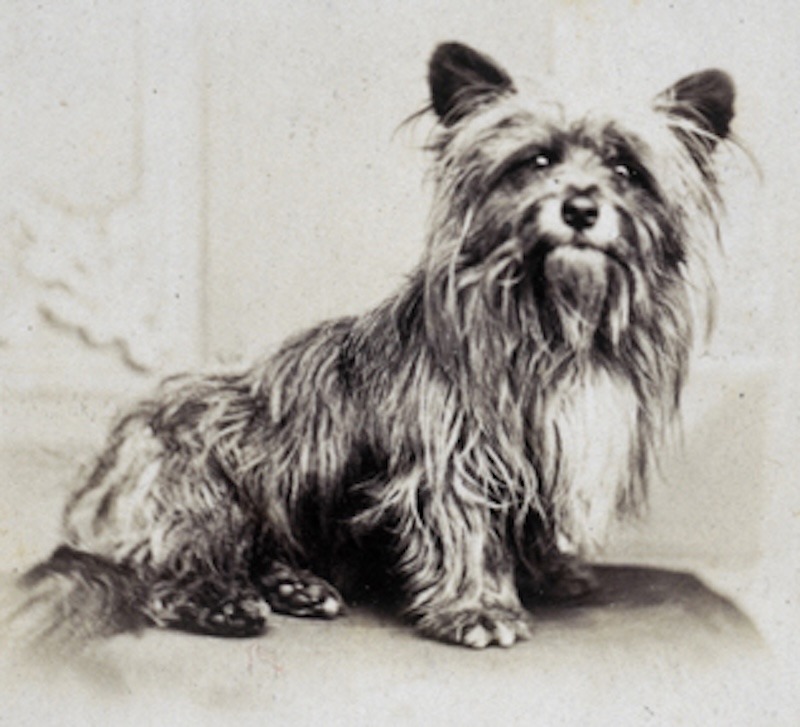
In the mid-1850s, a police nightwatchman in Edinburgh acquired a small terrier to accompany him on his shifts. This pairing led to one of the most widely documented animal accounts in Scottish history. Following the watchman’s death, the dog guarded his grave every single day for the next 14 years.
The animal survived freezing weather and strict city laws, eventually gaining the protection of the Lord Provost. The details of this long watch involve a daily one-o-clock cannon, a local coffee house, and a granite statue that still stands today.
John Gray and Greyfriars Bobby
John Gray moved to Edinburgh in 1850 with his family. To avoid the workhouse, he joined the Edinburgh City Police as a nightwatchman. Regulations required policemen to keep watchdogs during their shifts. Gray chose a small Skye Terrier or Dandie Dinmont Terrier named Bobby.
The two patrolled the city streets together for years. In February 1858, Gray died of tuberculosis. The city buried him in a standard grave, approximately 6 feet (1.82 meters) long, in Greyfriars Kirkyard, a historic churchyard in the Old Town. From that day forward, Bobby refused to leave the gravesite. He sat by the headstone day and night.
Greyfriars Kirkyard Daily Routine
The terrier maintained a strict daily schedule. He only left the grave once a day to eat. In 1861, a soldier named Sergeant Scott purportedly befriended Bobby and trained him to leave the cemetery at the exact moment the one-o-clock gun fired from Edinburgh Castle.
Bobby would run to a nearby location for his daily meal. According to the traditional account, he ate at Traill’s Temperance Coffee House. The kirkyard watchmen initially tried to evict the dog, but they eventually built a small shelter to protect him from the weather.
Stray Dog Protection in Edinburgh
In 1867, a new local by-law mandated that all stray dogs without licenses must be destroyed. Bobby faced imminent danger, but the Lord Provost of Edinburgh, Sir William Chambers, intervened. Chambers paid the licensing fee himself and gave Bobby a collar bearing an inscription that read, “Greyfriars Bobby from the Lord Provost, 1867, licensed”.
The dog lived out the rest of his days at the kirkyard. When he died in January 1872 at the age of 16, he was buried just inside the gates, a short distance from his master.
The Greyfriars Bobby Historical Debate
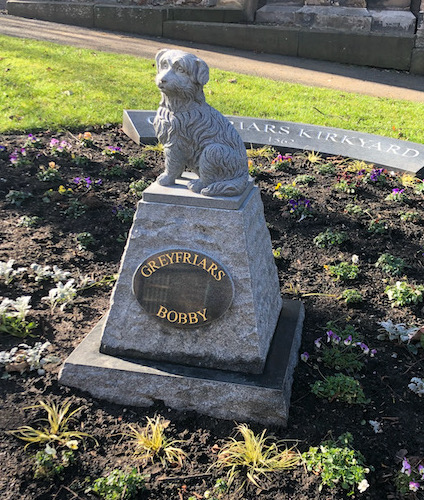
A year after Bobby died, Baroness Angela Georgina Burdett-Coutts funded a granite statue and drinking fountain near the kirkyard. While the narrative is widely accepted, some historians dispute the details. Author Jan Bondeson suggests that stray graveyard dogs were common in 19th-century Europe and that the original Bobby may have died in 1867 and been replaced by a younger animal.
Others debate whether the owner was John Gray the nightwatchman or a local farmer. Regardless of the disputes, the original licensed collar remains on public display in the Museum of Edinburgh.