
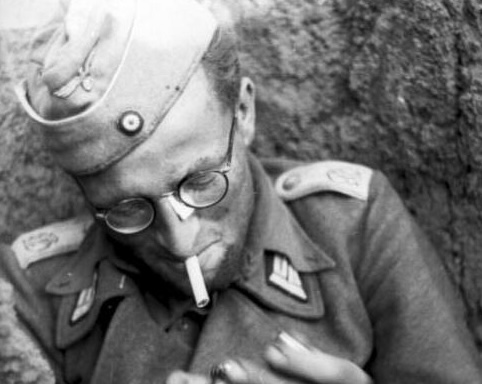
In the 1930s, the German government launched the most aggressive anti-smoking campaign in the entire world. Long before modern health organizations began fighting tobacco consumption, state-sponsored researchers in Germany were actively identifying the physiological dangers of nicotine.
The widespread movement initiated strict bans in public spaces, heavily restricted tobacco advertising, and intensely discouraged women from smoking. The resulting medical research was the most advanced of its time. Yet, the ambitious campaign ultimately failed to curb the nation’s growing nicotine habit.
Pioneering Medical Discoveries
During the early 20th century, German medical researchers made significant breakthroughs regarding the health effects of tobacco. A physician named Fritz Lickint formally coined the term “passive smoking” and published extensive studies directly linking cigarettes to airway cancers.
In 1939, Lickint released a massive medical book spanning over 1,200 pages that categorized nicotine as a severe addiction akin to alcoholism. The state funded various epidemiological studies and established the Scientific Institute for the Research into the Hazards of Tobacco at the University of Jena, which was headed by Karl Astel.
Public Bans and Tobacco Rations
Government officials introduced strict public regulations to protect non-smokers from secondhand smoke. Smoking was completely outlawed on trams, buses, and city trains across dozens of German cities. Midwives were strictly forbidden to smoke while on duty, and tobacco use was banned in many bomb shelters.
During World War II, women under the age of 25, women over the age of 55, and pregnant women were denied tobacco ration cards entirely. The military also attempted to restrict smoking among enlisted soldiers, strictly limiting their daily cigarette rations and organizing mandatory medical lectures on the dangers of tobacco.
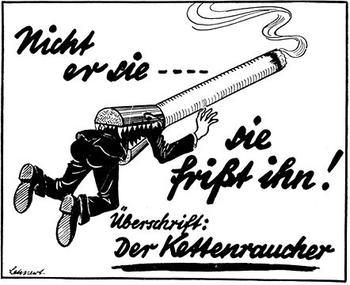
Adolf Hitler’s Personal Opposition
Adolf Hitler possessed a strong personal distaste for tobacco. He actively encouraged his close associates to quit the habit, even offering a solid gold watch as a reward to anyone in his inner circle who successfully gave up cigarettes.
He frequently complained about the massive financial cost of smoking and the physical toll it took on the military personnel. However, his personal aversion did not translate into a unified or entirely effective national policy across the government.
The Increase in Tobacco Consumption
Despite the extensive public health campaigns and advertising restrictions, the anti-smoking movement was largely ineffective at reducing actual tobacco use. High-ranking officials like Hermann Göring, Joseph Goebbels, and Eva Braun continued to smoke publicly. Furthermore, the paramilitary Sturmabteilung actually funded its operations through royalties from its very own cigarette company.
Consequently, annual cigarette consumption per capita in Germany essentially doubled between 1930 and 1940, reaching an estimated 1.02 kilograms (2.25 pounds) of tobacco per person. By 1941, the propaganda ministry officially ordered a halt to most public anti-tobacco campaigns.