
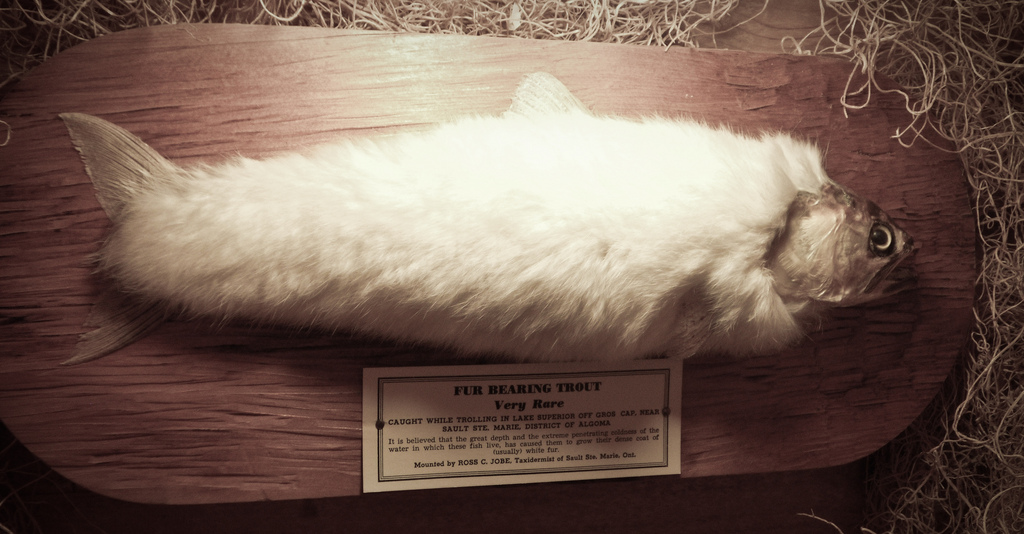
Rumors of an impossible fish with a thick coat of white animal hair swimming in freezing North American waters circulated widely during the early 20th century. Anglers and travelers shared detailed accounts of catching the elusive fur-bearing trout.
While the creature itself was a manufactured hoax, the origins of this elaborate deception trace back to a combination of clever taxidermy, tall tales, and a very real biological infection that visually transforms aquatic life.
The Spilled Hair Tonic and Freezing Waters
The stories surrounding the origins of the hairy fish varied heavily by region. One prominent narrative claimed that two jugs of hair tonic were accidentally spilled into the Arkansas River during the 1870s. According to the tale, the local fish absorbed the liquid and subsequently sprouted thick layers of fur.
Another widespread explanation stated that the extreme temperatures of northern bodies of water caused the native trout to adapt physically. Promoters of the hoax claimed the fish grew dense coats of white hair to maintain their body heat in the freezing environments.
Manufacturing the Hairy Fish
The legend gained physical evidence in the 1930s when taxidermist Ross C. Newman began creating and selling actual mounts of the creature. He achieved this by carefully wrapping preserved trout in white rabbit fur. These mounted specimens appeared in shop windows and on tourist postcards, convincing many people of their existence.
The first known published account of the creature appeared earlier in a 1929 issue of Montana Wildlife magazine. An author named J.H. Hockenberry wrote a detailed piece describing the capture of a furry fish, lending printed authority to the growing rumors.
The Water Mold Infection
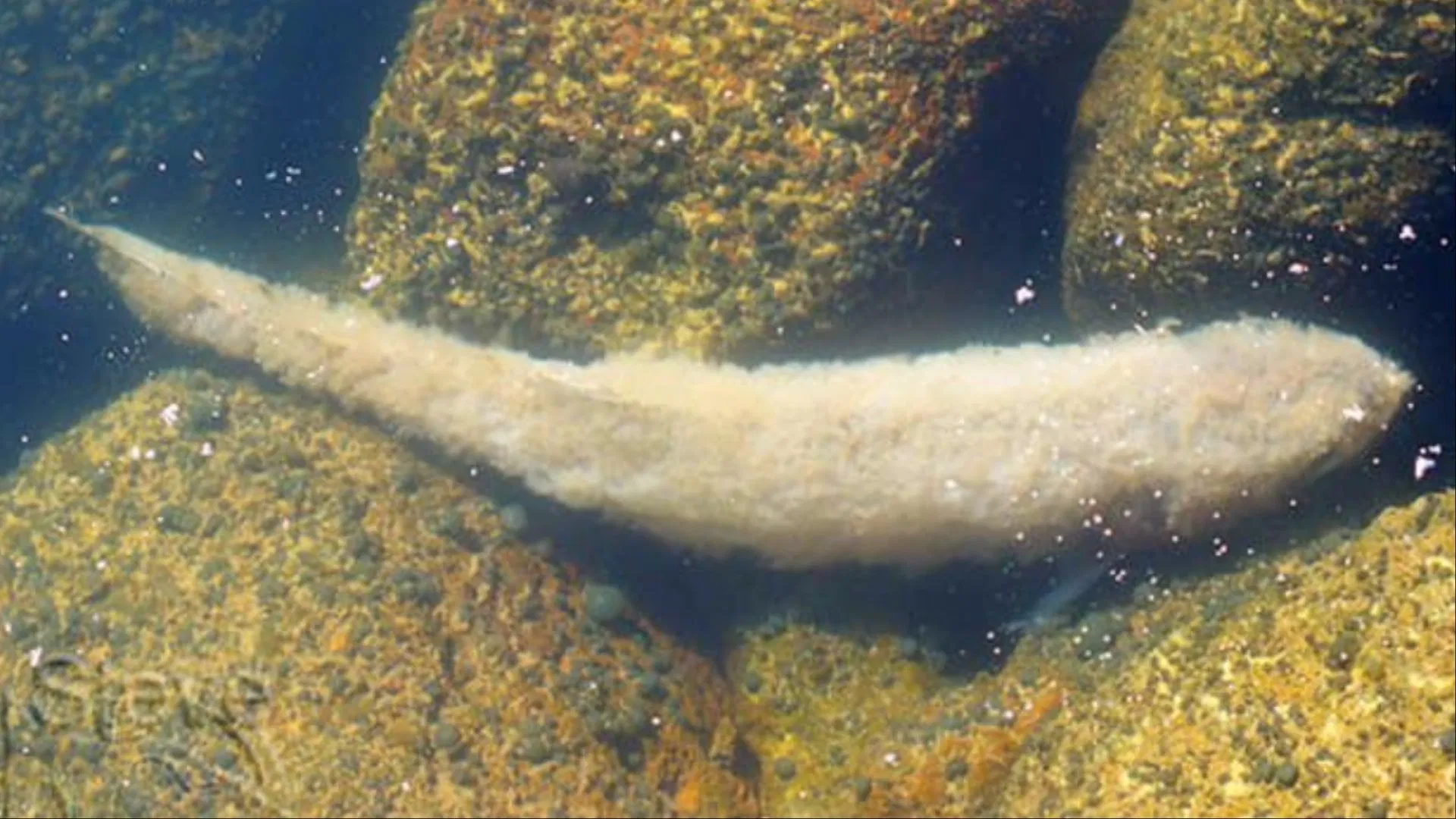
The visual inspiration for the hoax comes from a genuine natural phenomenon. Fish in freshwater environments can contract an infection called Saprolegnia. This is a type of water mold that attacks fish that are already weakened by injury, poor water quality, or sudden temperature drops.
As the Saprolegnia mold takes hold, it spreads across the scales of the fish. The physical manifestation of this fungal infection appears as dense, white, cotton-like tufts that closely resemble a layer of wet animal fur.
Washing Ashore with False Fur
The Saprolegnia mold aggressively consumes the external tissue of the infected fish. The fish eventually dies from the spreading infection. Even after the host perishes, the water mold continues to grow and expand over the carcass.
When these deceased, mold-covered fish washed up on riverbanks and lake shores, early explorers and fishermen found them. Discovering these white, fuzzy carcasses in the wild provided the factual visual basis that ultimately inspired the taxidermy hoax.