
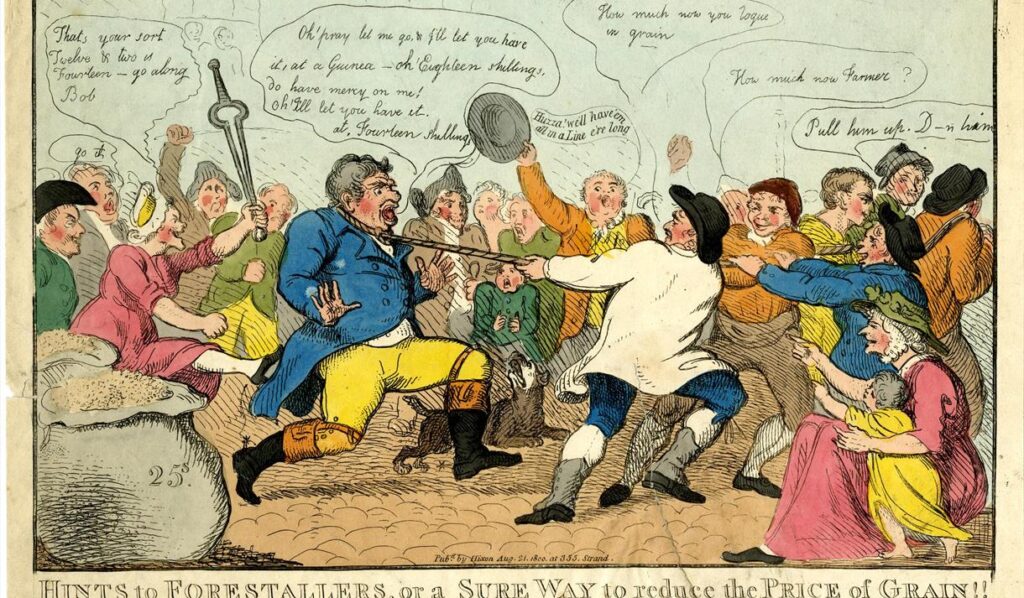
In October 1766, the streets of Nottingham, England, transformed into a battlefield where the weapons of choice were massive wheels of cheese. During a time of severe food shortages, a simple agricultural fair erupted into a chaotic uprising known as the Great Cheese Riot.
Angry residents clashed with out-of-town merchants, leading to widespread looting, military intervention, and hundreds of cheese wheels rolling through the city center. The days of unrest that followed left one man dead and forced armed escorts to protect dairy shipments.
A Perfect Storm at the Goose Fair
The annual Nottingham Goose Fair was a major hub for trading foodstuffs. In the autumn of 1766, a poor nationwide harvest sparked widespread anxiety over food supplies. When the fair opened on October 2, an unusually large quantity of cheese, similar to Red Leicester, was available for sale at heavily inflated prices.
Merchants demanded 28 to 36 shillings per 112 pounds (51 kilograms) of cheese. Tensions boiled over when merchants from neighboring Lincolnshire purchased large shipments with the intention of taking the food out of Nottinghamshire.
Cheese Wheels Roll Through Nottingham
A group of young men surrounded the Lincolnshire buyers, demanding the food remain in the local area. The confrontation rapidly escalated into physical violence. Rioters smashed shop windows and looted heavily laden stalls.
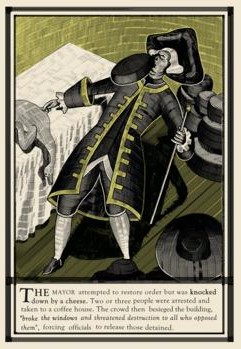
Soon, hundreds of heavy cheese wheels were thrown and rolled down major thoroughfares like Wheeler Gate and Peck Lane. When Nottingham Mayor Robie Swann attempted to intervene and restore order, he was physically knocked down by a massive, speeding wheel of cheese.
Escalation and Armed Conflict
The chaos quickly spread beyond the market square. Locals constructed roadblocks across the city to prevent merchants from fleeing with their purchases. Near Trent Bridge, a mob seized a cargo boat and looted its entire dairy shipment.
In another incident, a warehouse owner defended his property with firearms before organizing a mounted posse to track stolen goods to the village of Castle Donington. After a magistrate refused to issue search warrants, the posse attacked local residents until a crowd of women and children drove them away with stones.
Military Suppression and Casualties
Unable to control the crowds, authorities called upon the 1st Regiment of Light Dragoons and the Nottinghamshire Militia. The cavalry and infantry troops marched into the city and fired live ammunition directly into the crowds of rioters.
Several people were wounded, and a local farmer named William Eggleston was shot and killed while standing near a pile of his own wares. Rioters also attacked a private residence where magistrates held detainees, smashing windows to free the prisoners. The violence raged for several days before the military finally crushed the uprising, forcing merchants to transport future cheese shipments under heavily armed guard.