
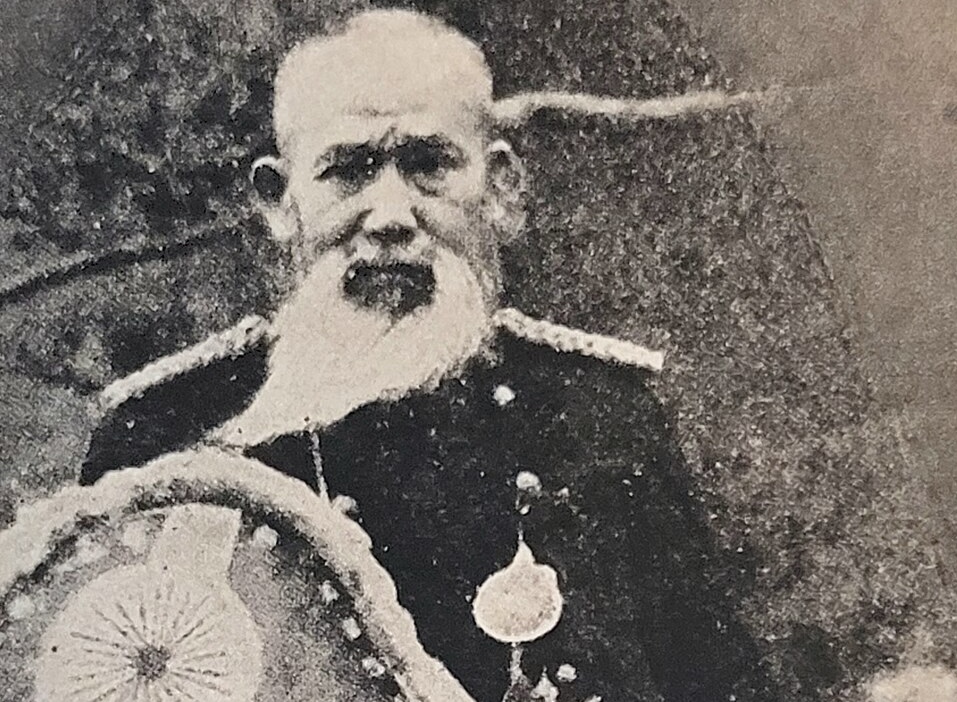
In the late 19th century, a man walked into a Tokyo telegraph office and demanded to send an urgent message to a foreign diplomat, claiming to be a high-ranking imperial minister. This was Kinjirō Ashiwara, a man who disrupted the actual Emperor of Japan’s royal procession and eventually declared himself the true sovereign.
Covered by the Japanese press for decades, his grandiose delusions transformed him into a massive media celebrity. This is the documented history of the self-proclaimed emperor who spent over fifty years in a psychiatric hospital while continuously holding press conferences about global politics.
From Samurai Son to Shogun Ashiwara
Born in November 1850 in Takaoka, Toyama, Ashiwara was the third son of a local samurai. He moved to Tokyo and worked for a comb wholesaler and a confectioner. Around the age of 20, he experienced a severe nervous breakdown. He married at 24, but his wife left him, leading to a divorce.
By 1875, his mental condition deteriorated, and he began publicly referring to himself as “Shogun Ashiwara.” The Japanese media first reported on him in June 1880 after he caused a massive public disturbance at the Ministry of the Treasury.
Interrupting Emperor Meiji’s Procession
Ashiwara’s most documented public incident occurred in July 1881. During a royal tour of the Tōhoku region, he breached protocol by disrupting the procession of Emperor Meiji and directly attempting to approach him. Police arrested Ashiwara. In 1882, medical officials admitted him to the Tokyo Metropolitan Psychiatric Asylum.
Doctors diagnosed him with hereditary mania, though later psychiatrists debated whether he had chronic mania or paranoid schizophrenia. Despite his detainment, Ashiwara escaped the facility three separate times in 1885, 1892, and 1904.
Press Conferences From a Tokyo Asylum
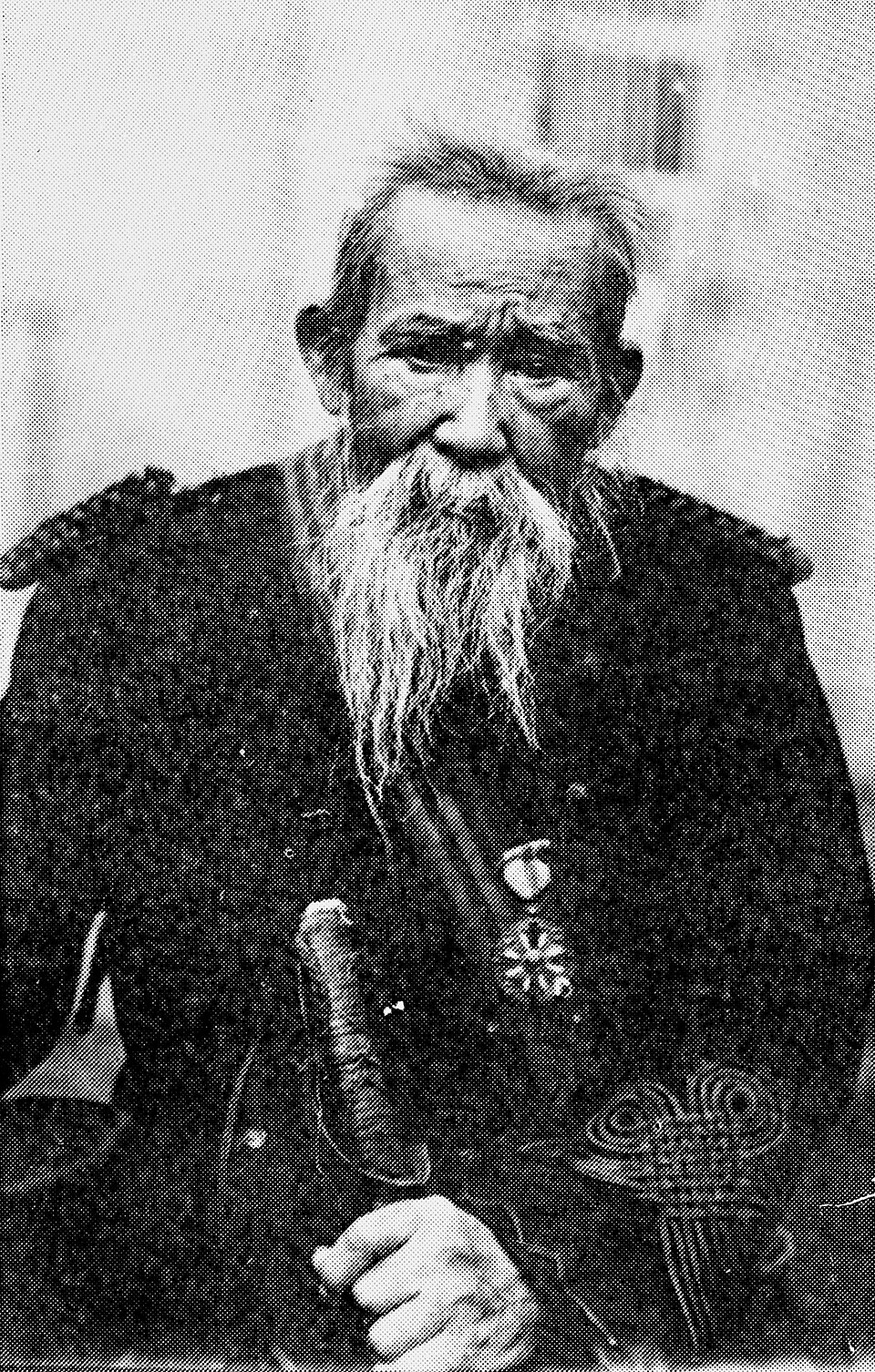
While hospitalized, Ashiwara claimed the asylum was his personal domain. A 1903 Yomiuri Shimbun report noted he told people the Emperor of France visited him and that he wrestled the United States President. Following Japan’s victory in the 1905 Russo-Japanese War, he started wearing formal court dress and grew a long white beard.
During the Taishō era, newspaper reporters frequently visited the asylum. Whenever political turbulence occurred, Ashiwara held press conferences, offering uninhibited quotes on global affairs that journalists eagerly published.
The Final Years of the Sovereign
When the Shōwa era began in 1926, Ashiwara elevated his title from Shogun to “Emperor Ashiwara.” He wrote his own imperial edicts on paper and sold them to the hospital visitors. He remained a resident of the Tokyo hospital until his death on February 2, 1937.
Following his passing, the vice president of the Matsuzawa Hospital conducted a medical autopsy. The examination revealed absolutely no pathological findings in Ashiwara’s brain, leaving the physical cause of his lifelong delusions a medical mystery.