
Deep inside a 13th-century basement in Konstanz, Germany, researchers examining an old ceiling realized they were looking at something entirely unexpected. The wooden boards above their heads were not standard building materials.
They were the hull of a flat-bottomed ship. Discovered in a building dating back to 1244, this wooden structure remained hidden in plain sight for centuries. Now, experts are documenting the ceiling surface to uncover the facts of ancient shipbuilding techniques.
A Ship Hull Above Ground
The State Office for Monument Preservation (LAD) in the Stuttgart Regional Council sent an interdisciplinary team to investigate the cellar in the Konradigasse. While analyzing the basement, the team noticed unusual features in the wood. Dr. Aline Kottmann, a specialist in medieval archaeology, noted that the researchers immediately saw the boards were reused. The discovery that they formed a nearly complete ship came as a surprise.
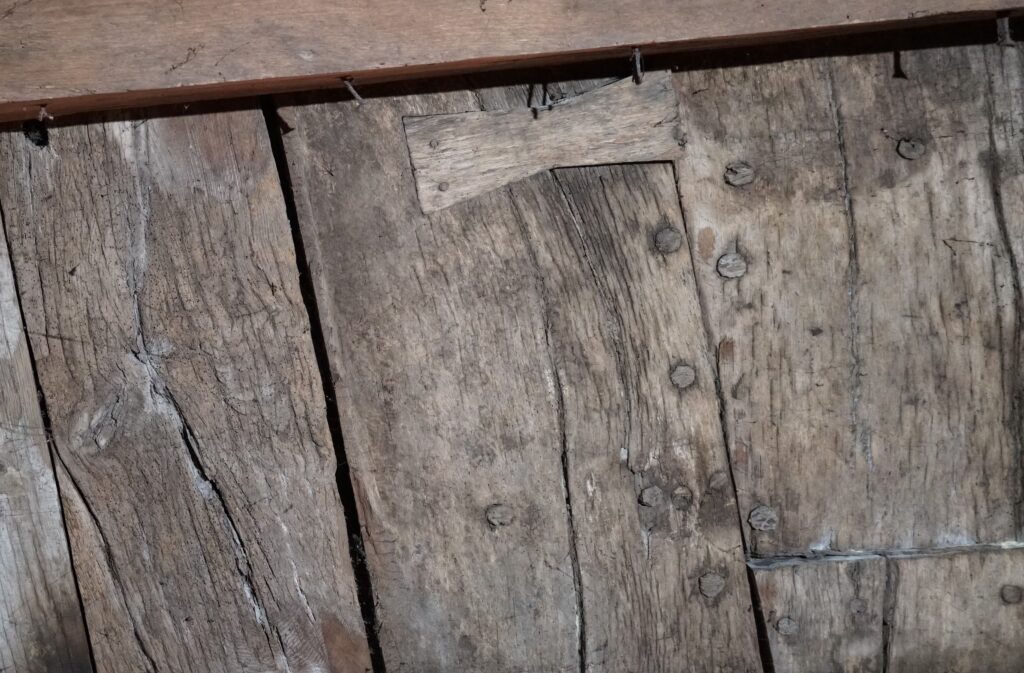
The structure covers more than 25 square meters and includes at least 19 distinct planks. Researchers identified the vessel through its characteristic wooden nails, specific fastener rows, and plank shapes. Alexandra Ulisch, a researcher from the LAD’s “Wrecks and Deep Sea” project, stated that finding a continuously connected hull section inside a house is highly unusual.
Details of the Medieval Cargo Vessel
Initial assessments indicate the timber came from a flat-bottomed cargo sailing vessel. The ship shares design characteristics with other Lake Constance vessels, such as the 14th-century Kippenhorn wreck near Immenstaad. The ceiling boards remained fastened together exactly as they were on the water.
Because the planks were installed in their original arrangement, the medieval caulking material used to seal the gaps survived intact. Researchers are analyzing this sealing mass to understand exactly how the medieval shipbuilders made the vessel watertight.
Rare Repairs and Dovetail Inserts
The planks show multiple signs of heavy use and subsequent repair. Shipbuilders cut out damaged sections and replaced them with custom-fitted wooden inserts. Researchers have identified at least four distinct repair sites on the timber. One of these fixes features a specific dovetail-shaped wooden insert.
According to researchers, this specific dovetail repair has no direct parallel in any other medieval ship found in the Lake Constance region.
Advanced 3D Mapping and Dating
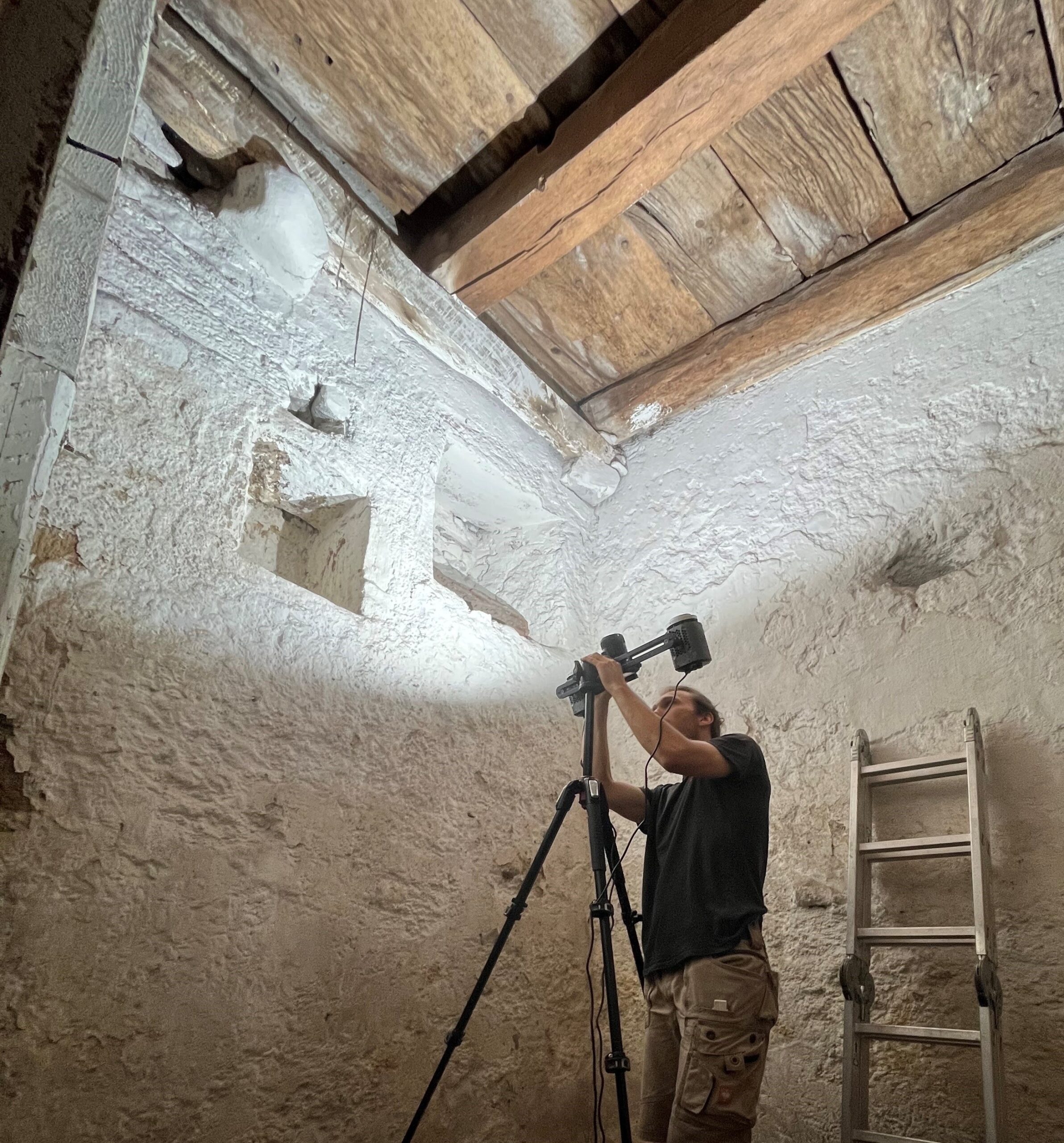
Because the wood is located inside a dry basement instead of submerged at the bottom of Lake Constance, scientists have direct and easy access to the timber. In mid-August 2026, the team documented the site using a technique called Structure-from-Motion. They took hundreds of photographs to generate a precise three-dimensional computer model of the ceiling.
The archaeological team also extracted physical wood samples for dendrochronological analysis. The upcoming laboratory results will provide exact dates for when the trees were cut, establishing the timeline of the vessel’s construction and its reuse.