
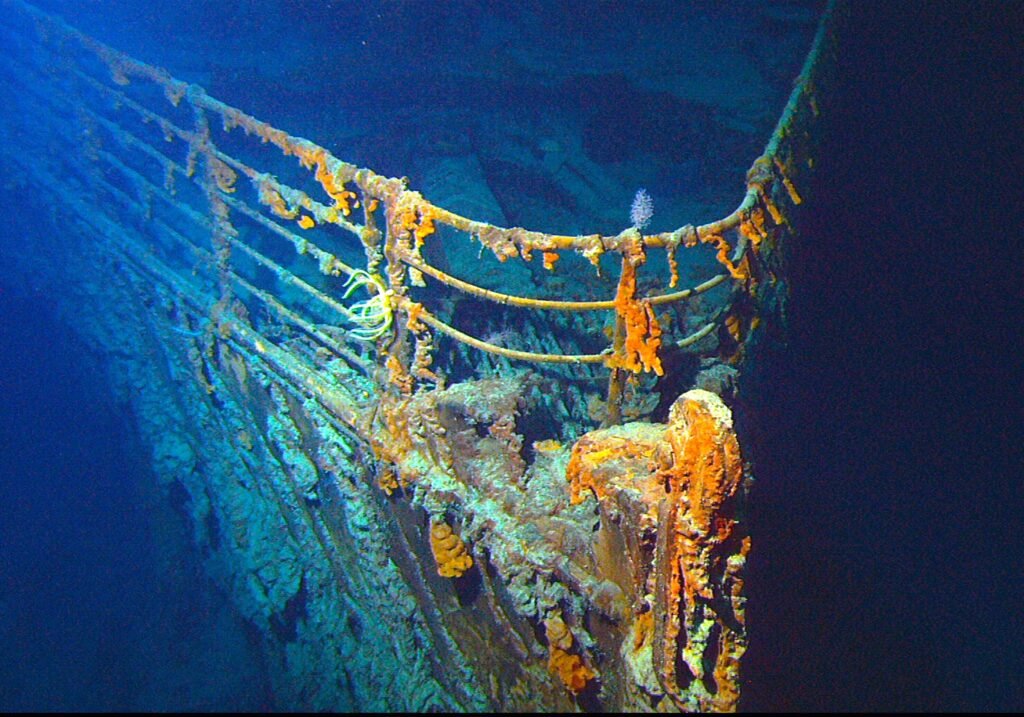
Deep beneath the freezing waters of the North Atlantic, an invisible biological force is slowly erasing the most widely recognized shipwreck in history. The RMS Titanic is physically disappearing, not due to ocean currents or treasure hunters, but because a microscopic, iron-eating organism is consuming the sunken vessel. Within a few short years, this tiny creature could dissolve the massive ship entirely, while simultaneously offering groundbreaking scientific applications for our future.
The Discovery of the Iron Eaters
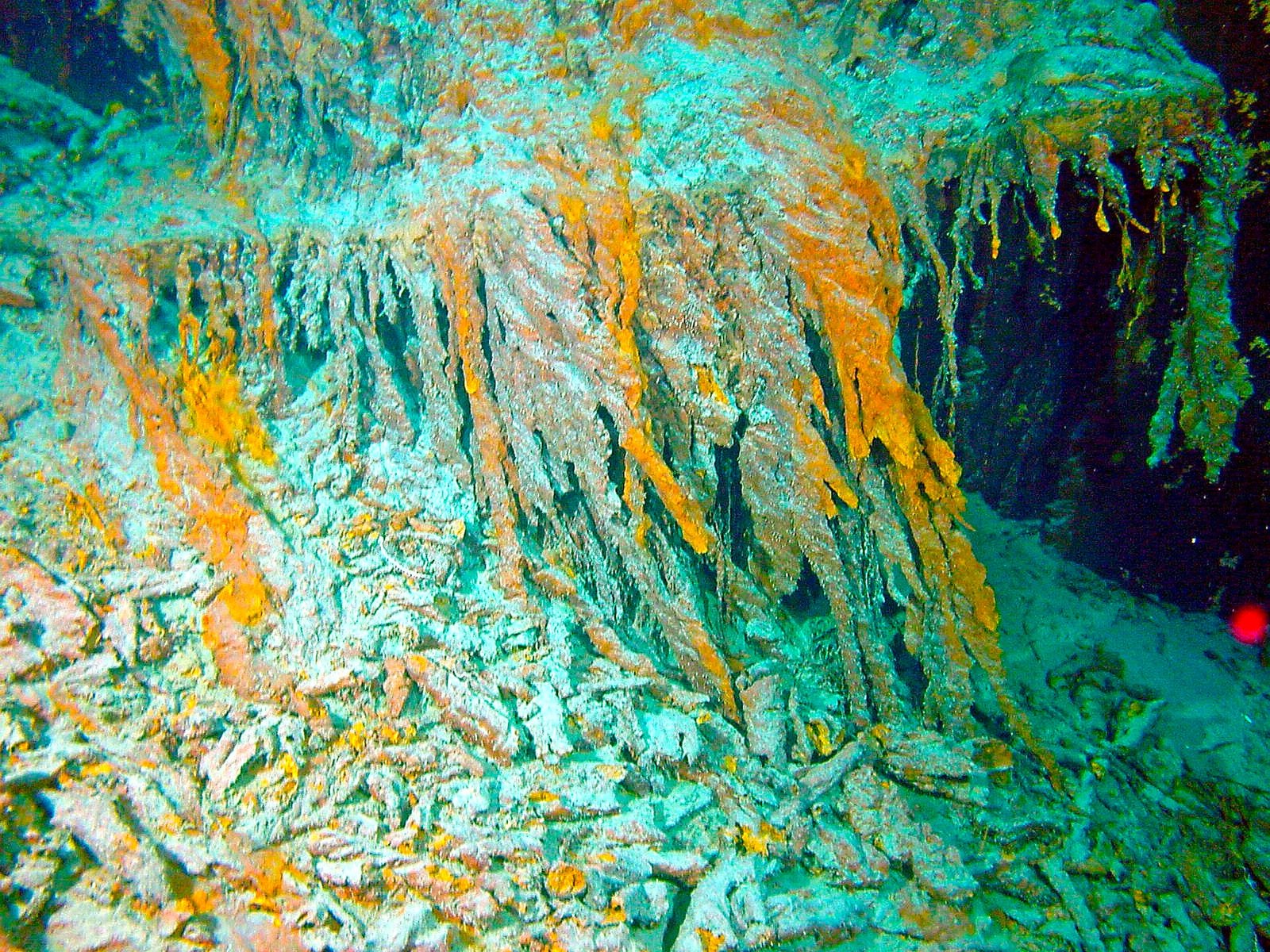
In 2010, researchers led by Dr. Henrietta Mann from Dalhousie University and scientists from the University of Seville identified a completely new bacterial species. During expeditions to the 1912 wreckage, divers collected “rusticles”—icicle-like formations of rust hanging directly off the ship’s metal hull. Upon conducting genetic and microbiological analysis in the laboratory, the team isolated the bacteria responsible for these formations. They named the new organism Halomonas titanicae. The bacteria thrive in the extreme, high-pressure, and highly saline environment of the deep ocean, utilizing the ship’s iron as a primary energy source.
A Ticking Clock for a Shipwreck
Operating deep underwater where dissolved oxygen levels are remarkably low, Halomonas titanicae accelerates the corrosion of steel. The microbes extract nutrients from the metal, reducing iron compounds and leaving fragile rust structures behind as a waste product. Because of this relentless biological activity, researchers estimate that the microbe and its associated microbial community will cause the total deterioration of the Titanic by the year 2030. The once-sturdy hull is rapidly dissolving into fine powders and flakes, ultimately returning the massive ocean liner’s metals to the sea.
Cleaning Up the Ocean Floor
While the bacteria spell the end for the ship, scientists recognize significant potential in their destructive capabilities. Halomonas titanicae could be harnessed for bioremediation, a process utilizing organisms to clean up polluted environments. Because these extremophiles efficiently break down steel and reduce heavy metals, researchers are exploring ways to deploy them for the controlled decomposition of hazardous marine debris. This includes safely breaking down decommissioned oil rigs, industrial waste, and modern shipwrecks, offering a natural method to remove dangerous metal pollutants from delicate underwater ecosystems.
Unexpected Benefits in Aquaculture
Beyond breaking down underwater metals, this deep-sea organism displays surprising benefits in the field of aquatic farming. Because the bacteria easily handle osmotic stress and thrive in salty habitats, researchers have tested specific strains of H. titanicae as a dietary probiotic for fish. Studies indicate that adding this bacteria to the diet of turbot significantly improves the fish’s growth rates and immune function. The microbes promote a healthy gut microbiome, helping the fish resist illness. A bacteria discovered consuming a sunken ship is now actively studied to support sustainable fish farming.