
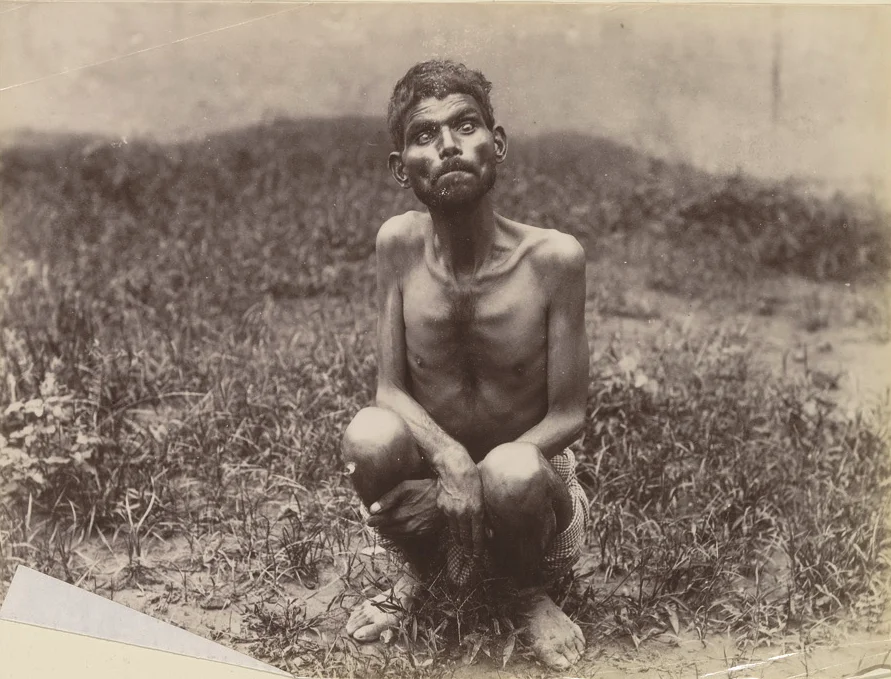
In February 1867, a band of hunters tracking through the jungles of the Bulandshahr district in India stumbled upon a cave guarded by a lone wolf. Prepared to ambush the animal, the men were stunned to find a human boy, no older than six, living alongside the beast.
He walked exclusively on all fours, refused to answer questions, and seemed completely wild. The hunters removed the child from the jungle and transported him to the Sikandra Mission Orphanage in the city of Agra. This event began the documented life of Dina Sanichar, a boy who spent his formative years disconnected from human civilization.
Discovered in a Jungle Cave
When the hunters brought the nameless boy to the facility, the missionaries called him Dina Sanichar. They chose the Hindi word for Saturday to mark the exact day he arrived. Because of his feral habits, he quickly earned the secondary name of Wolf Boy. Sanichar moved entirely on his hands and feet.
He rejected cooked meals and opted exclusively for raw meat. Superintendent Erhardt Lewis noted that the boy would carefully smell any food offered to him, instantly throwing it away if the scent displeased him. To maintain his teeth, he actively gnawed on animal bones.
Communication Without Language
Interacting with Sanichar proved extremely difficult for the orphanage staff. He did not speak or comprehend any human language. When he needed to express a basic need, he produced animalistic growls or howled just like a wolf. The missionaries attempted to use standard nonverbal gestures, such as pointing at objects, but Sanichar did not react.
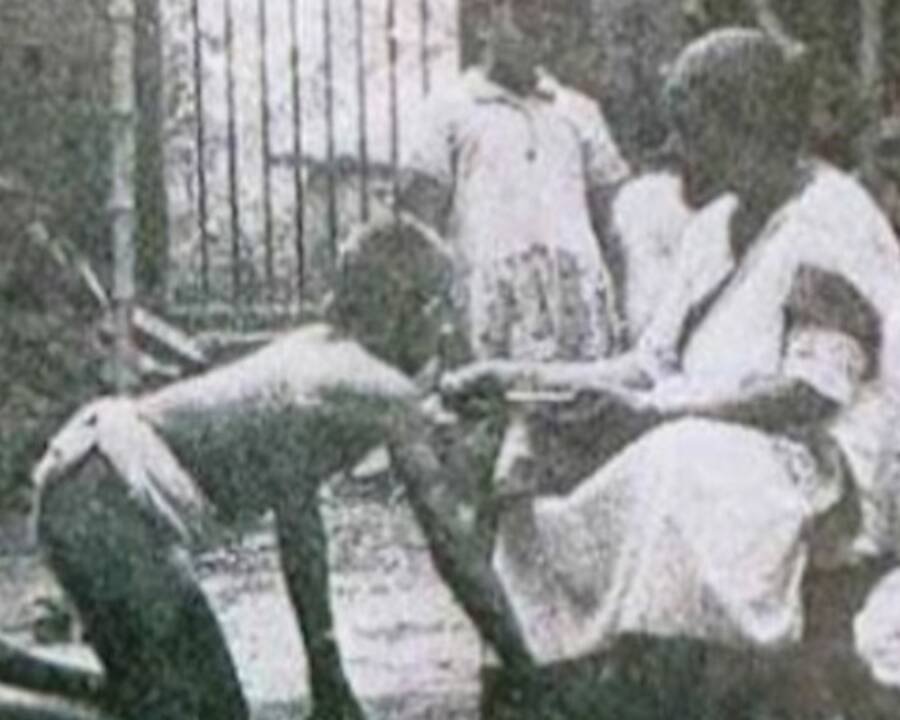
Because wolves do not have fingers to point with, the universal gesture meant absolutely nothing to him. Over the years, he learned to understand basic instructions from his caretakers, but he never actually managed to articulate human speech himself.
Adapting to the Human World
As time passed at the orphanage, Sanichar adopted a few human habits. He eventually learned how to stand upright and walk on his two feet. According to reports from the missionaries, he started wearing clothes and dressing himself. He also picked up the distinctly human habit of smoking cigarettes.
Sanichar was not the only feral child at the Sikandra Mission. Superintendent Lewis documented the presence of two other boys and one girl who also reportedly lived with wolves. Such discoveries occurred frequently enough that the orphanage staff normalized the arrival of children from the jungle.
A Short Life Among Humans
Sanichar lived the rest of his life surrounded by people, yet he remained fundamentally separated from their world. Despite the prolonged efforts of the missionaries, the gap between his early animal instincts and human socialization was too vast to close completely. He spent nearly thirty years at the orphanage before his body gave in to tuberculosis in 1895 at the approximate age of 35.