
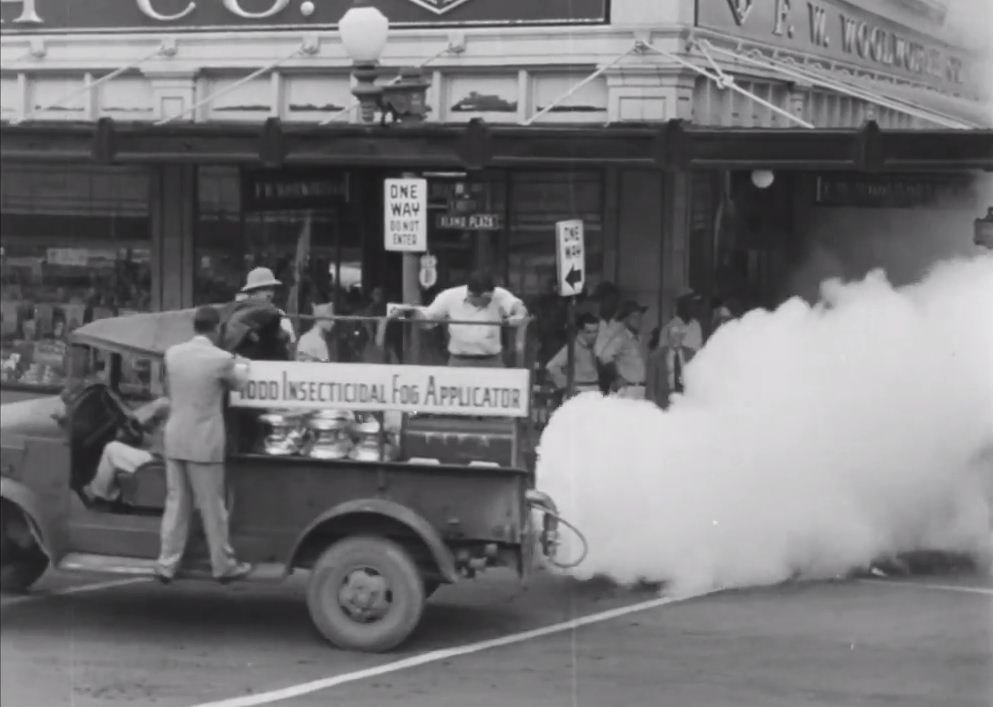
In May 1946, trucks rolled through San Antonio, Texas, blanketing neighborhoods in a thick chemical fog. The target was polio, a paralyzing disease trapping patients in iron lungs.
The weapon was DDT. Believed to be a harmless cure for numerous ailments, this pesticide was unleashed directly onto the public. The events that followed exposed severe environmental hazards and led to the creation of the Environmental Protection Agency.
A Misguided War on Polio
H.L. Crittenden, director of the San Antonio Department of Health, mandated the spraying of dichlorodiphenyltrichloroethane (DDT) across over a thousand city streets. Authorities operated under the incorrect assumption that insects transmitted polio. Jonas Salk had not yet begun his work culminating in the 1955 polio vaccine. During this era, many patients with paralytic polio were cooped up in iron lungs because their paralyzed chest muscles left them unable to breathe.
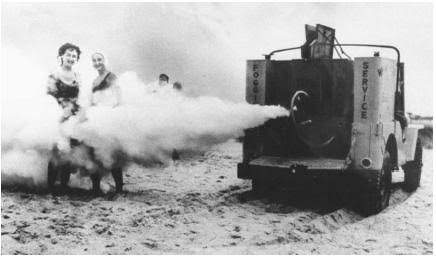
Other cities, including Rockford, Illinois, and Paterson, New Jersey, replicated the street spraying. At the time, popular media reinforced the safety of the chemical. A Life magazine advertisement explicitly promoted DDT as completely safe for human and animal exposure.
The Silent Spring Revelation
Public perception shifted drastically in 1962 following the publication of Rachel Carson’s “Silent Spring”. The book documented how pesticides devastated wildlife populations. Carson detailed how DDT ingestion caused larger birds to lay unhatched eggs with fragile, paper-thin shells. Citizens began to realize that high doses of deadly chemicals were present in their food supply and daily surroundings. This specific public reaction directly birthed the environmental movement.
Physical Toll and the EPA Ban
Responding to the public outcry, President Richard Nixon established the Environmental Protection Agency in 1970. The EPA subsequently prohibited a dozen chemicals in the US, including DDT.
Inside the human body, DDT collects in fatty organs like the glands and testes. Because milk is created from stored fats, high concentrations transfer directly into mothers’ breast milk. Human reactions occur at a concentration of 6 to 10 milligrams per kilogram (2.7 to 4.5 milligrams per pound) of body weight. Symptoms feature nausea, vomiting, confusion, severe headaches, and tremors. Scientists also found proof that DDT acts as an estrogen mimic, causing animals like frogs to become female when exposed via their water supply.
Global Export and Public Health Exceptions
Despite the domestic ban, manufacturing DDT remains legal within the United States for export. Companies ship the chemical to combat mosquitoes in malaria-ridden tropical nations in South America and Africa. DDT-treated wallpaper is still utilized in places where malaria causes a high percentage of deaths, though DDT-resistant mosquitoes are now appearing in these regions.
Within the US, a public health exception permits government deployment of the chemical to halt insect-borne disease outbreaks. California activated this exact exception in 1979, deploying DDT when fleas brought the bubonic plague into the state.