
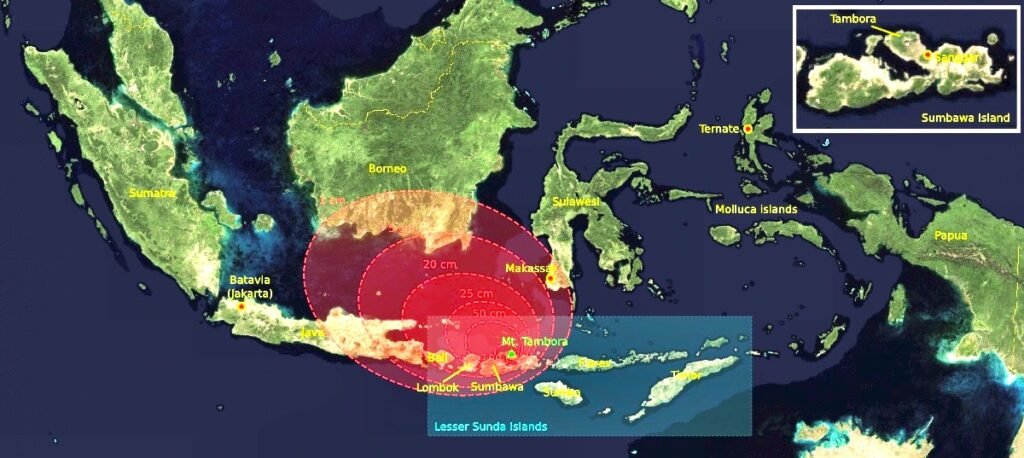
In April 1815, a mountain in the Dutch East Indies exploded with such devastating force that it altered the global climate and triggered a bizarre year without a summer.
The colossal blast completely annihilated the surrounding landscape, birthed deadly tsunamis, and plunged the Northern Hemisphere into unseasonable freezing temperatures that destroyed global harvests. This catastrophic event forced snow to fall in June and caused mass starvation across multiple continents.
A Mountain of Liquid Fire
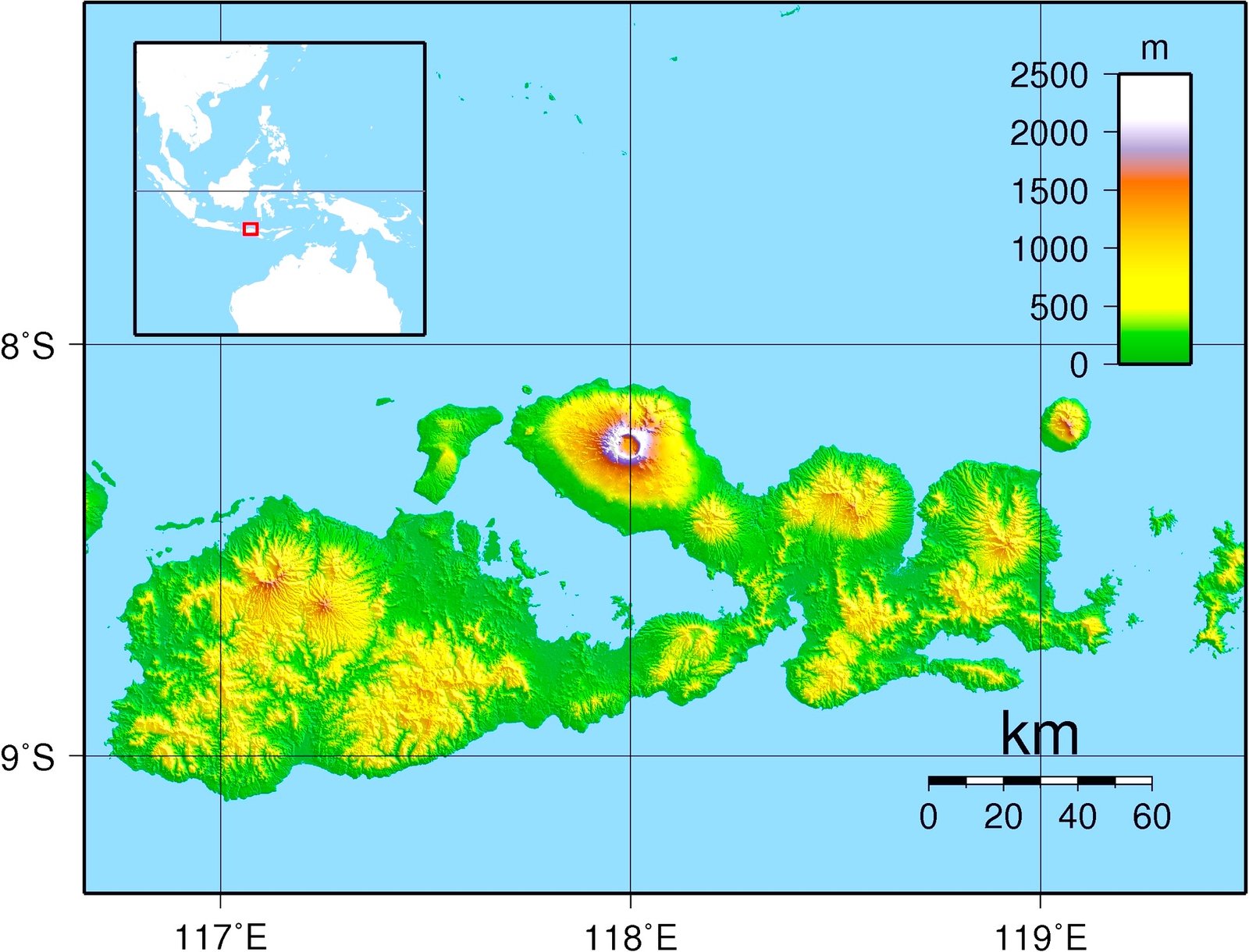
For centuries, Mount Tambora sat dormant on the island of Sumbawa, Indonesia. Deep underground, cooling magma built up immense pressure reaching 5,000 bar (73,000 psi). On April 5, 1815, the mountain finally fractured. Five days later, the eruptions reached a violent climax. The entire peak transformed into a flowing mass of liquid fire.
Pumice stones up to 20 centimeters (8 inches) in diameter rained down from the sky, followed by a violent whirlwind that ripped large trees from the ground. Pyroclastic flows wiped out the nearby village of Tambora, and tsunamis up to 4 meters (13 feet) high battered neighboring islands. The blast was so loud that people heard it in Sumatra, over 2,600 kilometers (1,600 miles) away.
The Colossal Ash Cloud
The sheer scale of the explosion is unmatched in recorded history. Mount Tambora ejected roughly 41 cubic kilometers (10 cubic miles) of material, dropping the mountain’s peak elevation from 4,300 meters (14,100 feet) to 2,851 meters (9,354 feet). A massive column of ash and gas shot over 43 kilometers (26.7 miles) into the stratosphere.
While heavier particles blanketed the region in thick ash, the finest dust remained suspended in the atmosphere for years. Longitudinal winds carried these particles around the globe, creating brilliantly colored, blood-red sunsets across Europe.
The Year Without a Summer
The eruption released tens of millions of tonnes of sulfur dioxide into the stratosphere, which formed an aerosol veil that blocked solar radiation. During the summer of 1816, average global temperatures plummeted by roughly 0.4 to 0.7 degrees Celsius (0.7 to 1.3 degrees Fahrenheit).
The northeastern United States endured a persistent dry fog that reddened the sun. By June, massive snowstorms buried parts of New York, Maine, and Vermont under 46 centimeters (18 inches) of snow. This cold snap shortened growing seasons to fewer than 80 days.
Global Famine and Disease
The extreme climate disruption devastated the global food supply. Cool temperatures and heavy rains rotted crops throughout the British Isles, while severe frosts ruined harvests across North America. The resulting food shortages triggered the worst famine of the 19th century in Europe, leading to massive riots and looting in grain markets.
Disrupted Indian monsoons also caused harvest failures in Asia and contributed to the rapid spread of a new cholera strain. Between the direct volcanic blasts, tsunamis, starvation, and disease, the 1815 Tambora eruption claimed an estimated 71,000 to 100,000 lives worldwide.