
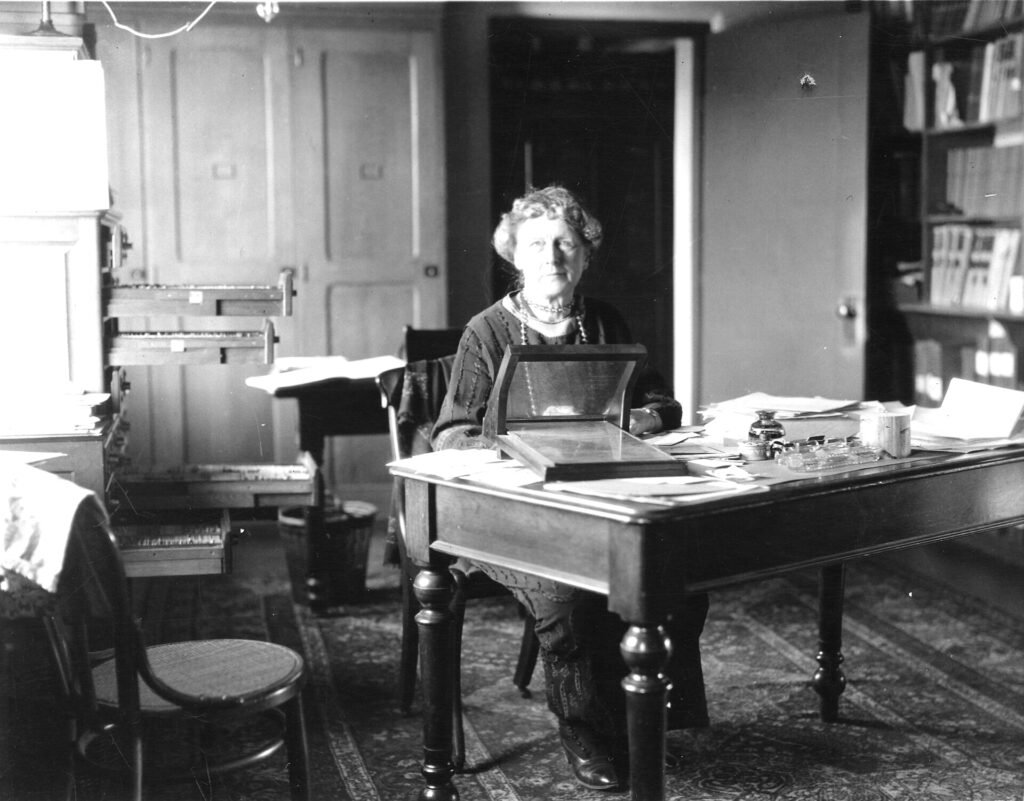
In the late nineteenth century, a young deaf woman walked into the Harvard College Observatory and changed how scientists map the night sky. At a time when female researchers faced strict institutional limitations, she processed complex celestial data at a speed that heavily outpaced her peers.
By the end of her career, she manually categorized hundreds of thousands of celestial bodies, creating the exact stellar classification framework that the global astronomical community still utilizes today. The sheer volume of her daily work permanently shifted the operational methods of modern astronomy.
From the Attic to the Observatory
Annie Jump Cannon developed an early interest in the cosmos alongside her mother, using a standard textbook to identify constellations from their Delaware attic. She pursued this focus academically, graduating as valedictorian from Wellesley College in 1884 with a degree in physics.
Sometime after her graduation, a severe bout of scarlet fever left her almost entirely without hearing. This severe physical change made socializing difficult, leading her to immerse herself fully into her academic research. She eventually enrolled in graduate courses at Radcliffe College to gain direct access to advanced telescopes. In 1896, Harvard Observatory director Edward C. Pickering hired her into a specialized group of female data analysts tasked with mapping the entire sky.
Sorting the Stars by Temperature
The observatory team faced a major technical roadblock upon her arrival. Two different scientists strongly disagreed on how to categorize the stars they photographed. Cannon stepped in and developed a third method that successfully bridged the gap. She sorted the stars strictly by their temperatures and spectral absorption lines, organizing them into seven primary categories: O, B, A, F, G, K, and M.
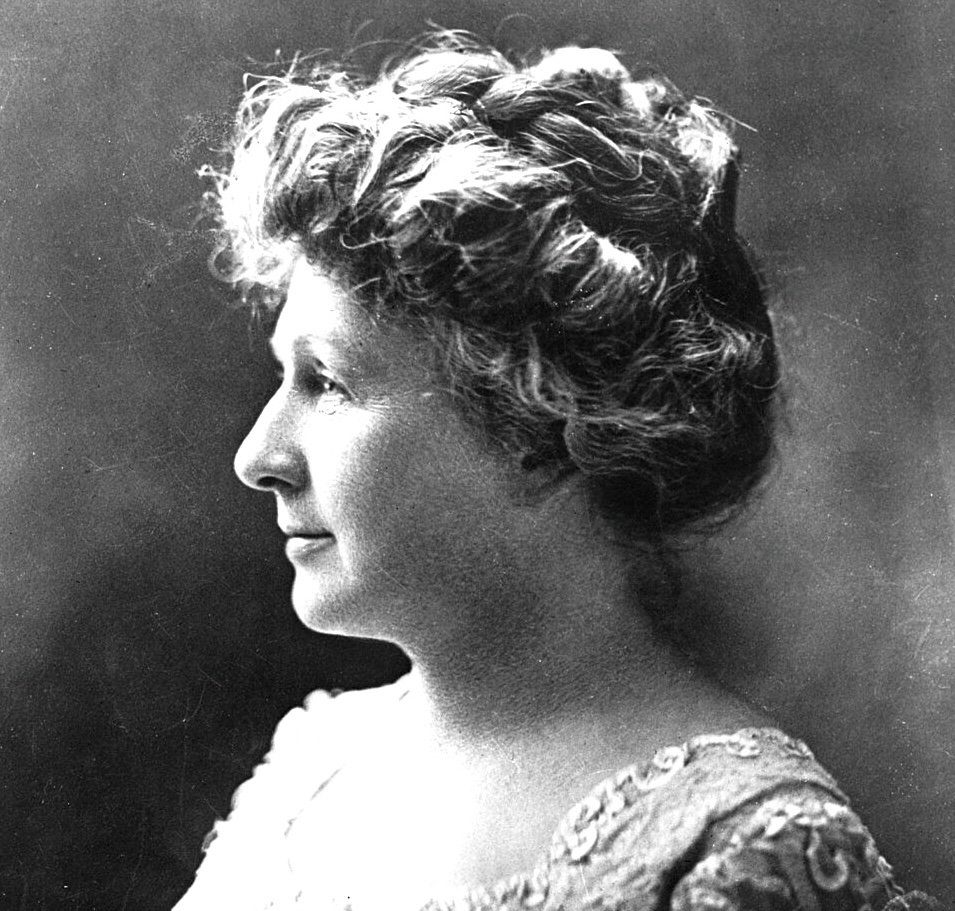
To help university students memorize the complex sequence, she coined the highly practical phrase “Oh, Be A Fine Girl, Kiss Me.” The International Astronomical Union formally adopted her exact system in 1922.
Speed and Precision in Darkness
Cannon possessed a highly accurate visual memory and maintained a rigorous daily work schedule. Examining photographic plates with a magnifying glass, she consistently classified three stars per minute.
She accurately identified stars down to the ninth magnitude, which is roughly sixteen times fainter than what the naked human eye can detect. Over the course of her four-decade career, she manually classified well over 350,000 individual stars and discovered 300 variable stars, five novas, and one spectroscopic binary.
Breaking Institutional Barriers
Professional recognition arrived slowly within a heavily patriarchal scientific field. Female workers at the observatory often earned just twenty-five cents an hour for tedious daily labor. Nevertheless, her immense output resulted in widespread formal recognition.
Cannon became the first woman to receive an honorary doctorate of science from Oxford University in 1925. Finally, in 1938, Harvard University officially appointed her as the William C. Bond Astronomer, granting her a formal academic title just two years before she retired from her post.