
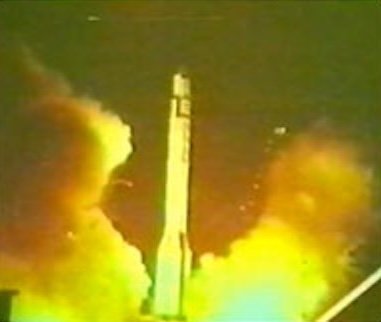
In June 1974, the Soviet Union launched Salyut 3 into orbit, presenting the spacecraft to the world as a civilian scientific outpost. Hidden beneath that cover story was a military reconnaissance platform carrying hardware never flown before or since: a heavy aircraft autocannon fixed directly to its hull.
For seven months, the armed station circled Earth with its gun untouched, until ground controllers prepared a final, classified experiment hours before its fiery end.
The Secret Almaz Military Program
Salyut 3 was actually OPS-2, a spy station built under the secret Almaz program led by Soviet aerospace engineer Vladimir Chelomey. To conceal the military reconnaissance mission from Western intelligence, Moscow grouped the Almaz stations under the civilian Salyut name.
Launched aboard a Proton rocket from the Baikonur Cosmodrome on June 25, 1974, the station carried high-resolution Earth-observation cameras built to photograph military sites across the globe and drop exposed film capsules back to Soviet territory.
Adapting a Bomber Gun for Vacuum
Soviet defense planners worried that American anti-satellite craft or astronauts might try to inspect, disable, or board their orbital outpost. To defend OPS-2, engineers adapted the 23-millimeter (0.91-inch) Rikhter R-23M autocannon from the tail gun of the Tupolev Tu-22 supersonic bomber.
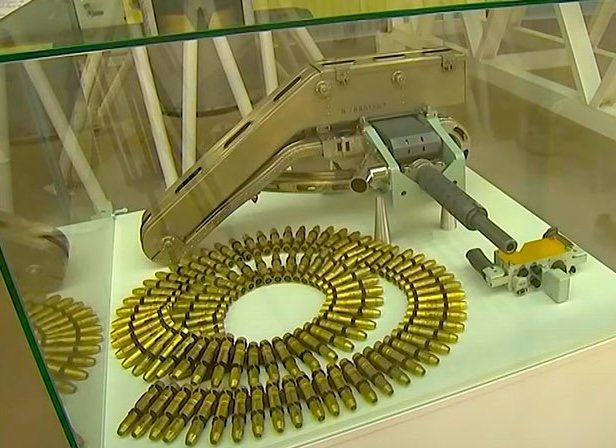
Unlike an aircraft turret, the space version was bolted rigidly to the station’s frame. Aiming at a target meant firing attitude thrusters to rotate the entire spacecraft while lining up an optical gunsight inside the cabin.
Cosmonauts Aboard an Armed Outpost
In July 1974, Soyuz 14 cosmonauts Pavel Popovich and Yury Artyukhin docked with Salyut 3, spending roughly two weeks operating its surveillance gear and military systems. A second crew aboard Soyuz 15 attempted to join the station in August 1974, but a docking system malfunction forced an early return to Earth.
Throughout the crewed flight, the cannon remained silent. Engineers feared that violent recoil and heavy vibration from firing the 23-millimeter (0.91-inch) weapon in vacuum could damage the hull, knock delicate optics out of alignment, or endanger the cosmonauts.
The Final Remote Firing Over Earth
Ground controllers waited until the end of the station’s operational life to test the gun. On January 24, 1975, with Salyut 3 unmanned and scheduled to deorbit, engineers sent remote commands to fire test bursts from the R-23M while simultaneously firing the station’s thrusters to counter the recoil.
Hours later, Salyut 3 plunged into Earth’s atmosphere and burned up over the Pacific Ocean. The next Almaz station, Salyut 5, flew without the gun, and Moscow kept the orbital weapon classified until after the Soviet Union collapsed, leaving Salyut 3 as the only confirmed spacecraft to fire a mounted cannon in orbit.