
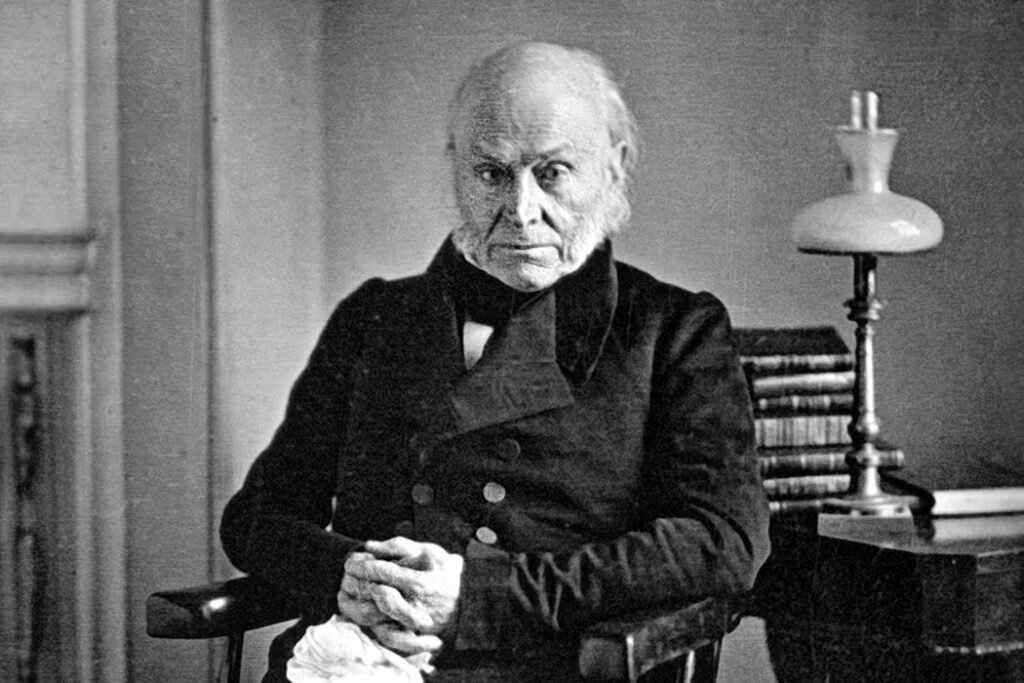
John Quincy Adams served as the sixth president of the United States and possessed one of the most impressive resumes in American political history. He graduated from Harvard with honors, spoke multiple languages fluently, ran a highly successful law practice, and taught at an Ivy League university. Yet his presidential term included one highly unusual executive decision. In the 1820s, he officially authorized a federal expedition to venture inside the planet.
The Hollow Earth Theory Reaches the Oval Office
The hollow planet concept reached the president through an Army officer named John Cleves Symmes Jr. Starting in 1818, Symmes toured the country to promote his specific variation of a very old geographical hypothesis. He argued that the globe was entirely hollow and contained lush underground environments populated by undiscovered plants and animals. To reach this hidden world, Symmes claimed that explorers simply needed to sail into massive holes located at the North and South Poles. He stated these circular openings measured thousands of miles (thousands of kilometers) across.
Lobbying the Government for a Polar Voyage
Symmes published research papers and delivered widespread lectures to build public support for a voyage to the polar openings. Throughout the early 1820s, he and his political allies repeatedly petitioned the United States Congress to fund an expedition below the crust. Congress consistently rejected the requests and refused to allocate any federal money to the hollow planet mission. President Adams, however, looked at the proposal and granted his executive approval for the journey to proceed.
A Change in Presidential Administration
The mission required extensive planning and time to organize. Before the ships could actually set sail, Andrew Jackson won the next election and replaced Adams in the White House. Jackson immediately halted the project and canceled the funding. Symmes’ supporters refused to quit and continued to lobby the federal government. In 1836, an associate named Jeremiah Reynolds finally secured congressional funding for a South Pole voyage. Reynolds changed the official pitch, focusing entirely on whaling, trade routes, and national pride instead of mentioning the polar holes. This voyage never found any entrances to the planet’s core.
Funding Science and Natural Explorations
Historical records do not provide exact proof that Adams genuinely believed the globe was hollow. As a dedicated naturalist, he consistently supported scientific observation and discovery. During his career, he helped establish the oldest operating national observatory in America and secured the foundational funding for the Smithsonian Institution. He viewed the proposed polar expedition as a chance to map uncharted territories and document new species in a completely unexplored region of the globe.