In the summer of 1953, a simple newspaper delivery set off a chain of events that exposed a vast Soviet espionage network operating inside the United States. A 14-year-old boy collecting change on his route received a seemingly ordinary five-cent coin. But this was no standard currency.
Dropped onto the pavement, the coin cracked apart, revealing a hidden compartment and a piece of coded microfilm. This accidental discovery launched a massive, years-long FBI hunt for a KGB operative hiding in plain sight in New York City.
A Suspicious Coin on Foster Avenue
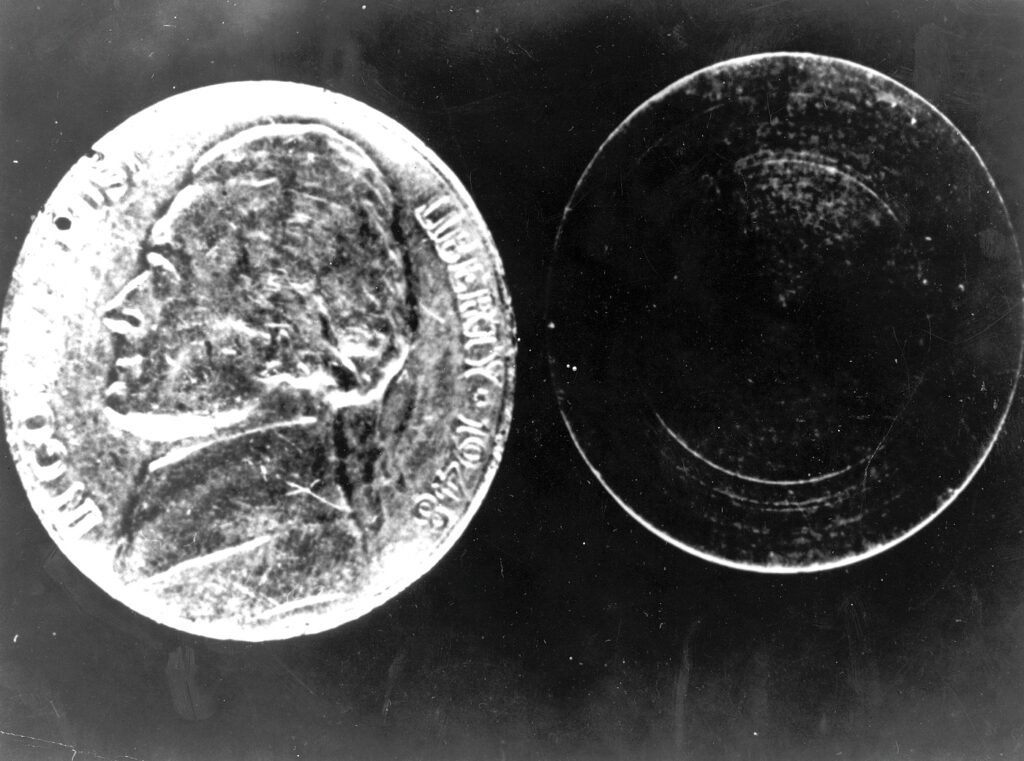
On June 22, 1953, Jimmy Bozart was collecting payments for the Brooklyn Eagle at an apartment building on Foster Avenue in New York. One customer handed him a nickel that felt unusually light. Curious, Bozart dropped the coin on the ground. The impact popped the nickel open.
Inside sat a microscopic piece of film packed with numbers. The boy showed the strange item to the daughter of a New York City Police Department officer. Within two days, the peculiar coin reached FBI agent Louis Hahn.
Four Years of FBI Dead Ends
The FBI laboratory examined the artifact closely. The coin was a clever fabrication: the front bore a 1948 date and standard copper-nickel composition, but the back was made from a copper-silver alloy minted during World War II. The enclosed microfilm contained 207 sets of five-digit numbers arranged in columns.
For almost four years, the FBI worked to decode the digits and find the source of the coin, but the cipher remained unbroken. They had no key, and the trail went completely cold.
A KGB Agent Defects in Paris
The breakthrough came in May 1957. Reino Häyhänen, a KGB agent known as “Vic,” was recalled to Moscow. Refusing to return, he defected in Paris. Häyhänen revealed that he had retrieved the hollow nickel from a dead-drop but accidentally spent it before reading the message.
He gave the FBI the information required to decrypt the microfilm. The hidden numbers formed a welcome message from Moscow, instructing Häyhänen on funding a cover business and managing his communications.
The Arrest of Rudolf Ivanovich Abel
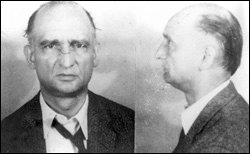
Häyhänen then exposed his KGB contacts, including his superior, William August Fisher, codenamed “Mark.” Following Häyhänen’s intelligence, the FBI tracked Fisher to a Brooklyn hotel room and photo studio packed with espionage equipment, including shortwave radios, microdot cameras, and trick containers.
Operating under the name Rudolf Ivanovich Abel, Fisher was arrested and stood trial. In October 1957, a federal jury found him guilty on three counts of conspiracy. Sentenced to 30 years in prison, Fisher spent four years behind bars before being traded to the Soviet Union in 1962 for downed American U-2 pilot Francis Gary Powers.