
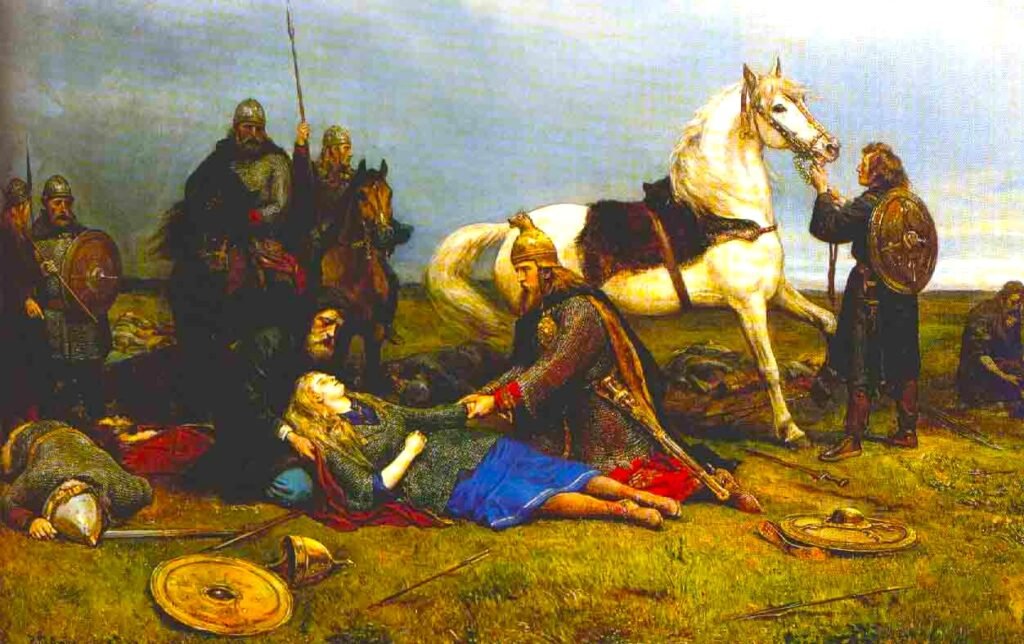
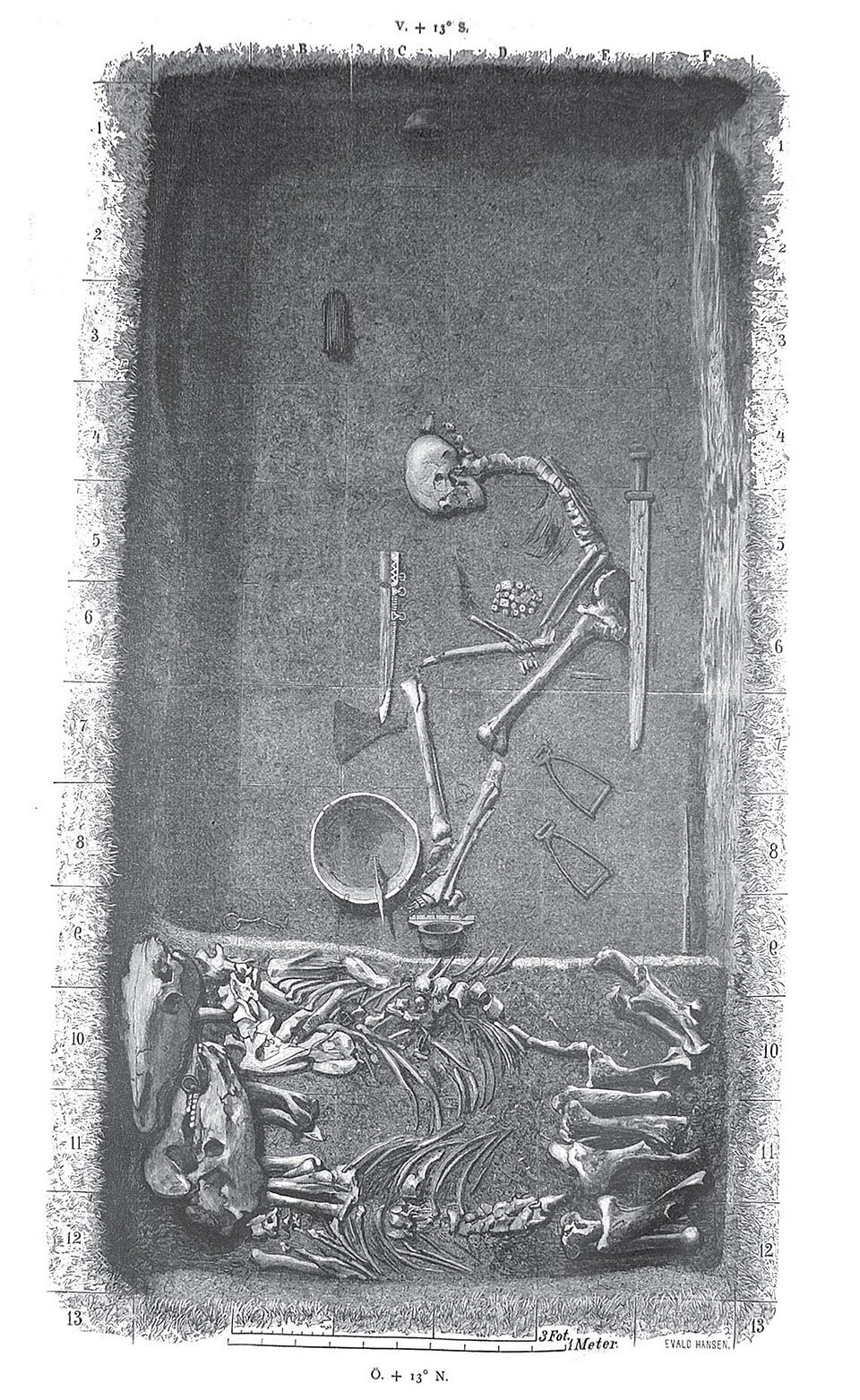
For more than a century, researchers assumed a 10th-century grave in Birka, Sweden, filled with weapons and two horses, held a male Viking. Then a 2017 DNA test confirmed the skeleton belonged to a woman. That finding reignited an academic debate over Viking shield-maidens, separating 13th-century Nordic fiction from rare historical records and physical remains.
Origins of the Old Norse Word Skjaldmær
The English term shield-maiden translates directly from the Old Norse word skjaldmær. Old Norse had no single word translating directly to warrior, instead using terms like drengr or rekkr for men. Researcher Judith Jesch traced the word’s history and found no conclusive evidence that people used it during the Viking Age.
Instead, Jesch suggests the term entered Old Norse in the 13th century, appearing in sagas as well as a ship’s name and a poet’s nickname. During the actual Viking Age, mythical Valkyries chose the slain on battlefields and served drinks in Valhalla, differing from the armed women in later stories.
Legendary Sagas and Post-Viking Fiction
Most well-known tales of shield-maidens come from medieval literature written centuries after the Viking era. Thirteenth-century legendary sagas, such as Vǫlsunga saga and Hervarar saga ok Heiðreks, feature named fighters like Brynhildr and Hervor, who raided dressed as a man before later marrying.
Her granddaughter, also named Hervor, later died in battle fighting attacking Huns. Similarly, Danish author Saxo Grammaticus wrote Gesta Danorum after the Viking Age, naming Lagertha and claiming women captained Danish forces at the Battle of Brávellir in 750. Modern scholars classify these texts as fiction rather than factual reports.
Rare Battlefield Accounts from History
Outside medieval fiction, historical records of Norse women fighting are scarce. Roman writers in late antiquity occasionally noted fighting women among Germanic peoples, though scholar Hermann Reichert concluded these cases were rare exceptions. One specific account comes from Byzantine historian John Skylitzes, who documented the 971 conflict between Sviatoslav I of Kiev and the Byzantine Empire in Bulgaria.
Following the Varangian defeat at the Siege of Dorostolon, stunned Byzantine victors discovered armed women lying among the fallen warriors. In the Greenland saga, Leif Erikson’s pregnant half-sister Freydís Eiríksdóttir also took up a sword in Vinland to scare away attacking Skrælings.
The Birka Grave and Ongoing Scholarly Debate
Physical findings have fueled sharp disagreement among experts. Excavators first uncovered Birka grave Bj 581 in the 1870s, finding many weapons and the bones of two horses alongside human remains. After bone analysis by Anna Kjellström pointed to a female skeleton, genetic testing in 2017 verified the individual was female.
Archaeologist Neil Price argues that historical female warriors existed. Conversely, Judith Jesch cites a lack of evidence for trained or regular female warriors, and scholars still debate how weapon-filled female graves should be interpreted.