
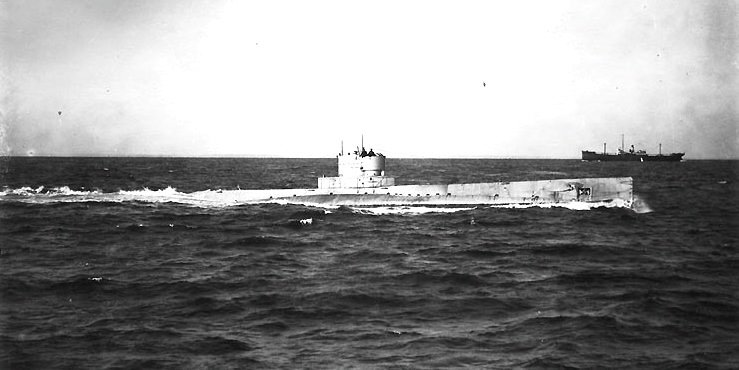
In May 1921, a 186-foot (56.8-meter) United States Navy submarine ran out of usable fuel and lost radio contact in the Pacific Ocean. Stranded 140 nautical miles (259 kilometers or 161 miles) southeast of Hawaii with low batteries and no way to call for help, the crew aboard USS R-14 turned to an unexpected method of propulsion. Using pipe bunk frames, hammocks, and blankets, the sailors rigged three sails on their steel warship and navigated into Hilo Harbor.
Stranded Off Hawaii During a Search Mission
Commissioned on December 24, 1919, USS R-14 (SS-91) was an R-1-class coastal and harbor defense submarine displacing 574 long tons (583 metric tons) on the surface. By September 1920, the vessel was stationed at Pearl Harbor in the Territory of Hawaii. On May 10, 1921, under the acting command of Lieutenant Alexander Dean Douglas, R-14 was conducting a surface search for the seagoing tug Conestoga southeast of the island of Hawaii. Seawater contaminated the submarine’s fuel supply, shutting down its diesel engines, while radio communications failed.
Rigging Sails From Hammocks, Blankets, and Bunk Frames
Because R-14’s electric motors lacked enough battery power to reach Hawaii, the ship’s officers and chief petty officers decided to sail the submarine to Hilo. The crew lashed pipe bunk frames together to form a top boom and tied it to the vertical kingpost of the forward torpedo loading crane. Hanging eight hammocks from this frame created a foresail that gave R-14 roughly 1 knot (1.9 kilometers per hour or 1.2 miles per hour) of speed and rudder control.
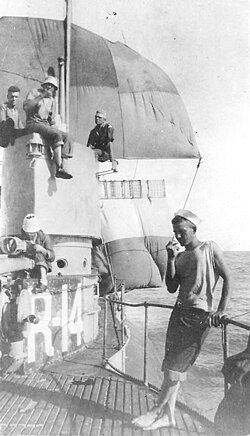
Next, the crew hung a mainsail made of six blankets from the sturdy radio mast, adding 0.5 knots (0.9 kilometers per hour or 0.6 miles per hour). A mizzen sail of eight blankets hung from a second bunk-frame boom tied to the vertical torpedo loading crane boom added another 0.5 knots (0.9 kilometers per hour or 0.6 miles per hour).
Charging Batteries With Dragging Propellers
Around 12:30 p.m. on May 12, 1921, the crew began recharging the submarine’s batteries while under sail. By dragging the propellers through the water, the sailors used the windmill effect of the slowly turning blades to spin the generators and send a small voltage into the batteries.
Reaching Hilo Harbor and Commendation From Nimitz
After 64 hours under sail, USS R-14 entered Hilo Harbor under battery propulsion on the morning of May 15, 1921. Submarine division commander Commander Chester W. Nimitz sent Lieutenant Douglas a letter of commendation recognizing the crew’s actions. R-14 continued serving in the Pacific and Atlantic fleets until decommissioning on May 7, 1945.