
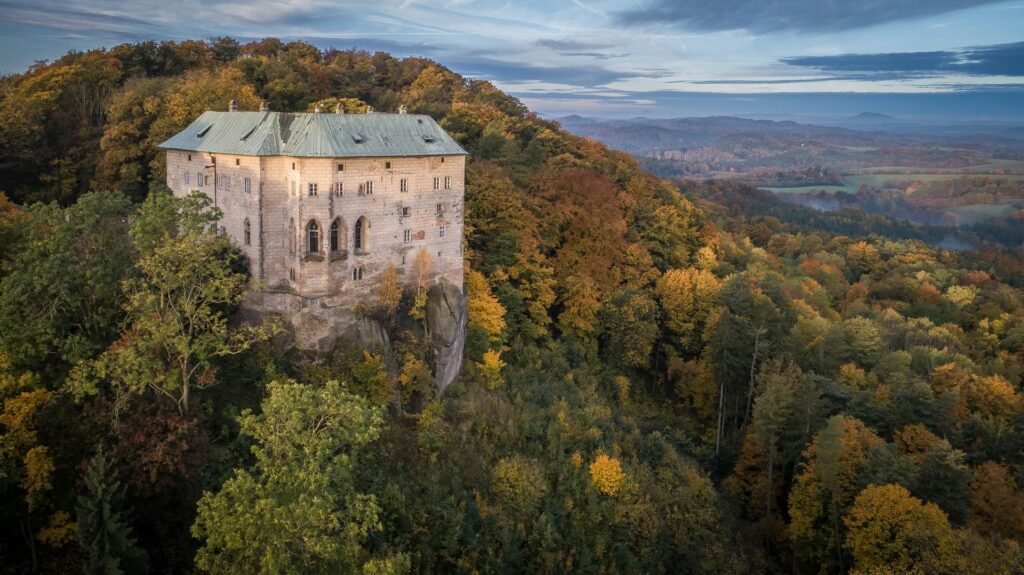
Hidden in the dense forests 30 miles (48 km) north of Prague stands a 13th-century structure with a disturbing architectural anomaly. Houska Castle lacks a water source, originally had no stairs leading to its upper floors, and features defensive walls that face inward.
Historical records and local lore report this fortress was not constructed to keep invaders out, but to trap something inside. Czech folklore maintains the structure was built to seal a gaping crack in the limestone that villagers firmly believed was a gateway to Hell. Discover the bizarre history, the unsettling folklore, and the 20th-century military occupations that continue to draw thousands of curious visitors.
The Inward-Facing Defenses
King Ottokar II of Bohemia ordered the construction between 1253 and 1278. Official records state it served as an administrative hub. The fortifications, however, pointed toward the inner courtyard. According to chronicler Václav Hájek in 1541, a seemingly endless abyss emerged in the cliff.
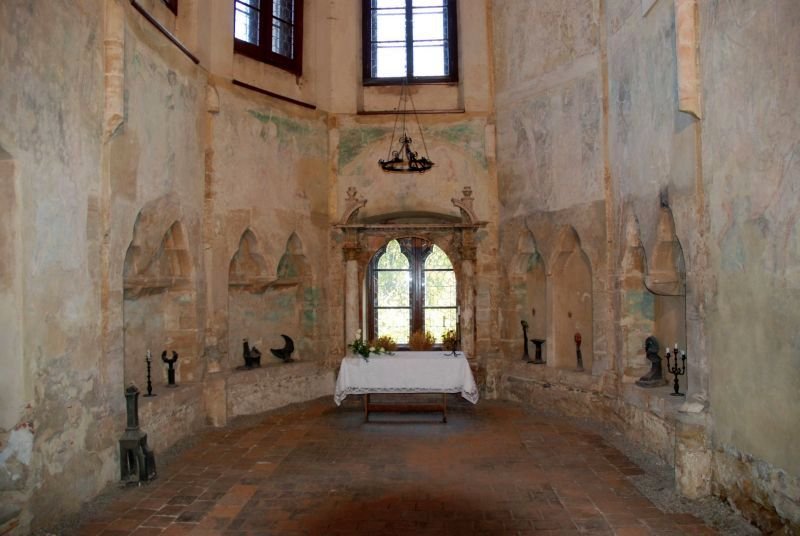
Locals were terrified of half-human hybrids they claimed crawled out at night. To stop this, the king had the gateway to Hell sealed with stone plates. A chapel, dedicated to Archangel Michael, was built directly over the crack. Villagers also recorded stories of condemned prisoners lowered into the dark void to report what they saw.
Aristocrats And Shifting Ownership
Over the centuries, the property changed hands numerous times among nobles. In 1639, a Swedish mercenary named Oronto reportedly occupied the grounds.
Locals claimed he practiced black magic in a laboratory, leading two hunters to assassinate him, though modern scholars view accounts of his presence as unverified. The building was renovated in the 1580s, fell into complete disrepair by the 1700s, and saw a full restoration in 1823. A century later, Josef Šimonek, the president of Škoda Auto, purchased the estate.
The Nazi Occupation
During the 1940s, Nazi forces took control of the isolated property. The strategic military value was low, given the lack of outward defenses. Historical accounts indicate the Wehrmacht utilized the castle to store SS leader Heinrich Himmler’s library.
This collection contained 13,000 manuscripts focusing on occultism. Some speculate the high ranks occupied the site to investigate if the gateway to Hell was real. The troops remained stationed there until the end of World War II, after which the Šimonek family reclaimed the estate.
Bizarre Frescoes Today
Houska Castle opened to the public in 1999. Tourists now walk through the inward-facing walls and explore the chapel built over the sealed limestone crack. Inside this chapel, visitors observe highly unusual medieval frescoes.
One painting depicts a creature with the upper body of a human woman and the lower body of a horse. This centaur is drawn shooting an arrow with its left hand, an unusual motif for a church of that era. Visitors continue touring the grounds to view these architectural anomalies firsthand.