
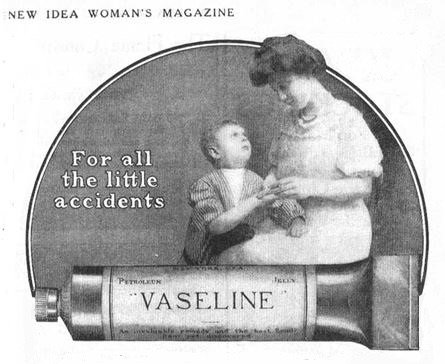
A dark, sticky sludge clogging 19th-century oil pumps in Pennsylvania eventually became a massive commercial product. In 1859, oil workers despised the thick residue building up on their drilling equipment.
Yet, a young chemist noticed the drillers applying this exact same dirt-covered sludge to their open wounds. This observation launched a decade of chemical purification and self-experimentation that resulted in one of the most widely distributed goods in history.
The Discovery of Rod Wax in Pennsylvania
Robert Chesebrough was a 22-year-old chemist working in the sperm whale oil industry. When petroleum was discovered in Titusville, Pennsylvania, he traveled over 300 miles (482 kilometers) from New York to investigate the new drilling sites. He wandered around the wooden derricks and noticed the workers struggling with a black, waxy substance they called “rod wax.”
The material constantly jammed the drilling pumps and caused major mechanical delays. Chesebrough also watched the drillers rub the unrefined black paste directly onto their cuts and burns to stop bleeding and relieve pain.
Purifying the Petroleum Jelly
Intrigued by the chemical properties of the rod wax, Chesebrough collected several heavy buckets of the sludge and transported them back to his laboratory in Brooklyn. He spent the next decade experimenting with heat and filtration to isolate the healing components. He developed a process that involved distilling the foul-smelling crude material under a vacuum and filtering it through bone char.
The end result was a translucent, odorless, and tasteless gel. Chesebrough patented the purification process in 1865 and officially registered the Vaseline brand name in 1872.
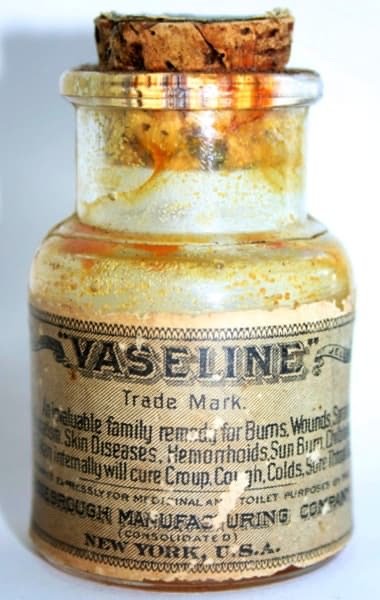
Self-Experimentation and Marketing
To prove the medical efficacy of his refined petroleum jelly, Chesebrough resorted to direct physical demonstrations. He traveled by horse-drawn carriage across New York State to show his product to crowds. During these public exhibitions, he deliberately burned his own hands with an open flame or poured acid on his skin.
He then immediately coated the fresh wounds with his clear Vaseline gel. He returned to the same towns weeks later to show the audiences his healed skin. He also distributed thousands of free half-ounce (14-gram) samples to onlookers.
A Nationwide Consumer Frenzy
The direct demonstrations generated immediate sales. By 1874, pharmacies and general stores across the United States were selling over 1,400 jars of Vaseline every single day. The medical community began purchasing the product in bulk quantities to treat minor abrasions and dry skin conditions.
Chesebrough opened a large manufacturing facility to keep up with the consumer demand. The manufacturing process remained identical to his original laboratory method. He consumed a daily spoonful of his own product until his death at the age of 96.