
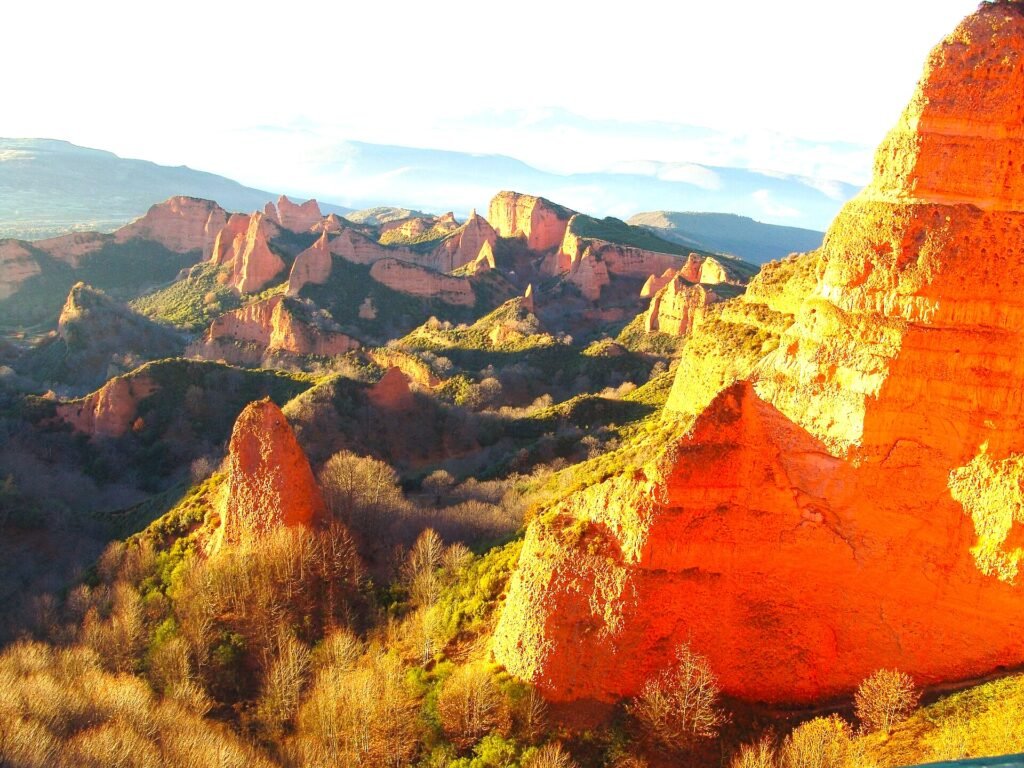
In northwestern Spain, where Castilla y León meets Galicia, vibrant green mountains are slashed by towering cliffs of bright orange rock. This striking landscape is not a natural formation. It is the direct result of a massive ancient industrial operation.
Over two millennia ago, the Roman Empire systematically tore these mountains apart to extract vast quantities of buried gold. Using structural collapses and immense volumes of water, Roman engineers permanently altered the topography of the Iberian Peninsula. The site is known as Las Médulas, and the extraction methods used here display the sheer scale of ancient engineering.
Collapsing the Earth from Within
The Roman presence in Iberia began in the second century BCE. To access the gold hidden deep inside the mountains, workers carved extensive galleries directly into the rock. Pliny the Elder served as a Roman procurator in Spain during the first century and documented these techniques in his encyclopedic Natural History. Miners worked underground for months in massive excavated spaces supported only by wooden arches.
Once the workers extracted the accessible ore, they evacuated the cavern. Sentinels then ordered the removal of the wooden support beams. Without these supports, the immense weight of the mountain caused the entire structure to collapse inward. Pliny described the event as a violent destruction, producing an incredibly dense dust cloud and a deafening crash as the mountain was rent to pieces.
Harnessing the Power of Water
The second method relied on extreme water pressure. The Romans constructed at least seven long aqueducts to channel snowmelt from nearby peaks into the mining site. They filled enormous reservoirs situated high above the mines. When they opened the dams, a massive torrent of water rushed downward to forcefully wash away tons of dirt and rock covering the gold.
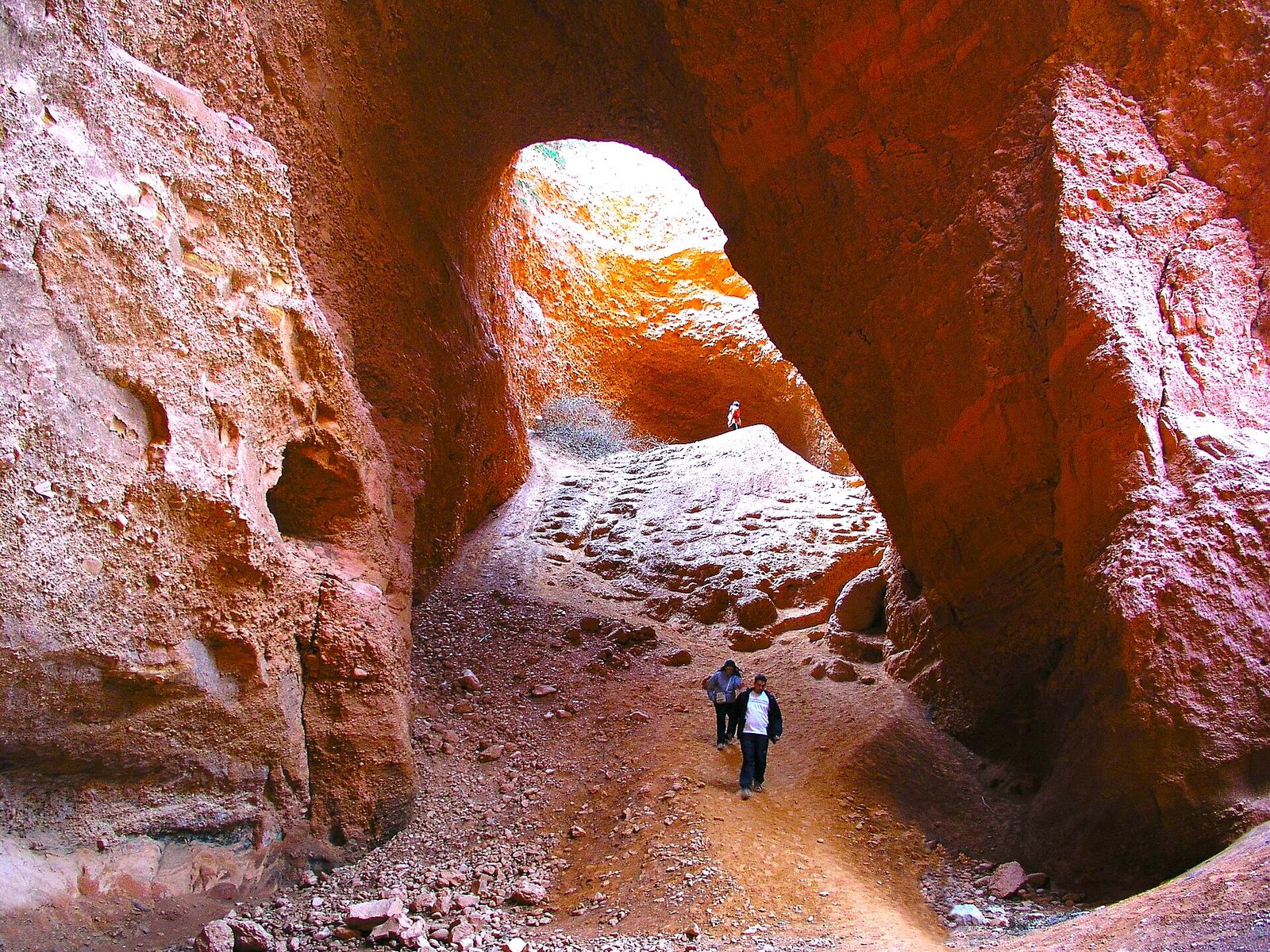
Alternatively, workers bored deep, narrow tunnels into the stone at precise intervals. They flooded these shafts simultaneously. The sudden, intense water pressure caused the mountain bases to fracture. The mountainsides would then fall away like unsteady sandcastles, exposing the rich gold veins hidden inside.
Tons of Ancient Wealth
These aggressive extraction methods yielded massive amounts of wealth. Historical estimates indicate the Romans removed approximately 20,000 libra of gold from Spain each year. This output converts to 6,600 kilograms or 14,500 pounds of gold annually. At current market prices, this volume of gold would be worth over 27 million dollars.
The Landscape Left Behind
The violent, shaking sounds of cracking mountainsides went silent around 1,800 years ago. The resulting landscape features jagged orange rock formations towering over the verdant valleys. In 1997, UNESCO designated Las Médulas as a World Heritage Site. Today, visitors walk through the same ancient tunnels carved and flooded by Roman workers. The site stands exactly as the miners left it, an expansive geographical footprint created by an empire in pursuit of massive wealth.