
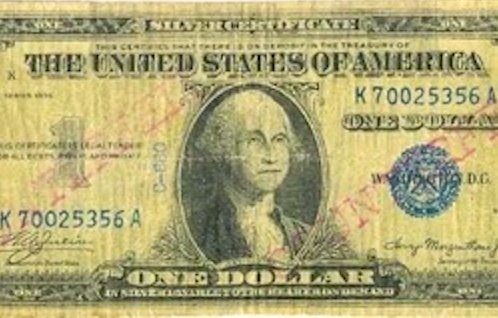
For ten years, the United States Secret Service ran one of the longest counterfeiting hunts in its history at the time, chasing a forger who printed blurred one-dollar bills with “Wahsington” misspelled. Agents handed out about 200,000 warning placards across New York without finding a solid lead. Their target turned out to be an aging junk collector whose ten-year run ended only after a fire, snowfall, and a boys’ poker game gave him away.
From Building Superintendent to Kitchen Counterfeiter
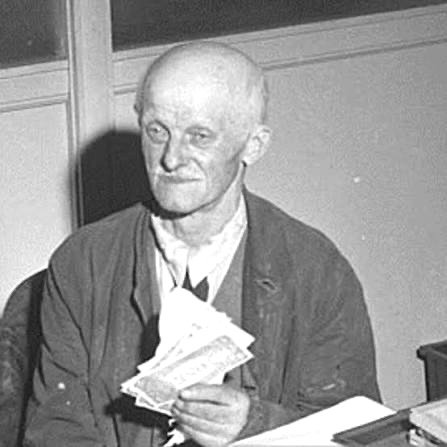
Born in Austria in January 1876, Emerich Juettner reached New York at age 14 on June 21, 1890. He worked as a picture frame gilder, married Florence LeMein in 1902, and raised two children while working as a building superintendent on the Upper East Side. After his wife died, he became a junk collector, pushing a used cart for sporadic earnings.
Using metal engraving and photography skills from his youth, Juettner began making fake $1 bills in November 1938. He photographed a real dollar, transferred the images to zinc plates, filled in details by hand, and printed notes on a cheap hand press in his kitchen. Made with poor ink on cheap paper, the bills looked uneven and sometimes had spelling errors.
How Case File 880 Baffled Federal Agents
After Juettner spent his first fake bill at a local cigar shop, the Secret Service opened Case File 880. Over the next decade, agents distributed about 200,000 warning placards at 10,000 stores and interviewed dozens of people who had spent the bills.
Juettner avoided capture by working alone on a small scale. He spent ten to twelve homemade $1 bills weekly across Manhattan shops, diners, bars, and street vendors, never repeating storefronts or tenders. Because few people examined worn single-dollar bills closely, the notes kept circulating quietly.
A Fire, Snowbound Plates, and a Poker Game
The search ended in January 1948. After a fire broke out in Juettner’s apartment building, his zinc plates and 30 fake $1 bills ended up outside under snow. Schoolboys playing in a vacant Upper West Side lot uncovered them. A week later, a father caught his son playing poker with a strange bill and alerted police, who notified the Secret Service. Agents traced the lot to the fire-damaged apartment and arrested Juettner.
A One-Dollar Fine and a Hollywood Film
Juettner openly admitted counterfeiting for nearly ten years, adding that he never gave more than one bill to anyone so nobody lost more than $1. Sentenced to one year and one day in prison, he was paroled after four months and paid a $1 fine that drew courtroom laughter. Following St. Clair McKelway’s 1949 New Yorker series, Juettner sold his story rights for the 1950 film Mister 880, earning more from Hollywood than from counterfeiting before dying on Long Island on January 4, 1955.