
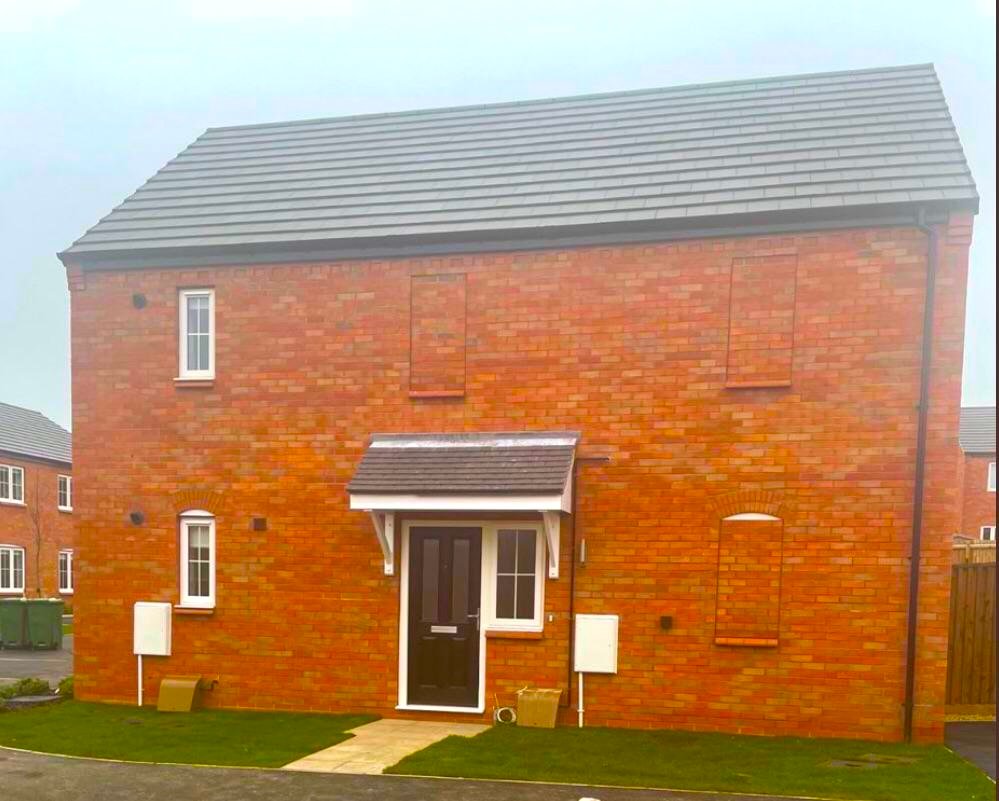
In 1696, the English government found an unusual way to assess a citizen’s wealth without ever looking at their finances: they counted their windows. For over 150 years across parts of Europe, having natural light in a home came with a strict financial penalty.
Rather than pay the government for the sun shining through their glass, property owners began bricking up their windows. The property tax altered the architecture of the era, turning the basic need for fresh air and daylight into a chargeable asset.
The Alternative to Income Tax
Under King William III, the Taxation (No. 3) Act 1695 was designed to calculate prosperity without investigating personal accounts. During this period, the British public strictly opposed the concept of an income tax. Citizens viewed financial disclosure as an unacceptable government intrusion and a direct threat to personal liberty.
Because of this resistance, the first permanent British income tax did not arrive until 1842. Authorities needed a levy that was easy to assess. Counting windows from the street required no entry into the home, a feature noted by economist Adam Smith in The Wealth of Nations.
Calculating the Cost of Glass
When introduced in England and Wales, the system featured a two-shilling flat-rate house tax, plus a variable charge for properties with more than ten windows. Over the decades, the thresholds shifted. By 1747, the flat rate detached from the window tax, and properties incurred specific charges based on exact brackets.
In 1766, the taxable threshold dropped to seven windows. While poverty granted some exemptions, certain agricultural spaces, such as dairies and cheese rooms, could also avoid the tax if the owner carved the room’s name directly onto the lintel.
Bricked Up Facades Across Europe
The tax quickly expanded. Scotland adopted it in 1748, France established its version in 1798, and Ireland followed in 1799. To avoid the rising charges, property owners physically filled their window spaces with masonry.
While architects had used blind windows for aesthetic symmetry since the medieval period, many Europeans from the 1600s onward deliberately bricked up functional windows strictly to lower their tax bills. The public heavily criticized the policy, frequently labeling it a direct tax on light and air.
The Final Abolition in 1851
Following a strong wave of public agitation during the winter of 1850 and 1851, the British government finally repealed the window tax on July 24, 1851, substituting it with a tax on inhabited houses.
Scotland and Ireland abolished their versions simultaneously, while France maintained its tax until 1926. Today, popular belief often links the phrase “daylight robbery” to this specific era of property taxation, though no scholarly evidence actually supports the connection.