
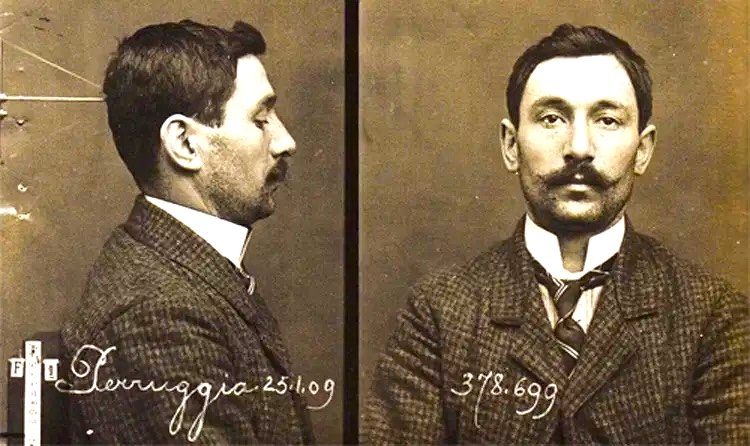
On a Monday morning in August 1911, a museum handyman walked out of the Louvre in Paris with a painting measuring just 30 by 21 inches hidden under his work smock. The museum staff did not even notice it was missing until the next day. Before this heist, the artwork shared a crowded wall with numerous other Renaissance paintings. By the time police recovered it two years later, the theft had transformed Leonardo da Vinci’s Mona Lisa into the most globally recognized painting on Earth.
A Handyman’s Plot to Take Da Vinci’s Masterpiece
Vincenzo Peruggia occasionally worked on protective glass displays at the Louvre. He wrongly believed Napoleon had looted the Mona Lisa from Italy and decided it was his patriotic duty to return it.
During police interrogations, Peruggia stated he arrived with other workers on August 21, waited for the specific gallery to empty, removed the art from the wall, wrapped it in his smock, and left the building. The next day, security checked with photographers who occasionally removed items for documentation. Only then did the Louvre realize the art was gone.
Suspecting Pablo Picasso of the Museum Heist
The heist became an international news sensation. The story dominated newspapers in France and reached global publications like The New York Times. When the Louvre reopened a week later, crowds lined up just to view the empty space on the wall. Meanwhile, the police desperately investigated multiple suspects.
They questioned poet Guillaume Apollinaire, who implicated his friend, young Spanish painter Pablo Picasso. Both men cried under police interrogation before investigators determined neither was involved in the crime.
Two Years Hidden in a Paris Apartment Trunk
The intense global media coverage caused a problem for the thief. With the painting’s face plastered across international newspapers, Peruggia could not sell it without risking immediate arrest. He kept the Mona Lisa locked inside a trunk in his Paris apartment for two full years.
Because of the widespread news coverage of the theft, millions of people worldwide saw the artwork for the first time, establishing its massive global fame in an era of early mass communication.
The Recovery and Return to the Louvre Gallery
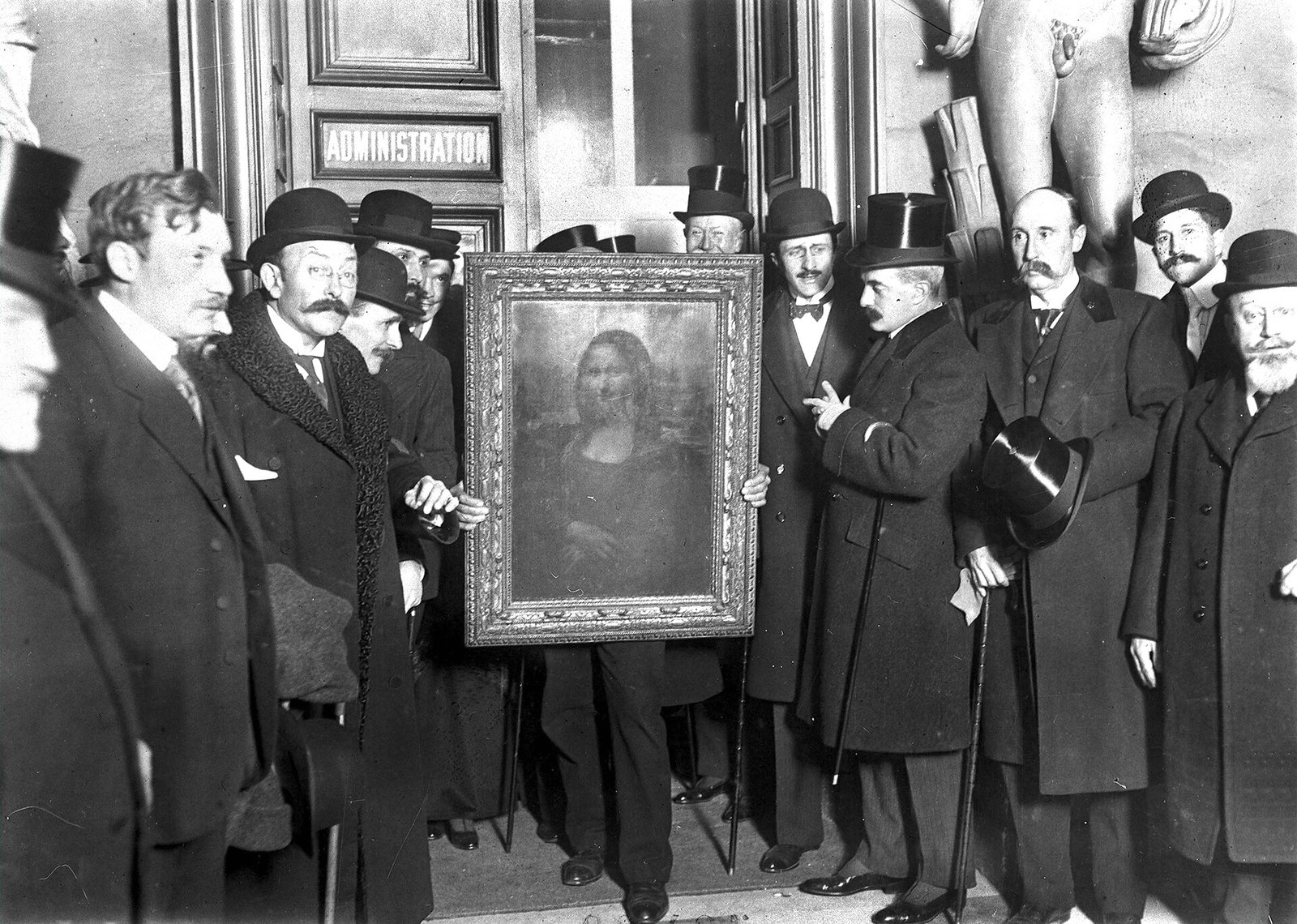
In late 1913, Peruggia contacted Alfredo Geri, an art dealer in Florence. He offered to bring the artwork to Italy for a reward. Geri instructed Peruggia to meet him at the Uffizi Gallery for authentication. After Peruggia dropped it off, Geri promised to keep it safe but immediately contacted the police.
Authorities arrested Peruggia at his hotel. Italy praised his patriotism, and he served six months in prison. The Uffizi Gallery displayed the piece for two weeks before officially returning it to the Louvre on January 4, 1914.