
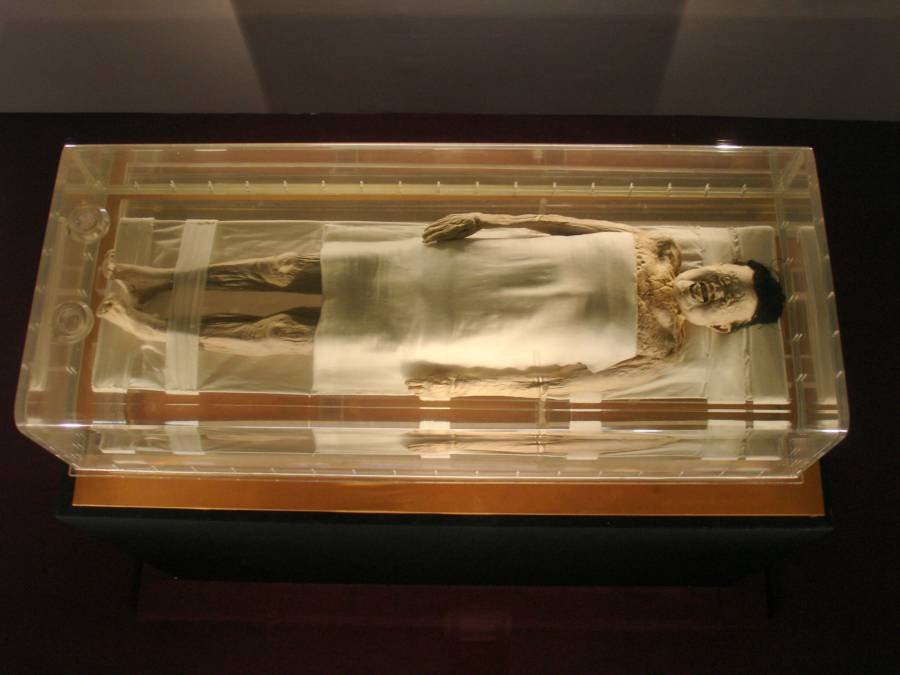
In 1971, workers digging near an air raid shelter near Changsha, China, uncovered a massive funnel-like crypt buried almost 40 feet (12.2 meters) underground. Inside lay Xin Zhui, also known as Lady Dai, a woman from the Chinese Han dynasty, which lasted from 206 BC to 220 AD. She died in 163 BC at the age of 50.
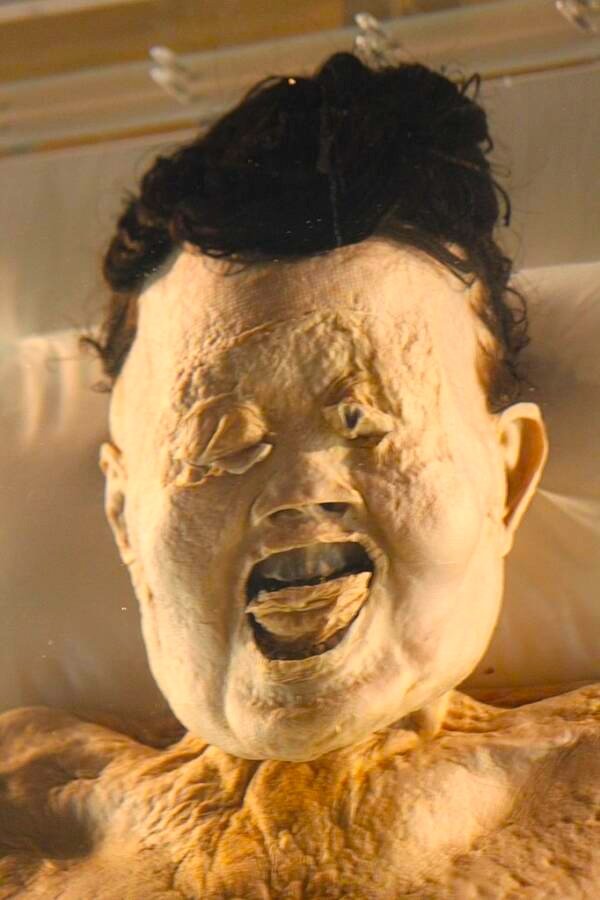
Despite being over 2,000 years old at the time of her unearthing, her skin remained soft to the touch, displaying both moisture and elasticity. Her ligaments could still bend exactly like those of a living person. She retained all of her original hair, including the hair on her head, her eyebrows, her eyelashes, and even the hairs inside her nostrils. This unprecedented find quickly became recognized globally as the best-preserved human mummy in history.
Unearthing The Hidden Artifacts Of The Crypt
Xin Zhui was the wife of Li Cang, an official holding the title of Marquis of Dai. Her massive tomb contained more than 1,000 precious artifacts meant to accompany her. Excavators cataloged extensive collections of makeup, toiletries, and hundreds of individual pieces of lacquerware.
The crypt also held 162 carved wooden figures, which were created to represent her personal staff of servants. Furthermore, a complete meal was meticulously laid out to be enjoyed by Xin Zhui in the afterlife.
The Engineering Behind The Preservation
Researchers attribute her physical condition to the airtight structure of the tomb. Xin Zhui was placed inside the smallest of four pine box coffins, which nested inside one another. She was tightly wrapped in twenty distinct layers of silk fabric. Her body was submerged in 21 gallons (79.5 liters) of a slightly acidic, unidentified liquid that contained traces of magnesium. The floor featured a thick layer of paste-like soil.
The entire crypt was packed densely with moisture-absorbing charcoal and sealed completely with clay, blocking oxygen and bacteria. An additional 3 feet (0.9 meters) of clay sealed the very top structure, entirely preventing water penetration.
Medical Autopsy And The Final Meal
Upon exposure to oxygen, the corpse immediately began deteriorating. However, an autopsy revealed her organs were entirely intact. Her veins still housed type-A blood with visible clots, confirming the official cause of death as a heart attack. Pathologists documented multiple prior ailments, including gallstones, high cholesterol, high blood pressure, and liver disease brought on by obesity, a lack of exercise, and an over-indulgent diet.
Inside her stomach and intestines, pathologists found exactly 138 undigested melon seeds. Since melon seeds require an hour to digest, researchers confirmed the fruit was eaten minutes before her fatal cardiac arrest. Today, she is housed in the Hunan Provincial Museum.