
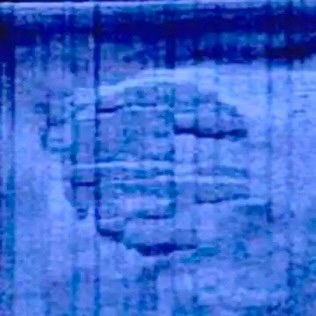
In the summer of 2011, a deep-sea treasure hunt in the Gulf of Bothnia yielded an image that immediately captured global attention. A blurry sonar scan revealed a massive, circular object resting on the floor of the northern Baltic Sea. Measuring 60 meters across, the structure featured bizarre shapes that looked entirely out of place in the dark waters.
Within months, international tabloid newspapers published the image, fueling wild speculation that an alien spacecraft had crash-landed in the ocean. The discovery triggered a fierce debate between salvage operators and the global scientific community.
OceanX and the Viral Sonar Scan
Swedish salvage operators Peter Lindberg and Dennis Åsberg, leading the OceanX diving team, were originally searching for an old shipwreck when their equipment captured the unusual formation. They described the 200-foot diameter object as having features of a non-natural origin. In 2012, the team revisited the site to acquire more detailed sonar scans.
Following a June 2012 article published by the UK’s Daily Mail, the image went viral. Some media outlets even drew graphic outlines over the scan to make it resemble the fictional Millennium Falcon spaceship.
Glacial Rocks and Geological Processes
OceanX eventually recovered stone samples from the site and delivered them to Volker Brüchert, an associate professor of geology at Stockholm University. Brüchert analyzed the materials and identified them as common granites, gneisses, and sandstones, along with a single piece of volcanic basaltic rock.
He explained that glaciers likely transported these rocks during the ice age. Furthermore, geologists Fredrik Klingberg and Martin Jakobsson confirmed that the chemical composition of the samples, which included limonite and goethite, perfectly matched natural nodules frequently found on the seabed.
Technical Flaws and Expert Criticism
The original sonar image faced heavy scrutiny from marine experts. Hanumant Singh from the Woods Hole Oceanographic Institution stated that the sonar instrument used was cheap, improperly wired, and poorly calibrated. He concluded the resulting distortions rendered the image useless for identifying undersea formations.
Scientist Charles Paull of the Monterey Bay Aquarium Research Institute agreed, suggesting the blur could simply be a rock outcrop, fishing trawler sediment, or a school of fish. Finnish planetary geomorphologist Jarmo Korteniemi added that regional bathymetry shows the object is just part of a larger group of naturally occurring mounds, likely a drumlin formed by glacial action.
Submarine Tours and Future Expeditions
As the scientific consensus pointed strictly to a natural geological formation, critics questioned the motives behind the ongoing publicity. Jonathan Hill of the Mars Space Flight Facility noted that OceanX had announced plans to charge wealthy tourists for submarine trips to visit the site.
He pointed out that proving the anomaly was just a rock would not benefit the salvage team financially. Despite the scientific conclusions, Lindberg stated in a 2019 interview that a new expedition could occur via an upcoming television production.