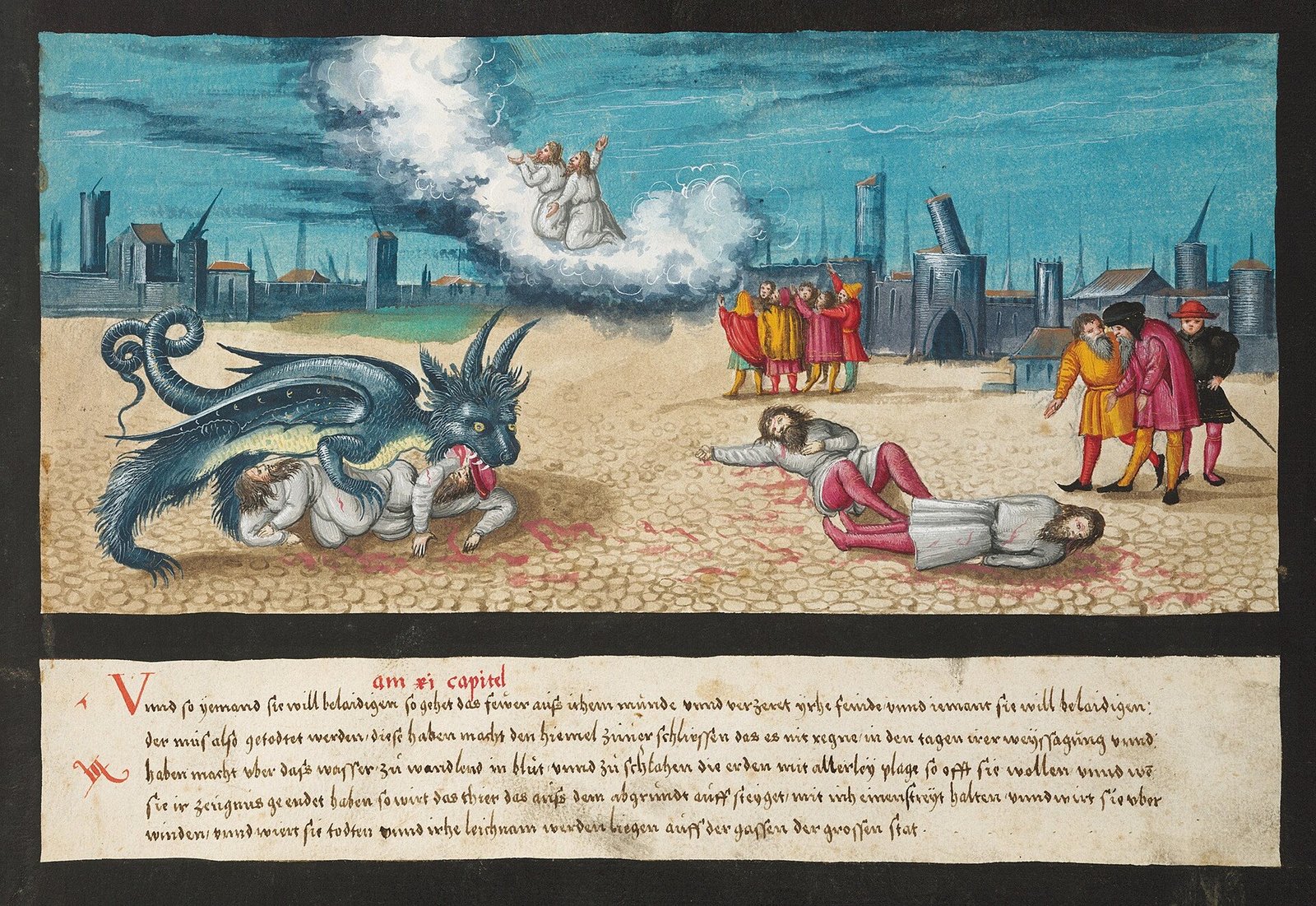
Created in sixteenth-century Germany, a mysterious manuscript surfaced with no title page, no author dedication, and no introductory explanation. The Augsburg Book of Miracles plunges directly into vivid illustrations of bleeding skies, catastrophic storms, and monstrous beasts.
Rendered in gouache and watercolor, this artifact chronicles historical omens, biblical phenomena, and celestial disasters from the beginning of time through the end of the world. Rediscovered centuries later, the surviving folios now offer a complete view into the cosmic fears and apocalyptic expectations of Renaissance Europe.
Origin And Workshop Clues
Scholars conclude that the manuscript originated in Augsburg based on local watermarks, regional event entries, and artistic styles. The production period points to the years between 1545 and 1552. A portion of the text draws directly from the 1545 Luther Bible, while the final historical event depicts a severe hailstorm that struck Dordrecht in 1552.
The name of printmaker Hans Burgkmair appears on a single folio. Art historian Till-Holger Borchert notes that because Hans Burgkmair the Elder died in the 1530s, his son, Hans Burgkmair the Younger, likely contributed to the workshop illustrations alongside Heinrich Vogtherr the Elder or Younger.
Biblical Omens And Ancient Catastrophes
The manuscript consists of 123 surviving folios with 23 inserts, each captioned in German Gothic script. The pages unfold in rough chronological order across three distinct sections. The opening segment spans Folios 1 through 15, illustrating miracles from the Old Testament. These images detail dramatic events from the Great Flood to the vision of Ezekiel, including Moses parting the Red Sea and Jonah cast from the whale.
Historical Freaks Of Nature And Celestial Signs
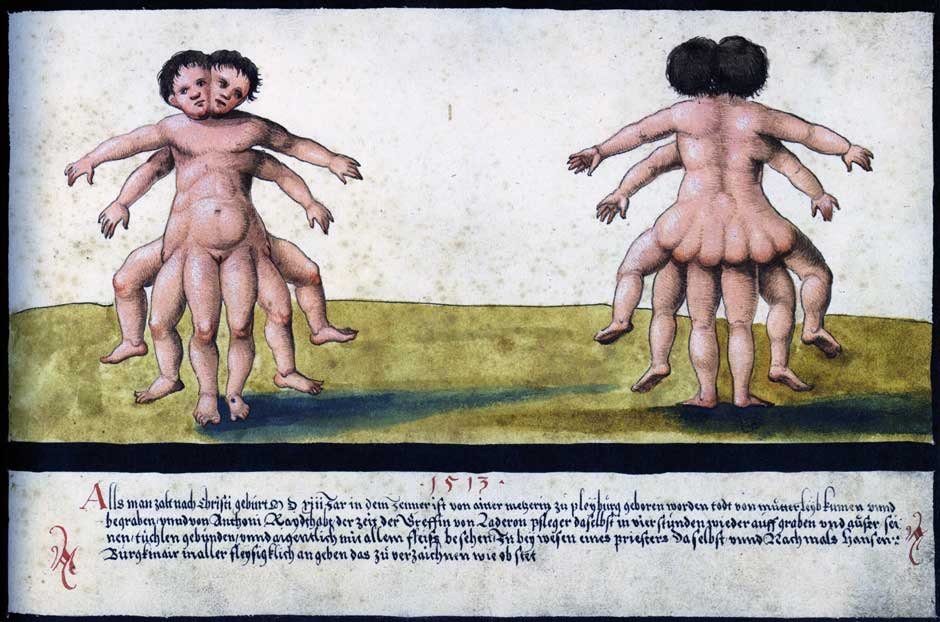
The second section, spanning Folios 16 to 171, documents extraordinary phenomena from antiquity up to the year 1552. These entries record terrifying meteorological and astronomical portents witnessed across Europe. Documented events include:
- A rain of blood and flesh recorded in 1456
- Five distinct suns appearing over Leipzig in 1551
- A bizarre sea creature documented in 1534
- The eruption of Mount Vesuvius, labeled in the text as 1482
- Monstrous animal births and historic comets
The Final Visions Of St. John
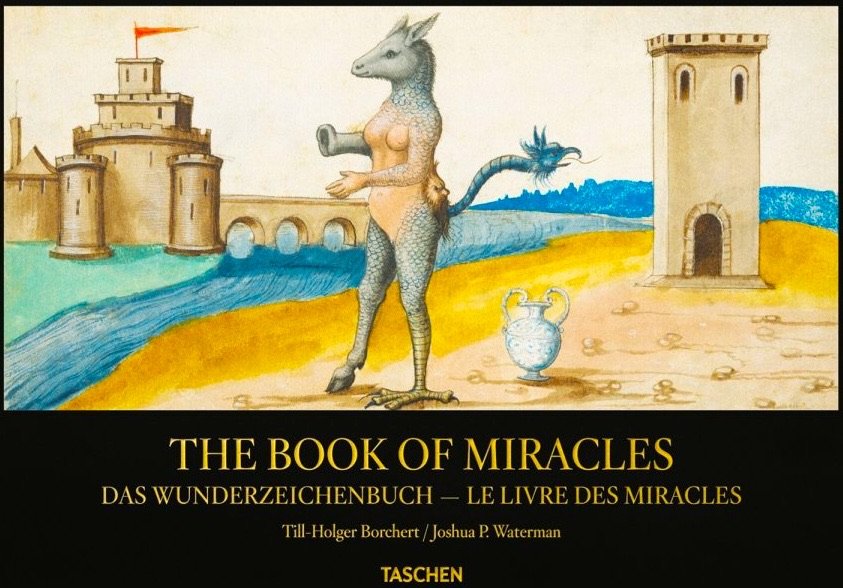
The manuscript concludes with nineteen surviving sheets depicting scenes from the New Testament Book of Revelation. These dramatic illuminations show the opening of the sixth seal, angels sounding apocalyptic trumpets, the rise of the beast from the bottomless pit, and the fall of Babylon. Rebound during the nineteenth century, the original document is preserved in the private collection of art collector Mickey Cartin, with a complete facsimile edition published by Taschen in 2013.