
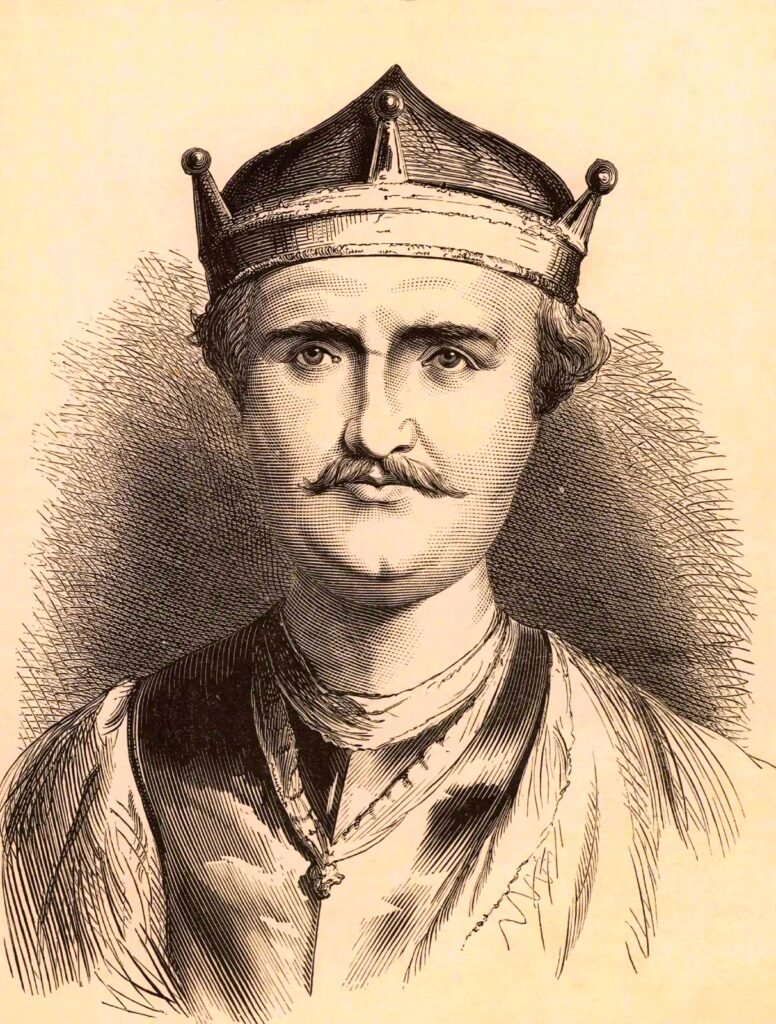
When a monarch dies, the public expects a meticulously choreographed procession. In 1087, the exact opposite happened to the most feared ruler in Europe. The demise of William the Conqueror devolved into a gruesome chain of events featuring theft, city fires, real estate extortion, and a biological disaster inside a crowded church.
The architect of the Norman Conquest took England by force, but his own funeral became a horrific spectacle of swelling gases and ruptured organs that forced his terrified mourners to flee.
A Fatal Saddle Injury
William I was actively campaigning against King Philip of France when a severe accident abruptly ended his military career. Chronicler William of Malmesbury recorded that the king, who had grown heavily overweight, was violently thrown onto the hard, metal-reinforced wooden pommel of his horse’s saddle.
The impact ruptured his internal organs. The mortally wounded king was transported to the Norman capital of Rouen. Knowing he would not survive, he formally split his domains, naming his younger son William Rufus as heir to the English throne, while assigning Normandy to his eldest son. William Rufus immediately rushed across the channel to seize the crown, leaving his dying father behind.
Stripped Bare by Looters
The moment William took his final breath, the royal court disintegrated. The noblemen who surrounded his deathbed scuttled away to secure their properties.
The remaining servants ruthlessly looted the royal bedchamber, stripping the room of weapons, furniture, valuables, and the king’s clothes, leaving his naked body abandoned on the floor. Eventually, a passing knight funded a rudimentary embalming process and arranged to transport the corpse to the Abbaye-aux-Hommes in Caen.
Fire and a Stolen Grave
Disaster stalked the procession upon arrival in Caen. As monks gathered to receive the monarch, a massive fire broke out, forcing attendees to abandon the corpse to extinguish the flames. Once the body finally reached the abbey, the service was interrupted by an angry local man.
He stood before the mourners and loudly proclaimed that the ground beneath the church had been stolen from his father by William. He refused to allow the burial on his family’s property. The clergy had to negotiate a financial settlement and pay compensation on the spot.
The Exploding Monarch
Extended delays and summer heat had severely bloated the king’s decomposing body. The masons had constructed a stone sarcophagus that was simply too small for his inflated remains. As attendants attempted to force the oversized corpse into the narrow stone cavity, the pressure proved too much.
According to the chronicler Orderic Vitalis, the king’s swollen bowels burst completely open. A putrid stench of rotting flesh instantly assaulted the nostrils of everyone inside the abbey. Burning frankincense failed to mask the horrific smell, causing the assembled bishops and mourners to desperately rush through the final rites and flee the building.