
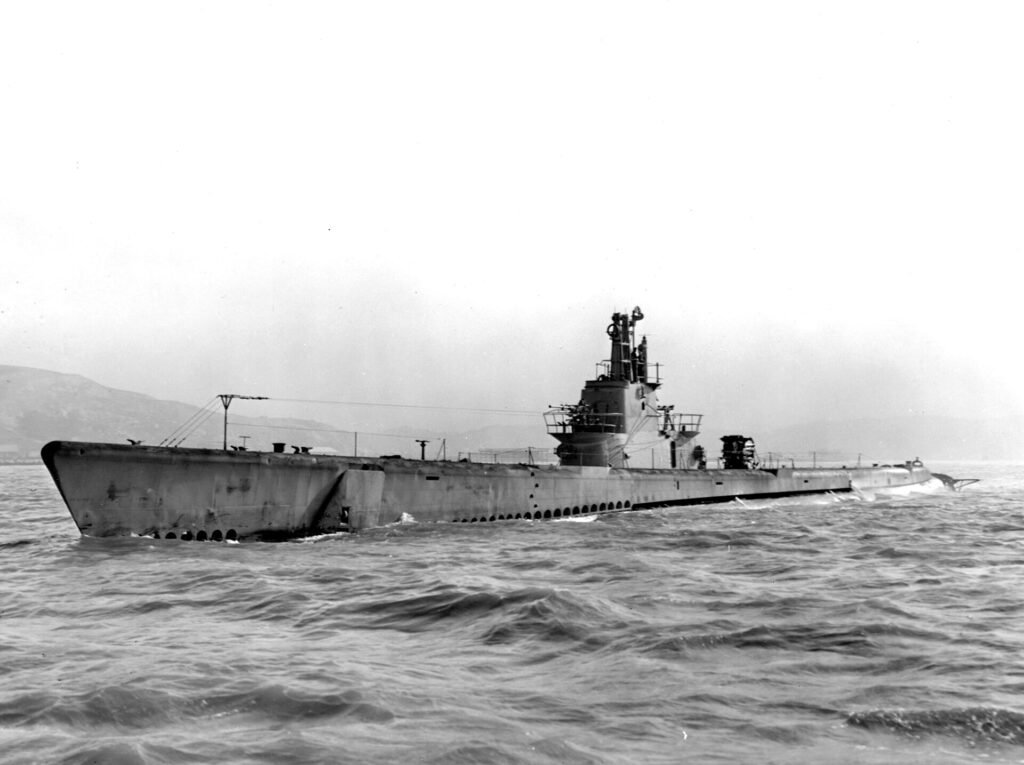
In the summer of 1945, a crew of American sailors sneaked ashore onto the Japanese home islands, planted explosives, and completely derailed a coastal train.
These men were not infantry or covert operatives; they were submariners from the USS Barb. Throughout World War II, this Gato-class submarine did much more than patrol the ocean depths. From sinking an aircraft carrier to firing rockets at coastal towns, the USS Barb compiled one of the most outstanding combat records in United States Navy history.
From the Atlantic to Pacific Naval Warfare
Commissioned on July 8, 1942, the USS Barb (SS-220) began her service in the European Theater. For her first five patrols, she operated out of Scotland, carrying out reconnaissance for the invasion of North Africa and hunting Axis blockade runners. In late 1943, the submarine transferred to Pearl Harbor.
In the Pacific Ocean, the Barb found lucrative hunting grounds. During her seven Pacific patrols, she officially sank 17 enemy vessels totaling 96,628 tons, including the Japanese aircraft carrier Un’yō in September 1944. That same month, she rescued 14 Australian and British prisoners of war who had survived the sinking of the SS Rakuyō Maru.
A Daring Raid in Namkwan Harbor
The submarine’s most notable actions occurred during her final patrols under the command of Commander Eugene B. Fluckey. In January 1945, the Barb penetrated Namkwan Harbor on the China coast to attack a convoy of 30 anchored ships. Maneuvering in dangerously shallow waters, the crew launched their torpedoes into the enemy group.
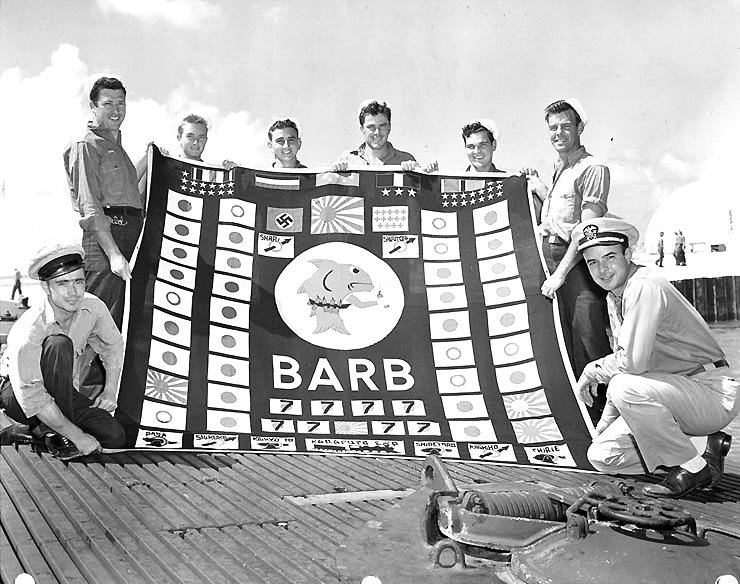
To escape, the Barb raced on the surface at high speed for a full hour through uncharted, heavily mined, and rock-obstructed waters. Commander Fluckey earned the Medal of Honor for this action, and the submarine received the Presidential Unit Citation.
Ground Combat on the Japanese Coast
Before her twelfth and final patrol, the Barb underwent yard alterations that included the installation of 130-millimeter rocket launchers. In June 1945, she became the first U.S. submarine to employ rockets in combat, striking several towns on Karafuto. The crew also bombarded the Tyuleny Island garrison with regular armament, causing fires and destroying constructions. Then, on the night of July 22, an eight-man demolition squad went ashore on Karafuto.
Chief Gunner’s Mate Paul G. Saunders and seven other carefully selected sailors planted a charge that successfully blew up a railroad train. This was the only ground combat operation in the Japanese home islands during the war.
A Quiet Post-War End in Italy
After hostilities ceased, the USS Barb returned to the United States and was placed in reserve. She briefly returned to active service in the 1950s and underwent a Greater Underwater Propulsion Power Program conversion. In December 1954, the U.S. loaned the submarine to Italy, where she was renamed the Enrico Tazzoli. She served with the Italian Navy until 1972, when she was sold for scrap for approximately $100,000.