
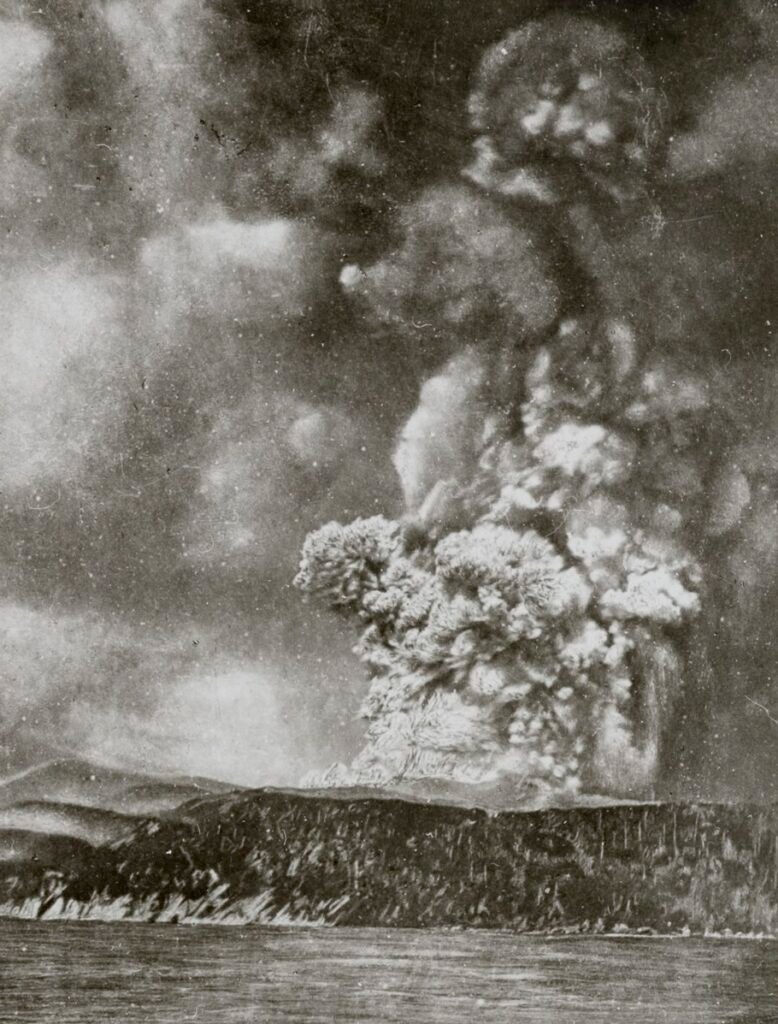
On August 27, 1883, a noise ripped through the atmosphere with such extreme force that people 3,000 miles away mistook it for nearby cannon fire. A volcanic island in the Sunda Strait simply blew itself apart, releasing energy four times greater than the most powerful nuclear weapon ever detonated.
The resulting acoustic wave circled the planet more than three times, while massive walls of water flattened coastlines and ash turned global sunsets blood-red for years. This is the timeline of the Krakatoa eruption, the single most destructive acoustic event ever documented.
The 10:02 A.M. Cataclysm
For months, the Indonesian island of Krakatoa had been venting steam and ash. At 10:02 a.m. on August 27, the mountain unleashed its third and largest explosion of the day. The sheer volume of the blast reached an estimated 310 decibels at the source. The noise traveled 1,930 miles to Perth, Australia, and 3,000 miles to the island of Rodrigues near Mauritius.
A Shockwave Felt Around the World
The pressure wave radiated outward at 675 miles per hour. Aboard the RMS Norham Castle, sailing 40 miles off the coast of Sumatra, the concussive force instantly ruptured the eardrums of the sailors on deck. One hundred miles away in Batavia, the acoustic pressure shattered windows and cracked brick walls.
Barographs across the globe recorded the exact same atmospheric wave passing by seven different times over five days as it bounced back and forth between the volcano and its exact antipodal point on the opposite side of the Earth.
Walls of Water and Scorching Ash
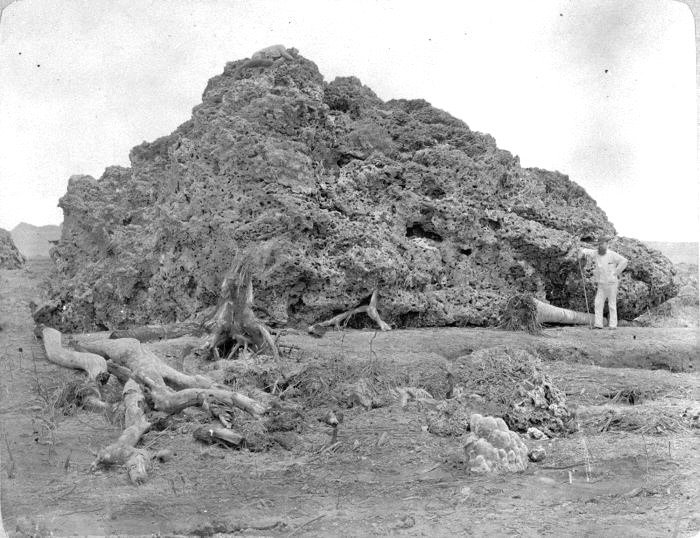
As the island collapsed into a newly formed underwater caldera, it displaced millions of tons of seawater. The resulting tsunamis reached heights of 151 feet. These massive waves surged across the Sunda Strait, completely washing away coastal towns like Merak and Telok Betong.
At the same time, the volcano ejected pyroclastic flows—dense clouds of superheated gas and ash—that traveled at 62 miles per hour across the ocean surface on a cushion of steam, incinerating everything they touched. In total, the eruption and massive waves killed 36,417 people.
A Changed Atmosphere
The detonation hurled 20 cubic kilometers of debris into the sky, pushing an ash column 260,000 feet into the stratosphere. High-altitude winds distributed sulfur dioxide across the planet, lowering global temperatures by 0.72 degrees Fahrenheit the following year. The massive volume of suspended atmospheric particles altered how sunlight reached the ground.
Observers worldwide documented completely blue or green moons, while cities like New York dispatched fire engines to put out apparent distant fires that were actually just intensely red, ash-filtered sunsets. By the time the skies cleared, the northern two-thirds of Krakatoa had vanished entirely beneath the ocean.