
In the mid-19th century, a trespassing pig wandering into an American farmer’s potato patch on a disputed island nearly ignited a massive war between the United States and the United Kingdom. Two major world powers amassed highly armed naval fleets and infantry detachments over a dispute triggered entirely by a single dead farm animal. The resulting military standoff lasted for 12 years and required the intervention of a German Emperor to finally resolve.
A Vague Boundary Line
The root of the conflict began in 1846 with the signing of the Oregon Treaty. The document aimed to divide the Pacific Northwest territory between the United States and British-controlled Canada. The treaty stated the border ran through the middle of the channel separating the continent from Vancouver Island.
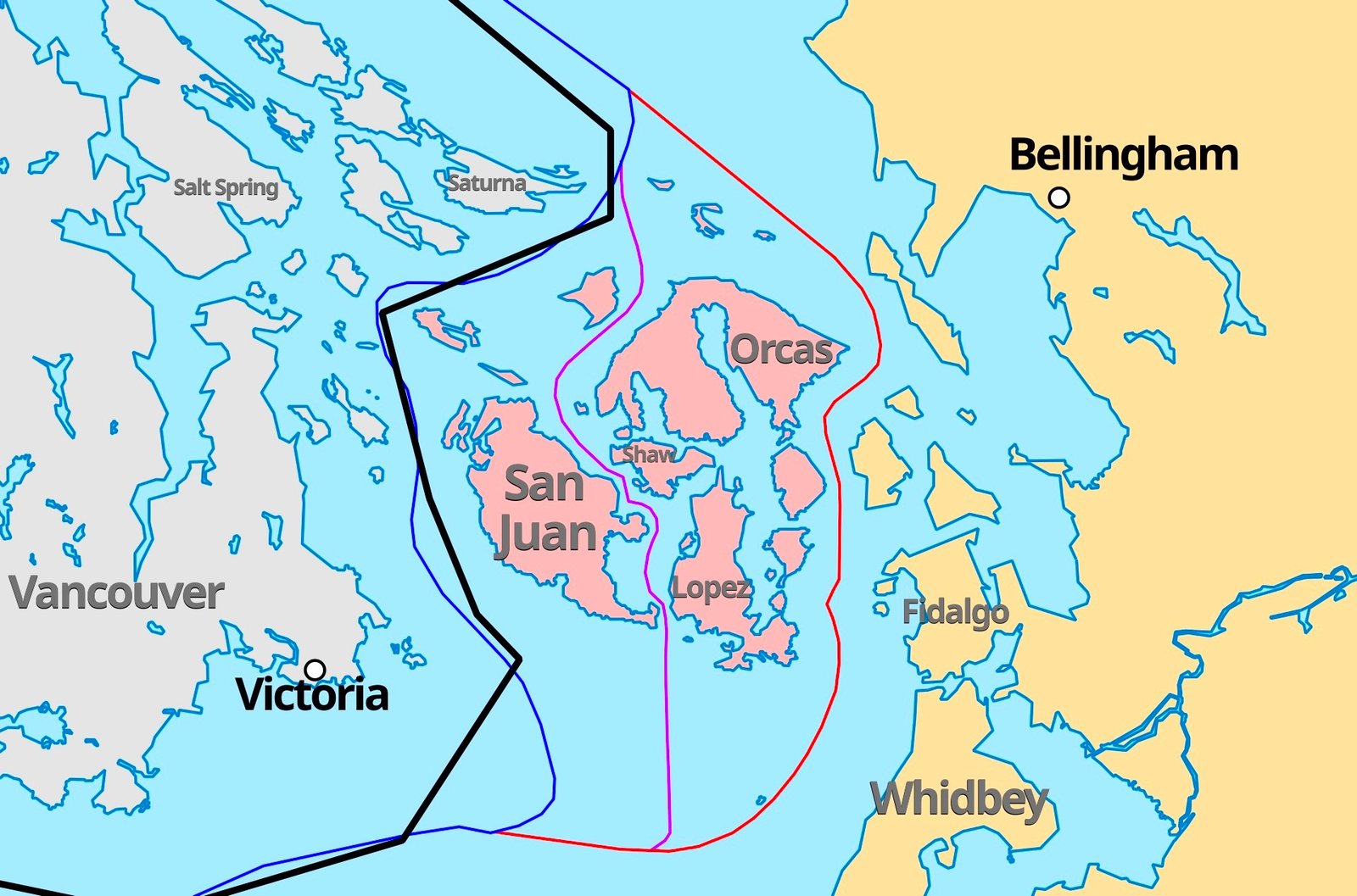
The problem was that two distinct channels existed: Haro Strait to the west of the San Juan Islands, and Rosario Strait to the east. Due to poor maps and vague wording, both the United States and Britain claimed full sovereignty over the San Juan Islands.
The Trespassing Pig
Britain’s Hudson’s Bay Company established a sheep ranch on San Juan Island, operated by Charles Griffin, an Irishman who let his pigs roam freely. Concurrently, a handful of American settlers moved onto the same island. On June 15, 1859, American farmer Lyman Cutlar found one of Griffin’s pigs rooting in his garden and eating his tubers.
Frustrated by repeated intrusions, Cutlar shot and killed the pig. He offered Griffin $10 in compensation. Griffin demanded $100. Cutlar refused to pay, arguing the pig was trespassing. When British authorities threatened to arrest Cutlar, American settlers immediately requested military protection.
The Military Escalation
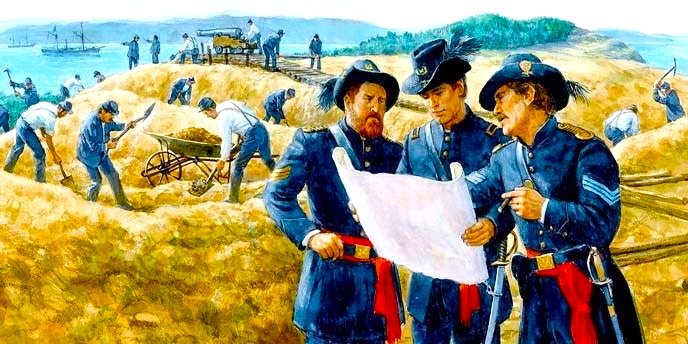
The situation rapidly spiraled out of control. The U.S. military dispatched Captain George Pickett and 66 infantrymen to San Juan Island to prevent British interference. In response, Britain sent three Royal Navy warships. Pickett refused to back down, moving his cannons to high ground and constructing a redoubt.
By August, the conflict had escalated dramatically. The U.S. had 461 troops and 14 cannons facing off against five British warships carrying 2,140 men and 70 massive guns. Despite the overwhelming force, British Rear Admiral Robert L. Baynes refused orders to engage, stating he would not start a war between two great nations over a squabble about a pig.
The Long Standoff
When news reached Washington, D.C. and London, shocked officials intervened. U.S. General Winfield Scott negotiated a joint military occupation, reducing both sides to a maximum of 100 men each. The Americans established a camp on the south end of the island, and the British built one on the north end.
For the next 12 years, the rival soldiers lived peacefully on the island. In 1871, the nations agreed to international arbitration. German Emperor Wilhelm I formed a commission, which ruled in favor of the United States in October 1872, officially placing the San Juan Islands in American territory.