
In November 1944, a silent and unguided weapon took to the skies from the coast of Japan, embarking on a 6,000-mile (9,656-kilometer) journey across the Pacific Ocean to strike North America. High above the clouds, riding a newly discovered high-speed air current known as the jet stream, thousands of giant paper balloons carried deadly explosive payloads.
This covert operation predated the modern intercontinental ballistic missile, bringing the destruction of World War II directly to the continental United States. The incredible operation remained completely hidden from the American public, resulting in a strict media blackout, an accidental strike on a top-secret nuclear facility, and the only civilian deaths by enemy action on the US mainland.
Engineering the Fu-Go Weapon
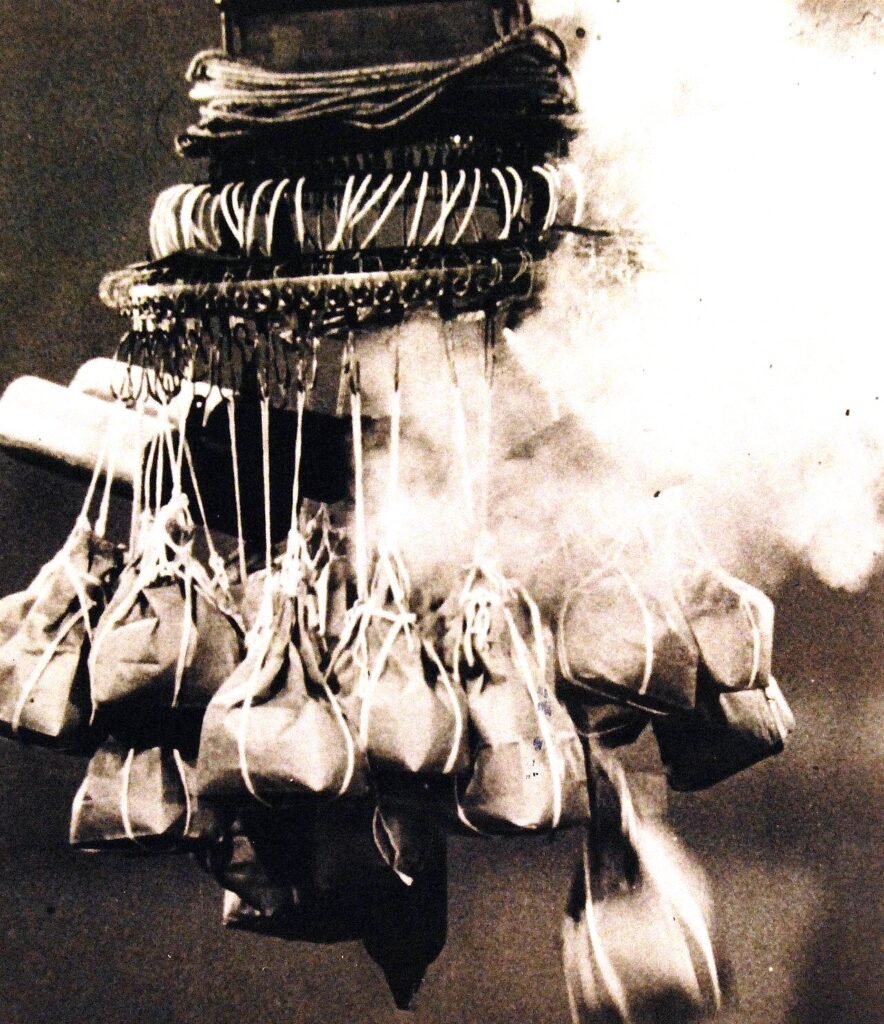
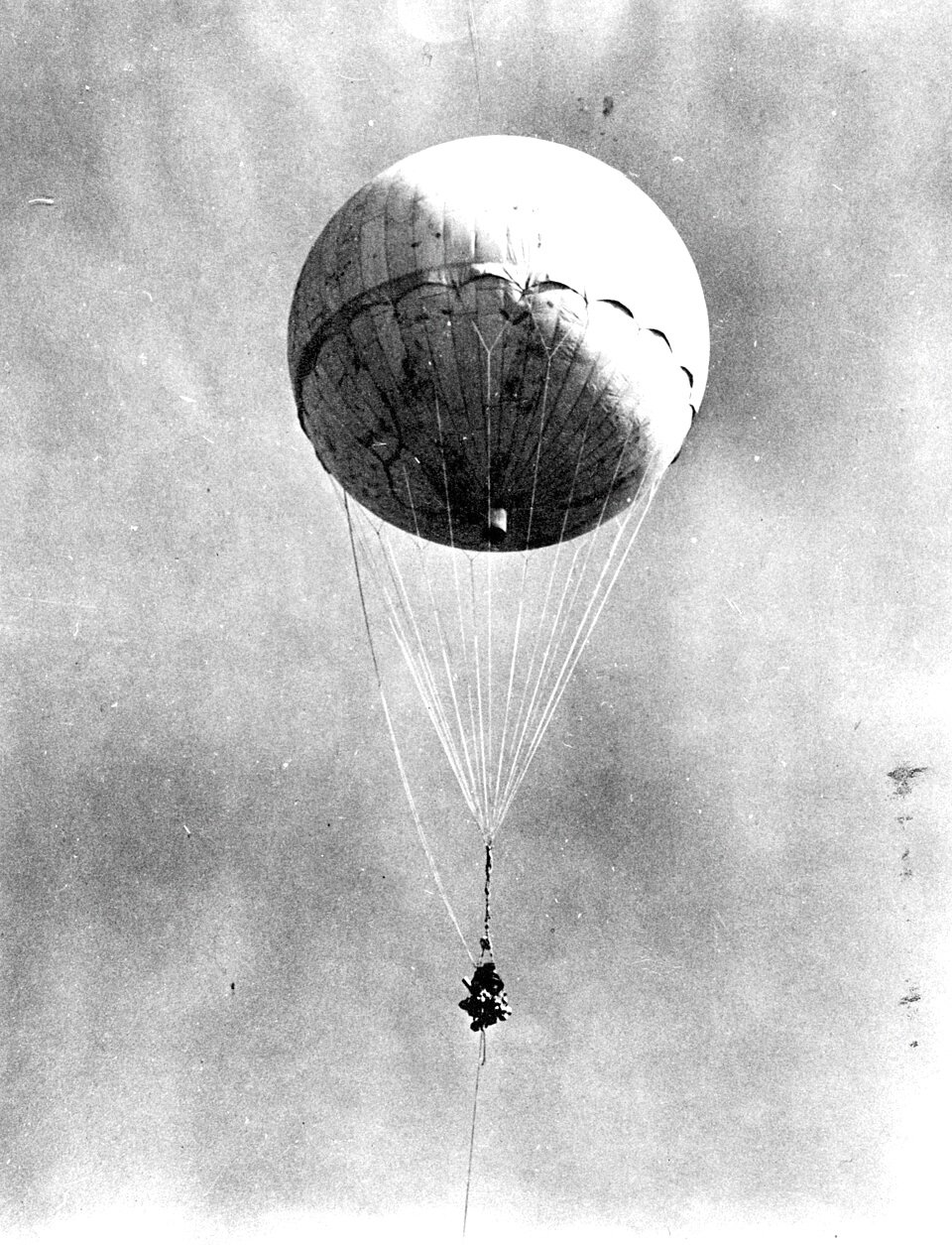
The Imperial Japanese Army designed the Fu-Go as a 33-foot (10-meter) hydrogen-filled balloon. Teenage girls across Japan glued together layers of paper mulberry to create the envelopes. Each balloon carried four 11-pound (5-kilogram) incendiary devices and one 33-pound (15-kilogram) high-explosive bomb.
To survive the fluctuating temperatures of the 30,000-foot (9,144-meter) altitude, engineers developed a sandbag ballast system. When the balloon lost altitude, a barometric mechanism used gunpowder plugs to drop sandbags, keeping the craft aloft for the 30 to 100 hours needed to reach the North American continent.
The Silent Pacific Crossing
Between November 1944 and April 1945, Japan launched about 9,300 balloons. Roughly 300 were found scattered across the United States, Canada, and Mexico. The goal was to ignite massive forest fires across the Pacific Northwest. Heavy winter snow and damp conditions prevented widespread blazes.
The US government quickly initiated a strict press censorship campaign. Broadcasters and newspapers were ordered to keep quiet about the discoveries. Because no news reports reached Japan, the Imperial Army believed the offensive had failed and abandoned the costly project entirely.
Striking the Manhattan Project
While the massive forest fires never materialized, one balloon managed to disrupt a highly classified American operation. On March 10, 1945, a Fu-Go descended near Toppenish, Washington.
It collided with electric transmission lines and caused a short circuit. This cut power to the Hanford Engineer Works, the secret facility producing plutonium for the Manhattan Project. Backup systems restored power immediately, but it took three days to bring the nuclear reactors back to full capacity.
The Fatal Discovery in Oregon
The US media blackout successfully confused the Japanese military, but it also left the American public completely unaware of the falling bombs. On May 5, 1945, Reverend Archie Mitchell and his pregnant wife Elsie drove into Oregon’s Fremont National Forest for a picnic with five Sunday school students.
While Archie parked the car, Elsie and the children found a downed balloon on the ground. The attached anti-personnel bomb exploded, killing all five children and fatally wounding Elsie. They became the only civilians killed by Axis action in the contiguous United States during the war.