
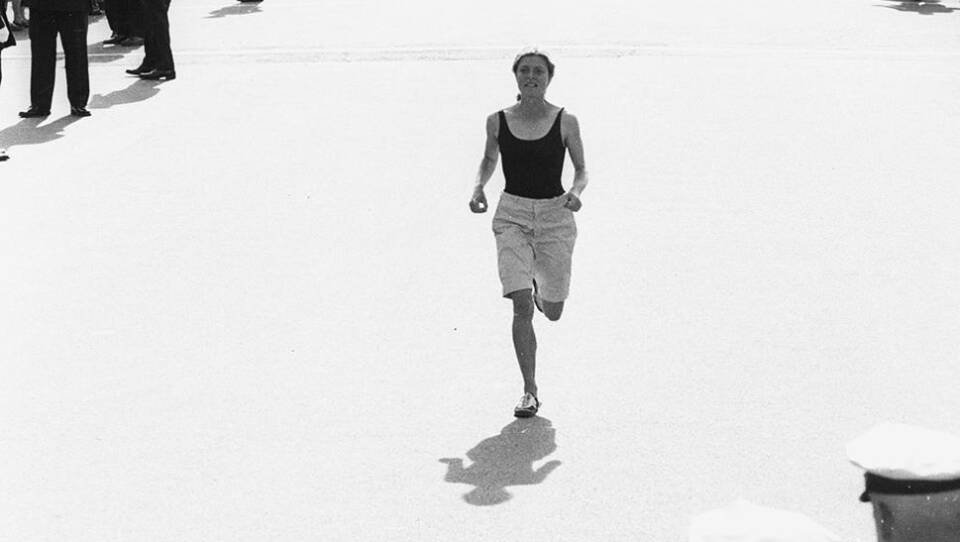
On the morning of April 19, 1966, a twenty-three-year-old runner crouched out of sight in the vegetation near the starting pen in Hopkinton, Massachusetts. She wore her brother’s Bermuda shorts and a blue hooded sweatshirt layered over a black swimsuit.
The athlete was waiting for the starting gun of a twenty-six-mile race that officials had explicitly forbidden her to enter. This runner was Roberta “Bobbi” Gibb. Over the next three hours, she would complete the entire Boston Marathon course and change the history of long-distance running.
A Denied Application and a Cross-Country Journey
Before 1966, the Amateur Athletic Union prohibited women from competing in races longer than one and a half miles. When Gibb submitted her application for the Boston Marathon in February, race director Will Cloney mailed her a rejection letter.
Cloney stated that women were not physiologically capable of running marathon distances. Gibb had spent the previous two years training, sometimes running up to forty miles in a single day. To reach the starting line, she rode a bus from San Diego, California, for three nights and four days, arriving at her parents’ home in Winchester,
Massachusetts, just before the event.
Stepping Onto the Pavement in Hopkinton
Gibb’s mother dropped her off near the starting area. Gibb concealed herself in the bushes while the male competitors lined up. Once the gun fired and about half the pack had passed her location, she jumped directly into the middle of the runners.
The men around her quickly realized she was a woman. When they offered their verbal support, Gibb removed her heavy sweatshirt. Spectators along the route began cheering loudly upon seeing a female competitor. The press picked up the story immediately, broadcasting her progress as she made her way toward the city.
Crossing the Finish Line and Official Recognition
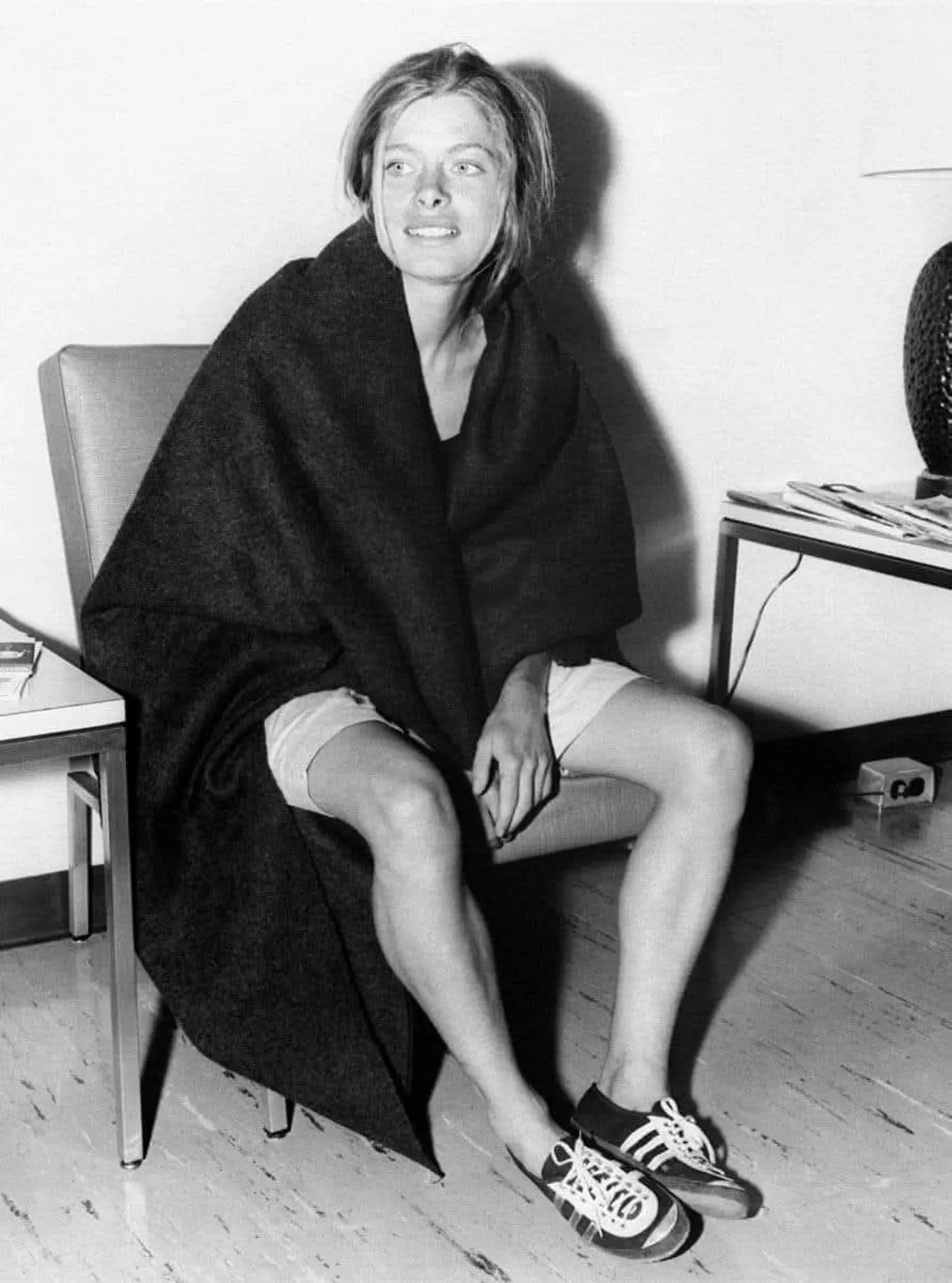
Gibb completed the course in three hours, twenty-one minutes, and forty seconds. She finished ahead of two-thirds of the registered runners. Massachusetts Governor John Volpe waited at the finish line to shake her hand. The next morning, the Record American newspaper featured her on the front page with the headline “Hub Bride First Gal to Run Marathon.” Despite the public documentation, Cloney initially told the Boston Traveler that Gibb did not run in the marathon, claiming his checkers never saw her.
Gibb returned to run the course again in 1967 and 1968, finishing first among the growing number of female participants both years. The Boston Athletic Association did not officially sanction women’s division marathons until 1972. In 1996, the organization retroactively awarded Gibb three medals for her victories in the pre-sanctioned era and inscribed her name on the Boston Marathon Memorial in Copley Square.