
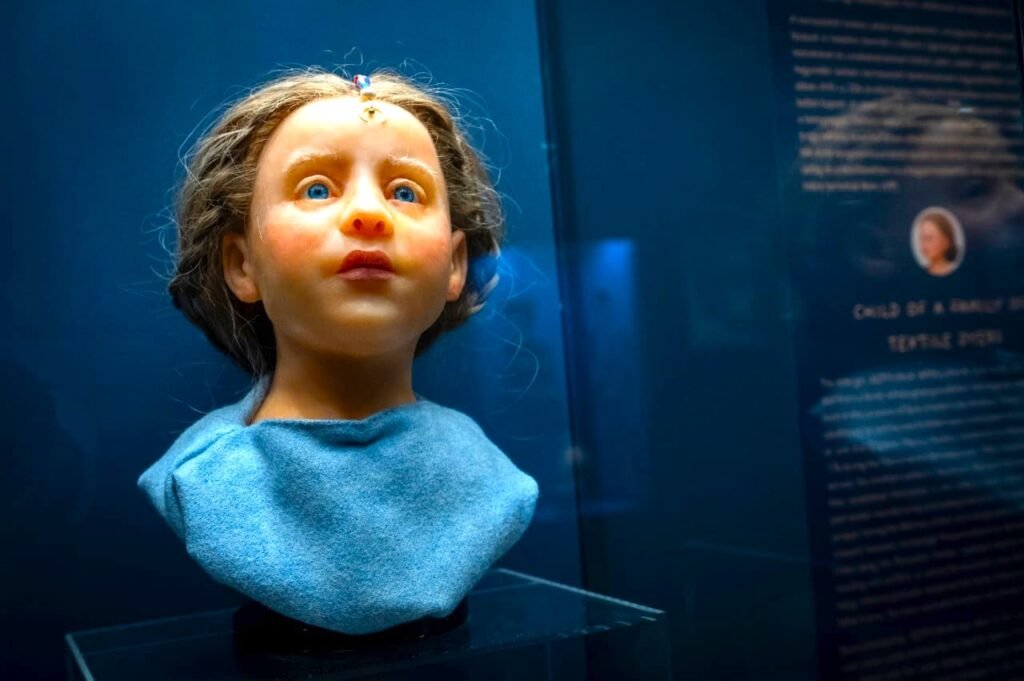
Beneath the busy streets of modern-day Budapest lie the ruins of Aquincum, a 2,000-year-old Roman capital that was once home to 15,000 people. While the stone walls and skeletal remains of this ancient city have long been unearthed, the actual faces of its residents remained entirely lost to time.
Now, a museum exhibition has brought 16 of these individuals back to the surface. By combining DNA analysis with forensic anthropology, researchers have rebuilt the physical appearances of the people who walked these streets two millennia ago, offering a direct look into ancient Roman society.
From Buried Ruins To A Museum Exhibition
Settled by the Celts, Aquincum rapidly transitioned into a strategic Roman military base and became the bustling capital of Lower Pannonia by 106 C.E. The city thrived with a population of 15,000 residents before largely emptying out by the fifth century.
Between 2019 and 2021, major excavations across the historical site revealed thousands of ancient burial sites, providing researchers with a massive collection of skeletal remains to study for the first time.
Reconstructing Ancient Features With DNA
The Aquincum Museum utilized this evidence to create an exhibition titled “Once We Were Like You.” To rebuild the ancient faces, experts turned to detailed DNA analysis and cranial examinations. The shape and bone density of the recovered skulls dictated the structural foundation and age of each individual. Genetic data then provided exact aesthetic details, revealing hair colors, skin tones, eye colors, and even the presence of freckles.
The Anthropologists Behind The Faces
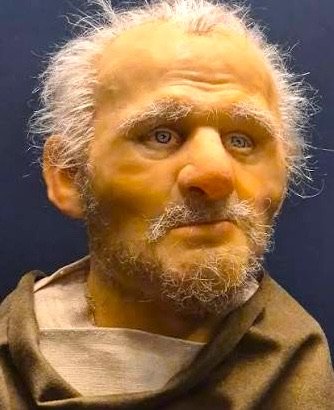
Bringing these individuals into the modern era was a meticulous process. Anthropologist and facial reconstruction expert Ágnes Kustár spearheaded the initial phase, completing six hyper-realistic painted silicon busts decorated with hair, clothing, and jewelry. Each bust took a full month to create. Following Kustár’s death in 2023, portrait artist Emese Gábor took over the project, finalizing the remaining faces to reach a total of 16.
Tracing The Lives Of The Lower Middle Class
The exhibition pairs the physical reconstructions with narratives grounded directly in forensic evidence. Researchers identified social status by examining the bones for signs of intense physical labor, starvation, or blunt force injuries.
One reconstructed man, given the name Respectus, shows skeletal evidence of heavy stone-splitting labor, a broken nose, and a knocked-out tooth resulting from a brawl. Other graves contained specific artifacts, such as a hand mirror buried with a teenage girl, a matron in fine clothing, and a condemned person buried face down in the dirt. These physical markers indicate that the vast majority of these reconstructed faces belonged to the hard-working lower middle class.