

Long before he occupied the Oval Office, the sixteenth President of the United States spent his time tinkering with mechanics and riverboats. Most history books focus on his political career. Yet, tucked away in the archives of the United States Patent and Trademark Office lies Patent No. 6,469. This document shows Abraham Lincoln was an inventor who designed a mechanical solution to a common maritime problem.
A Riverboat Crisis Demands a Solution
The year was 1848. Congressman Abraham Lincoln was traveling on a steamship named the Globe across the Great Lakes. Suddenly, the vessel struck a sandbar. The crew scrambled, forced to empty heavy cargo to lift the ship high enough to float free. This slow process sparked an idea in the politician’s mind. Having spent his early years navigating flatboats along the shallow Sangamon River, Lincoln knew the dangers of underwater obstacles intimately. He decided to engineer a permanent fix.
Engineering Patent Number 6,469
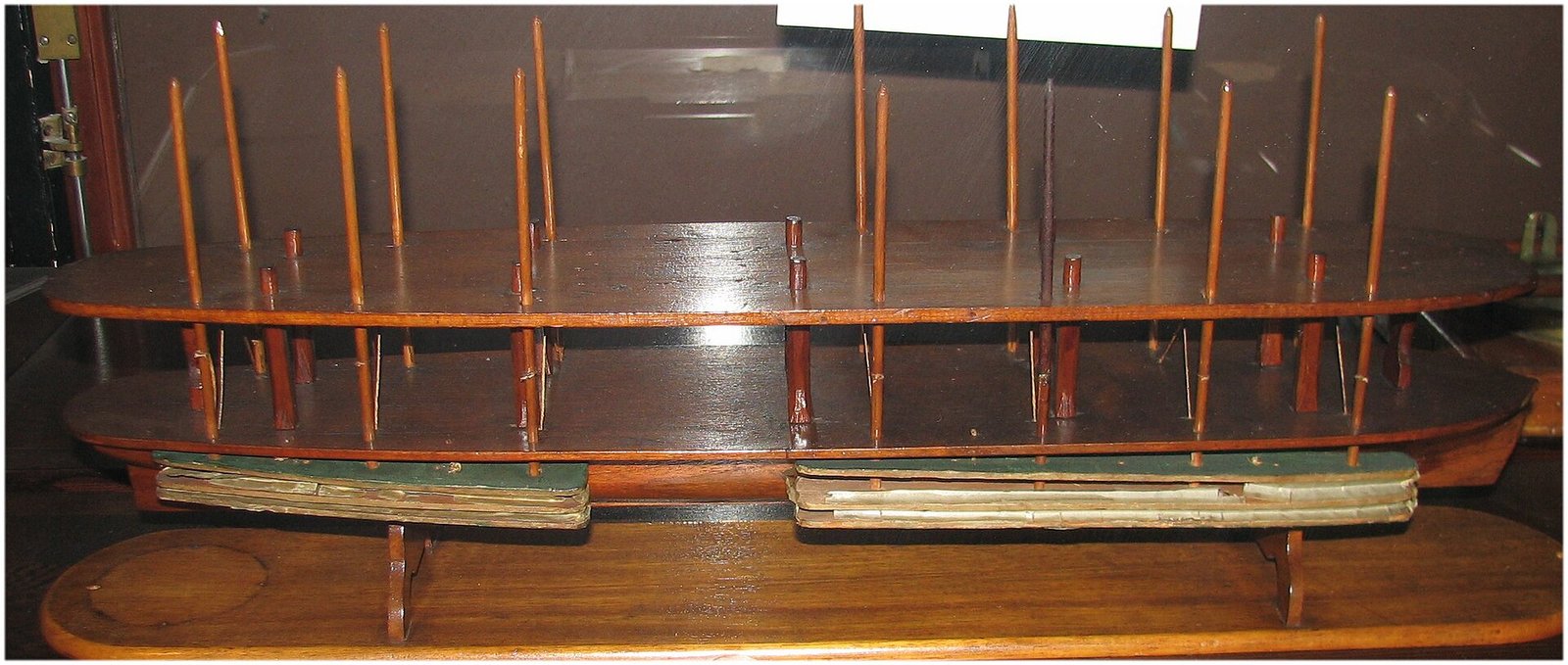
Returning to his law office in Springfield, Illinois, Lincoln began drafting designs. His concept, titled “Buoying Vessels Over Shoals,” relied on expandable, waterproof fabric chambers attached to the sides of a hull. These chambers operated like bellows. If a steamboat hit a shallow shoal, the crew would use a system of ropes and pulleys to expand the chambers.
Once filled with air, the extra buoyancy would lift the vessel, allowing it to clear the obstruction. To demonstrate his concept, Lincoln whittled a detailed wooden scale model measuring roughly 20 inches (50.8 centimeters) long.
The Washington Patent Office Approval
Lincoln took his hand-carved model to Washington, D.C. He hired patent attorney Zenas C. Robbins to help him navigate the application process. On May 22, 1849, the United States Patent Office officially granted Patent No. 6,469 to Abraham Lincoln. The paperwork detailed the exact mechanism of the adjustable air chambers and the structural reinforcements required to support the weight of a loaded boat.
The Unbuilt Blueprint
Despite the official patent and the detailed engineering, the invention never saw a manufacturing line. The required waterproof fabric was expensive, and the added weight of the heavy wooden pulleys made the system impractical for actual riverboats. No full-sized version of Lincoln’s buoyancy system was ever constructed. Today, his original wooden model sits on display at the Smithsonian Institution. He remains the only person in American history to hold a registered patent while also serving as President of the United States.