
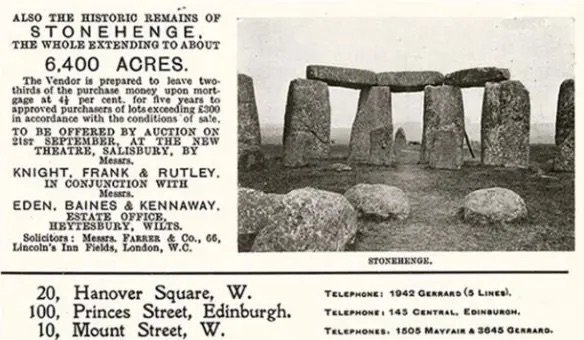
On September 21, 1915, a local barrister named Cecil Chubb attended an estate auction in Salisbury, England, with strict instructions from his wife to purchase a set of dining chairs.
Instead, he walked out holding the deed to a 4,500-year-old prehistoric monument. This single transaction transferred ownership of one of the world’s most famous prehistoric stone circles to a private citizen for a total sum of £6,600.
Lot 15 Hits the Auction Block
For nearly a century, the Antrobus family owned the land containing Stonehenge. After Sir Edmund Antrobus died and his sole heir was killed in the First World War, the sprawling family estate was divided into lots to pay mounting taxes. The auction took place at the Palace Theatre in Salisbury, handled by the firm Knight, Frank & Rutley.
Lot 15 consisted of the stone circle itself and thirty acres of adjoining downland. At the time, rumors circulated that a wealthy foreign buyer might purchase the stones, dismantle them, and ship them completely overseas.
The Winning £6,600 Bid
When the auctioneer introduced Lot 15, the bidding opened at £5,000. Cecil Chubb, a self-made millionaire who was born in a nearby village, sat quietly in the audience. As the price climbed, Chubb raised his hand. The hammer finally came down at exactly £6,600.
Chubb later told reporters he had not planned to buy the prehistoric structure when he walked into the theatre. He simply acted on a whim to ensure the land remained under local ownership rather than falling into the hands of an overseas buyer.
An Unappreciated Anniversary Present
Chubb brought the deed home to his wife, Mary, presenting the prehistoric site as a gift to celebrate their upcoming wedding anniversary. She was entirely displeased with the purchase. Mary had sent her husband to the auction specifically to buy a set of dining chairs they needed for their home.
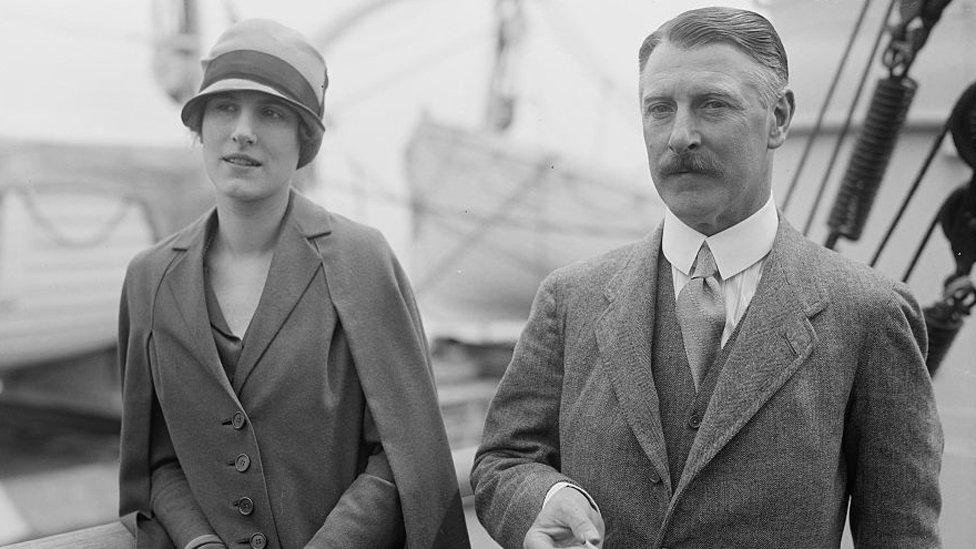
Instead of furniture, she received a massive field of standing stones that generated minimal revenue, required constant physical upkeep, and brought significant unwanted public attention to their family finances.
Deeding the Stones to the Nation
The Chubb family owned the property for exactly three years. On October 26, 1918, Cecil Chubb signed a deed of gift officially transferring ownership of Stonehenge and the surrounding thirty acres directly to the British government. More here.
He included strict legal conditions in the transfer, mandating that the public must always have free access to the site and that local residents of the surrounding parishes should never be charged an entrance fee. Following the property transfer, Prime Minister David Lloyd George granted him the formal title of First Baronet of Stonehenge.