
In the winter of 1938, a physicist walking through a Swedish forest solved one of the greatest scientific mysteries of the twentieth century. Elise “Lise” Meitner had recently fled Nazi Germany with a diamond ring and ten marks in her purse. Within months, she would figure out how to split the atom.
Her mathematical calculations unlocked the process of nuclear fission, yet her name was entirely left out when the Nobel Committee handed out its highest award for the discovery.
Years in a Basement Laboratory
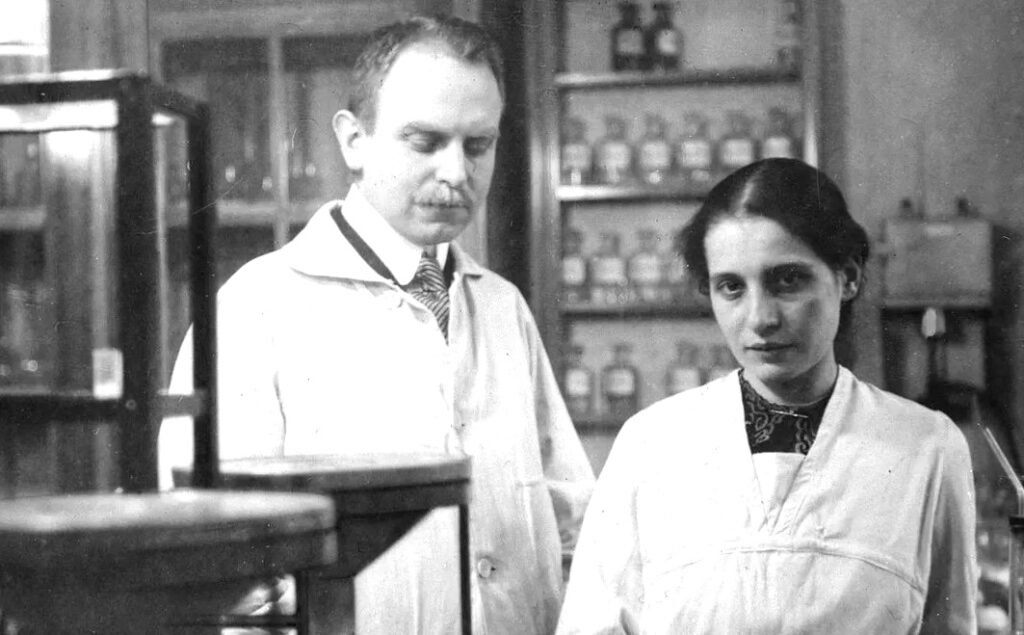
Born in Vienna in 1878, Meitner became the second woman to earn a physics doctorate from the University of Vienna. She moved to Berlin to work with chemist Otto Hahn. Because women were barred from Prussian universities at the time, she had to conduct her initial research in a repurposed woodworking shop in the basement.
She could not use the upstairs laboratories. Despite these barriers, she discovered new isotopes, uncovered the Auger-Meitner effect in 1922, and eventually became the first female university physics professor in Germany.
A Secret Train Ride Across the Border
When Germany annexed Austria in 1938, Meitner lost her citizenship and her academic protections. Facing immediate danger due to anti-Jewish laws, she had to leave the country. Fellow scientists quickly organized a covert exit. On July 13, she worked a full day at the institute to avoid suspicion, correcting an associate’s paper until eight in the evening.
Hahn and Paul Rosbaud helped her pack two small suitcases. She boarded a lightly used train with Dutch physicist Dirk Coster, successfully crossing the border into the Netherlands before eventually settling in Sweden.
The Snowy Walk and the Missing Math
In December 1938, Hahn wrote to Meitner about a puzzling experiment. He had bombarded uranium with neutrons and found barium, a much lighter element, in the residue. Hahn could not explain the physics. Over Christmas, Meitner and her nephew Otto Robert Frisch walked through the snowy woods of Kungälv, calculating the mechanics on scraps of paper.
They realized the uranium nucleus had acted like a wobbly drop of liquid, splitting in half. The resulting nuclei were lighter than the original uranium by one-fifth the mass of a proton, a mass difference that converted into massive energy according to Albert Einstein’s equation. They named this exact process “fission”.
The 1944 Nobel Prize Announcement
The publication of their findings triggered the atomic age. In 1944, the Royal Swedish Academy of Sciences awarded the Nobel Prize in Chemistry solely to Otto Hahn.
Meitner received forty-nine Nobel nominations throughout her life but never won the award. She continued her research in Sweden and later retired to the United Kingdom. Decades after her death in 1968, the scientific community added element 109 to the periodic table, officially naming it meitnerium.