
Deep inside a quiet New England graveyard sits a headstone bearing a death date completely unlike any other in the United States: 1883 BC. The ashes resting beneath the soil do not belong to an early American settler, but to an ancient Egyptian toddler named Amun-Her-Khepesh-Ef.
Stolen from his original resting place, sold by international sailors, and forgotten away in a dusty museum attic, this two-year-old child experienced a bizarre 4,000-year journey that ultimately ended in Middlebury, Vermont.
Stolen from the Sands of Dahshur
Amun-Her-Khepesh-Ef translates to “Amun Is with His Strong Arm.” Historical texts claim he was the son of King Senusret III and Hathorhotep. However, his actual identity has never been officially confirmed. The exact relationship between the supposed parents remains unclear, with some historians suggesting Hathorhotep was actually the king’s granddaughter.
The child died around two years of age and was initially interred in Egypt, likely within the necropolis of Dahshur. Centuries later, grave robbers raided the tomb, pulling his mummified remains from the desert sands and setting off a chain of events that moved him across the Atlantic Ocean.
A Bizarre Transaction in New York City
In 1886, a collector named Henry Sheldon traveled to New York City to acquire artifacts for the Henry Sheldon Museum of Vermont History. He purchased the young prince’s mummy from a group of visiting Spanish sailors.
Unfortunately, the ancient remains arrived in Middlebury in an exceptionally poor, putrid condition. Unfit for public display in the museum’s exhibition galleries, the mummy was quietly relegated to the attic. Sheldon passed away in 1907, and the child’s remains sat hidden in the dark for decades.
The Furnace Cremation
A museum curator named George Mead finally stumbled upon the forgotten mummy in 1945. At first, colleagues suggested throwing the badly degraded remains in the trash. Mead refused, opting instead to give the child a proper local burial.
Because he feared college student pranksters might dig up the grave to steal an intact mummy, Mead took an unusual precaution. He cremated the ancient remains inside his neighbor’s furnace before placing the ashes in his own family plot. The cremation permanently negated the possibility of any future exhumation to verify the child’s identity.
America’s Earliest Gravestone Date
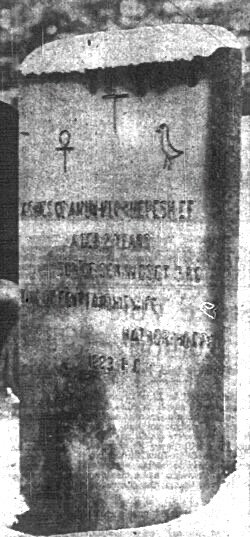
Amun-Her-Khepesh-Ef was buried beside Mead’s first wife, Caroline Hawley, and near Vermont Representative Daniel Chipman. His original stone read:
“ASHES OF AMUN-HER-KHEPESH-EF AGED 2 YEARS SON OF SEN WOSET 3 RD KING OF EGYPT AND HIS WIFE HATHOR-HOTPE 1883 BC.”
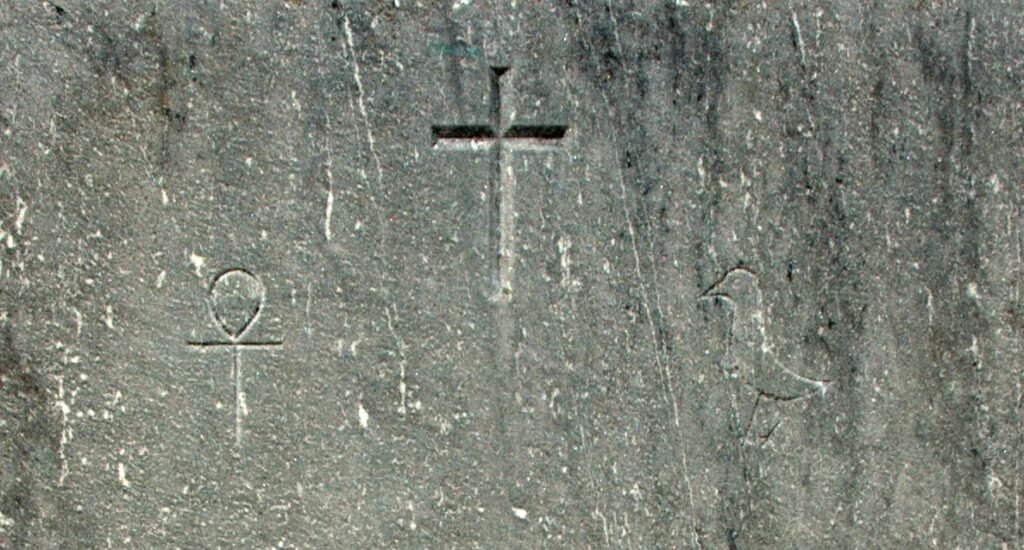
The carving featured an ankh, a Christian cross, and a quail chick hieroglyph. In 2023, the town installed a replacement marker. Today, visitors frequently travel to the Vermont cemetery to leave children’s toys, die-cast cars, and vinyl animal figurines at the grave of the ancient Egyptian toddler.