
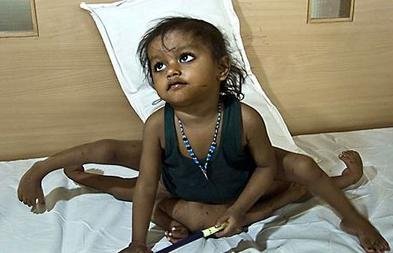
In 2005, a girl was born in the Araria district of Bihar, India, with four arms and four legs. Her parents, daily laborers earning less than 40 rupees a day, named her Lakshmi. The infant quickly gained nationwide attention, drawing crowds who viewed her as a deity incarnation, and even a circus that attempted to purchase her.
However, her condition was purely medical. Lakshmi was an ischiopagus conjoined twin, fused to a sibling who stopped developing in the womb. Facing severe health risks, her survival required one of the most complex separation surgeries in history.
A Complex Medical Anomaly
Lakshmi’s twin lacked a head and developed chest, but their vascular systems were intricately tangled. The twins shared a single pelvic ring. Each had one working kidney, while Lakshmi had a second necrotic kidney. Because of this fusion, the toddler could not walk normally and suffered from a clubfoot.
Furthermore, she developed an infected ulcer and continuous fevers. Doctors at Sparsh Hospital in Bangalore determined she had a 75 percent chance of surviving an operation, but without it, she would not reach her teenage years.
A Massive 27-Hour Operation
On November 6, 2007, a medical team led by Dr. Sharan Patil began the procedure. The Sparsh Foundation completely covered the estimated $625,000 cost. Over 30 surgeons worked in shifts for 27 hours.
They started by removing the twin’s organs and Lakshmi’s necrotic kidney, replacing it with her sibling’s functioning kidney. Surgeons then carefully relocated the reproductive system and urinary bladder directly into Lakshmi’s body.
Dividing the Skeletal Structure
The surgical team then amputated the twin’s legs at the hip joints, causing heavy bleeding. They meticulously separated the joined backbones, navigating chaotic nerve clusters to prevent paralysis. After the parasitic twin was pronounced dead, doctors divided the shared pelvic ring.
They bent the remaining pelvic bone to close the circle and applied an external fixation device to hold it in a proper position to heal over the next three weeks.
Post-Surgery Recovery
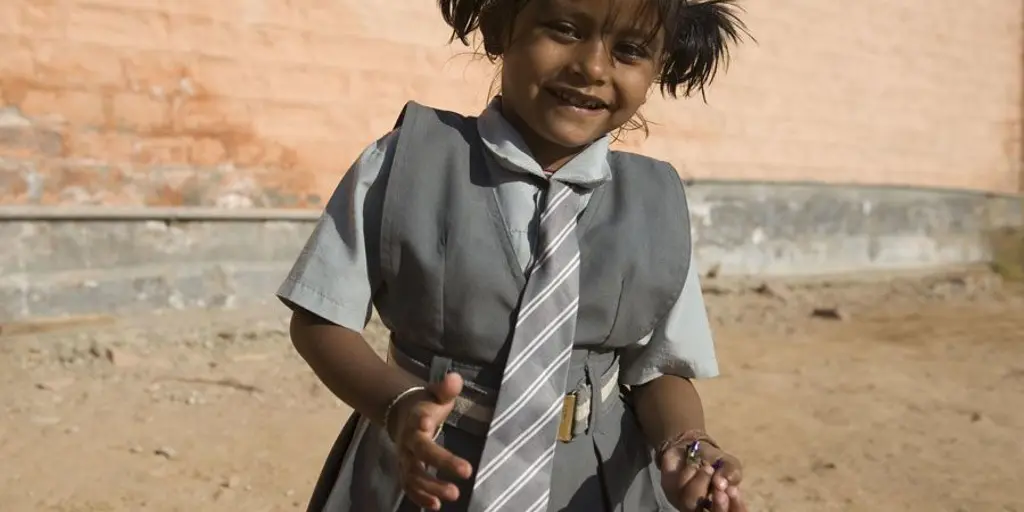
The final suturing took four hours, completing the extensive operation. Within a week, the hospital held a press conference showing Lakshmi with her father. Following a month in the hospital, the family relocated to Jodhpur. Her father secured farm work at an educational facility for disabled children, which Lakshmi and her brother attended.
Follow-up medical examinations confirmed the spinal separation did not cause paralysis. She later underwent surgery to correct her clubfoot, while her pelvis successfully shifted into a healthier position.