
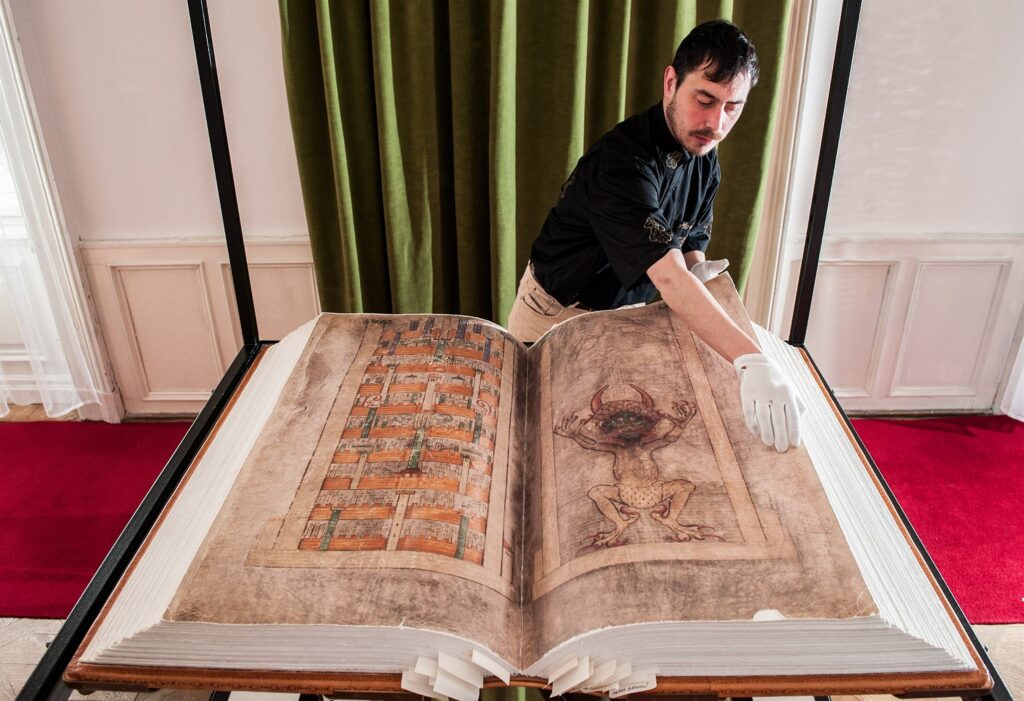
The Codex Gigas is a historical document that defies standard bookmaking. Created in the early 13th century in the Benedictine monastery of Podlažice in Bohemia, this enormous manuscript contains a complete Latin Bible and other medieval texts. Its dimensions and an unusual full-page portrait of the Devil fueled centuries of rumors. Today, the true facts surrounding the creation, scale, and turbulent history of this object reveal a fascinating timeline.
The Physical Scale of the Giant Book
The physical dimensions of the Codex Gigas are unprecedented among known medieval manuscripts. The book measures 92 centimeters (36.2 inches) in length, 50 centimeters (19.7 inches) in width, and 22 centimeters (8.7 inches) in thickness. The total weight of the bound text reaches a massive 74.8 kilograms (164.9 pounds).
The original manuscript contained 320 leaves of vellum, though twelve pages were removed for unknown reasons. The remaining 310 pages cover 142.6 square meters (1,535.0 square feet) and required the skins of an estimated 160 donkeys or calves. Beyond the Bible, the pages contain medical treatises and historical chronicles bound in leather-covered wooden boards.
A Dark Legend of Demonic Creation
The extreme size and unified handwriting of the text gave rise to a popular legend during the Middle Ages. The story claimed that a scribe broke his monastic vows and faced a sentence to be walled up alive. To escape this fate, he promised to write a book encompassing all human knowledge in a single night.
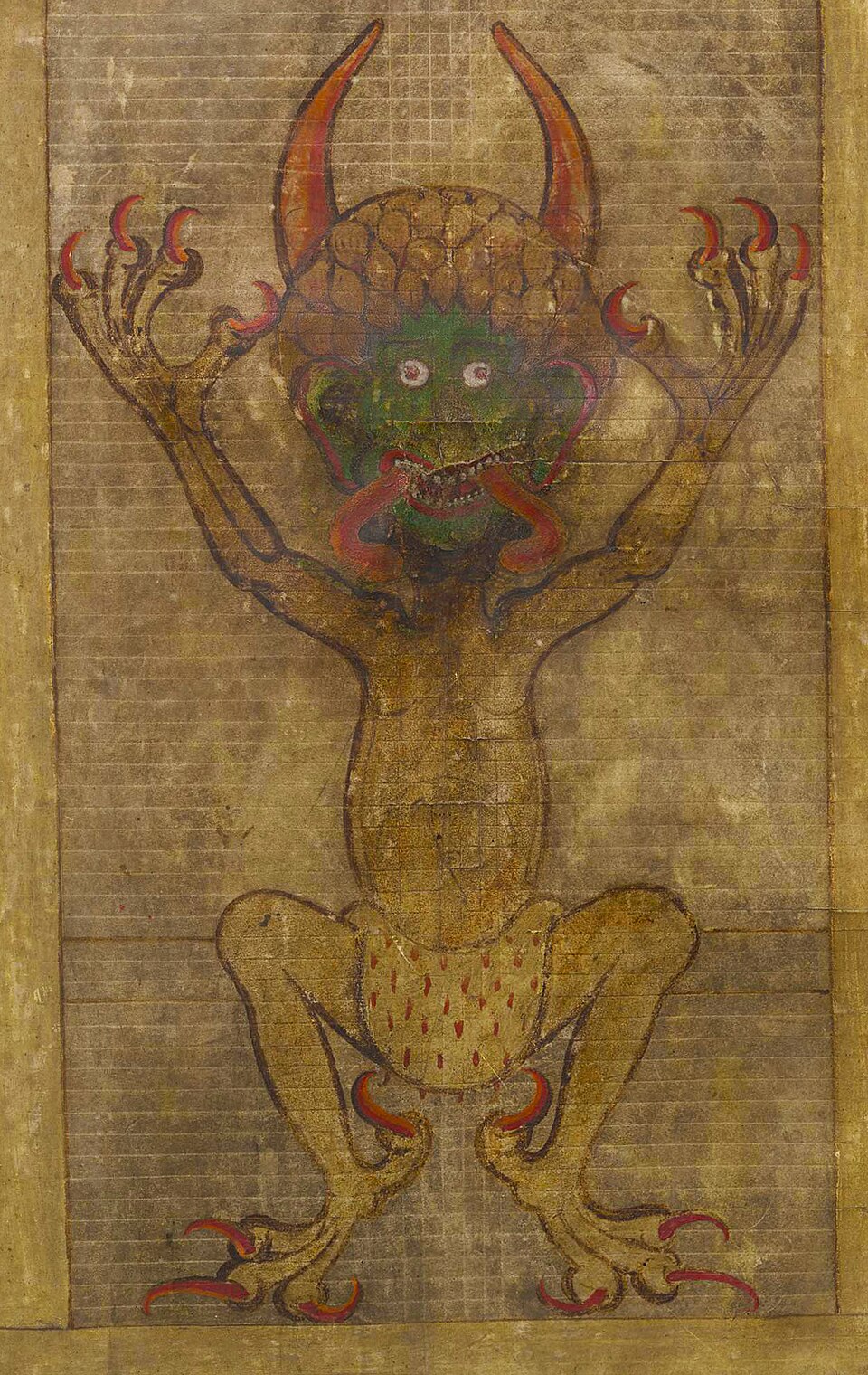
As midnight approached, the desperate monk reportedly prayed to Lucifer for assistance in exchange for his soul. The legend states that the Devil completed the work, and the monk painted a 50-centimeter (19.7-inch) tall portrait of Satan on Folio 290 to accompany the text.
Decades of Solitary Calligraphy Work
Modern scientific analysis contradicts the single-night myth. Handwriting experts verified that the entire document was indeed written by one scribe.
However, paleographers estimate that completing the intricate calligraphy took between 20 and 30 years of continuous labor. Despite the decades required, the writing remains uniform throughout the volume, showing no signs of aging or fatigue from the author.
A History of War and Relocation
The book survived multiple relocations and conflicts. It moved from Podlažice to Sedlec Abbey, then to Broumov, and eventually into the library of Rudolf II in Prague. In 1648, during the Thirty Years’ War, the Swedish Imperial Army seized the collection as war booty.
The text faced destruction during a 1697 fire at the Tre Kronor royal castle in Stockholm. It survived only because someone threw the massive book out of a window, reportedly injuring a bystander. It now resides at the National Library of Sweden.